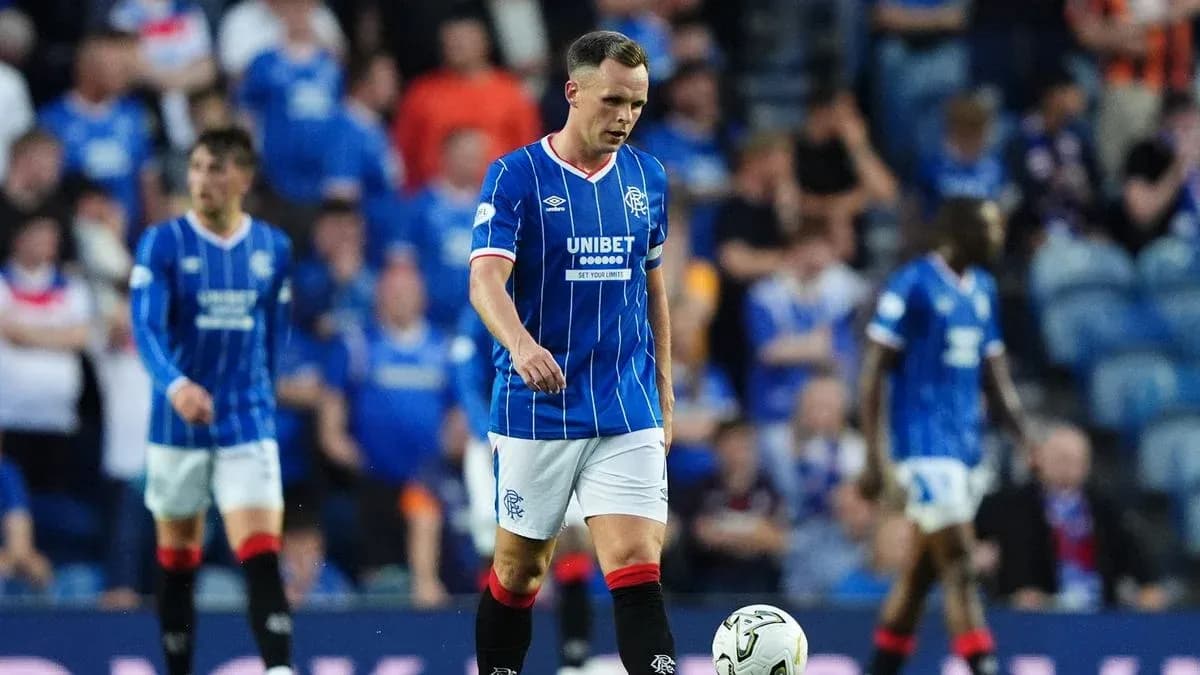
Rangers Face Pressure After Conference League Defeat
The 3-2 aggregate defeat sends the Light Blues into a playoff for Conference League football – and piles yet more pressure on a board already feeling the flames licking at its feet.
Derek McInnes had warned Rangers they were playing with fire by failing to plug the obvious gaps in his defence. On this evidence, the blaze is spreading.
Andrew Cavenagh and his American regime walked into Monday’s shareholder meeting knowing the mood was sour. They walked out singed. Supporters queued up to hammer a recruitment record that has swallowed millions of dollars and spat out only mediocrity across their 12 months in charge.
They hoped Europe might buy them some breathing space. Turn around the 2-1 deficit from Poland, reach the Europa League play-off, and at least temper the anger. Instead, another night of frustration has only stoked it.
Rage in the stands, questions in the boardroom
McInnes is now four games into his reign without a single win. That statistic alone tells its own story. The reaction at full-time told an even louder one.
Ibrox erupted in boos as the players trudged off. Nobody escaped. The manager copped it, the players copped it, but the sharpest edge of the fury belongs with the American board whose lavish outlay has failed to solve the basics: no control in midfield, no consistent creativity, no clear identity.
Nine new signings, yet the same old problems. Until Cavenagh and his team get serious about how they identify and sign players, nights like this will keep repeating.
Rangers now drop into the Conference League for the first time. Only victory over Czech side Jablonec will secure a place in the league phase. That’s not the European stage this club expects to inhabit. It’s the one their current level of organisation deserves.
A dream moment for Shankland, a nightmare second half
For a brief spell, it looked like McInnes might get the spark he craved.
On 19 minutes, birthday boy Lawrence Shankland – who turned 31 on Monday – finally had his moment. Former Celt Yuki Kobayashi inexplicably dangled out an arm trying to block compatriot Yokota’s cross. Clear handball. Clear chance.
Shankland, the boyhood Rangers fan now wearing the armband, stroked home from the spot. The goal he has dreamt about his whole life. The two-week wait for his first strike in blue must have felt almost as long as the 31 years since he came into the world.
It should have been a launchpad. Instead, it became a false dawn.
Rangers’ tempo sagged after the break. The sharpness that had been there in flashes during the first half drained away. The passing slowed, the movement dulled, the pressure eased. Jagiellonia sensed it.
The Polish side grew bolder, stepped higher, and eventually struck. Nik Prelec pounced with the equaliser that swung the tie back their way and sent them on to the Europa League play-off. One clinical moment, one more defensive lapse, and Rangers’ European ambitions shrank in an instant.
Klopp comparison looks badly timed
Ibrox CEO Jim Gillespie had already raised eyebrows this week when he compared McInnes to Jurgen Klopp. Not in playing style, he stressed, but in leadership and man-management.
Given the lack of anything resembling Klopp’s famed “heavy metal” football at Ibrox so far, the analogy jarred with many supporters. After this week, it looks even more awkward.
Everything that could go wrong for McInnes has gone wrong. The double injury blow to Youssef Chermiti and Tuur Rommens has stripped an already thin squad of ideas and leadership, despite the arrival of three former captains. The new manager has barely had a stable platform to work from.
Even so, the Klopp comparison has done him no favours. When your team looks disjointed and short of conviction, being mentioned in the same breath as one of the game’s great modern coaches only invites ridicule.
Strikers under the microscope
With Chermiti out for the season after rupturing knee ligaments, the need for someone to step up in attack is glaring.
Ryan Naderi should be that man. He cost £5 million from Hansa Rostock on deadline day last January. Since then, he has only three goals. The questions around that late scramble to sign him are getting louder with every misfire.
This was another night when he never looked close to justifying the fee. At 6ft 4ins, he should dominate defenders, bully them, pin them back. Too often he looks like a punch-drunk boxer, swinging without conviction, stumbling through duels he should relish.
McInnes clearly harbours his own doubts. The recruitment team are already weighing up a move for Portland Timbers frontman Kevin Kelsy as they draw up a list of potential replacements for their crocked £9 million hitman Chermiti. That search alone tells you how little faith there is that Naderi can suddenly transform.
He is not the only attacker feeling the heat. Shirts are up for grabs all over the pitch. But one summer signing has at least offered a glimmer of hope.
Yokota, operating on the right, looks like he will take some shifting. His hunger to take on defenders, to commit people and swing in crosses, is almost the sole source of invention in this side at times. Without him, Rangers would be almost entirely blunt.
It’s early, but the contrast is stark: if more of this summer’s recruits hit Yokota’s level, McInnes’ job looks very different.
Constant change, little cohesion
The one thing McInnes has delivered consistently so far is change.
Five alterations from the Dundee United draw to the first leg in Poland. Six more for Sunday’s defeat to Hibs. Another five changes for this return tie, plus a switch of shape to 3-5-2. At half-time, Thelo Aasgaard made way for Ross Mc, taking the tally to seven interval substitutions in just four games.
Some of that chaos is enforced. The shortage of defensive options pushed McInnes towards a back three. It never looked comfortable.
Djeidi Gassama was asked to operate as a wing-back, but the Mauritanian has never been known for his defensive diligence. Jagiellonia’s Rodrigo Conceicao exploited the space behind him repeatedly in the early stages, stretching a backline that already looked uncertain.
McInnes eventually reverted to a flat back four, introducing McCrorie for the second half. The shape looked more familiar. The performance did not improve.
The shift coincided with a drop in pace. Rangers stopped attacking with the same urgency and intensity that had at least unsettled their visitors before the break. Jagiellonia grew into the game, then took it away from them.
Now Rangers must pick themselves up for a Conference League play-off they never expected – or wanted – to face. The question is no longer just whether this squad can salvage a European campaign.
It’s whether this board, and this recruitment strategy, can be trusted to build a team worthy of the jersey at all.