Rangers vs Jagiellonia: UEFA Europa League Qualifying Clash
At Ibrox Stadium, Rangers host Jagiellonia in the second leg of a UEFA Europa League 3rd Qualifying Round tie that will decide who stays on course for the group stage and the associated financial and sporting upside; trailing from the first leg, Rangers face an early-season, high-stakes knockout scenario, while Jagiellonia defend a narrow advantage with a first-ever Europa League group phase within reach.
Head-to-Head Tactical Summary
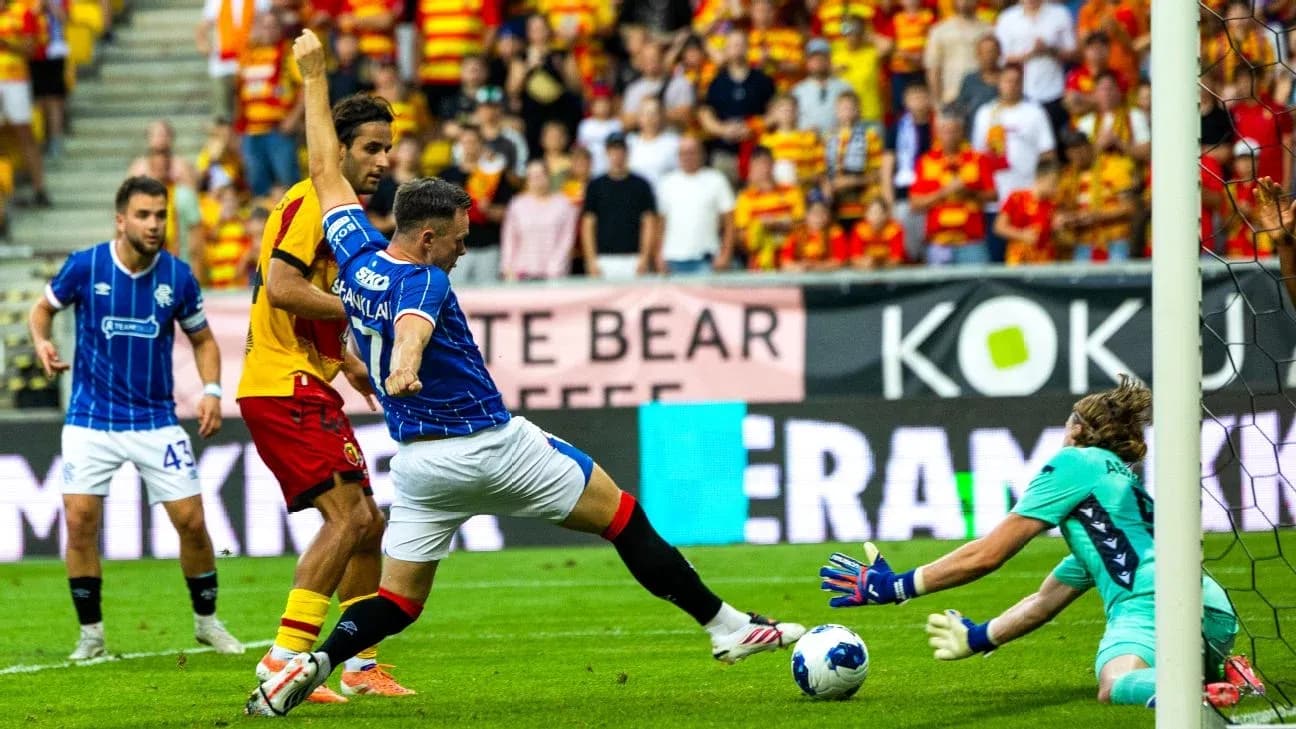
The only previous meeting between these sides came a week earlier on 6 August 2026 at Chorten Arena in Bialystok, where Jagiellonia, playing at home, beat Rangers 2–1 in the first leg of this 3rd Qualifying Round tie. The match was already 2–1 at half-time, and that scoreline held through full time, underlining Jagiellonia’s ability to start aggressively and then manage the game, while Rangers showed they can score away but were vulnerable defensively under pressure.
Global Season Picture
- League Phase Performance: There is no group stage standings data yet for either Rangers or Jagiellonia in the 2026 UEFA Europa League; both are still in the qualifying phase, so progression from this tie is a prerequisite for any future points, goals for, or goals against to matter in a group context.
- Season Metrics: In the league phase context of this Europa League campaign so far (qualifying included), Rangers have played 1 match, losing it 2–1 away. They have scored 1 goal and conceded 2, with no clean sheets and no games failed to score. Their typical shape has been a 4-2-3-1, and their discipline profile shows yellow cards spread across early, late, and stoppage-time periods, suggesting occasional lapses in control in different phases of the game. Jagiellonia have also played 1 match, winning 2–1 at home, with 2 goals scored and 1 conceded, no clean sheets, and no failures to score. They set up in a 4-3-3, indicating a more front-foot structure, and their bookings concentrated in the 76–90 minute range hint at a willingness to commit tactical fouls to protect a lead late on.
- Form Trajectory: Rangers’ form string of “L” reflects a single defeat so far, meaning their European season currently trends negatively and leaves them needing an immediate response at home. Jagiellonia’s “W” indicates one win from one, a clean upward trajectory that gives them confidence and a psychological edge going into the away leg, knowing a draw or even a narrow one-goal loss (depending on aggregate and no away-goals rule) could still be enough to advance.
Tactical Efficiency
With only one competitive Europa League qualifier played for each side, the efficiency picture is still emerging but already offers contrasts. Rangers’ 4-2-3-1 and a 1:2 goals-for to goals-against ratio point to a side that can create but has not yet found defensive balance in Europe; conceding twice away while failing to keep a clean sheet raises questions about their ability to control transitions and protect their back line when chasing the game. Jagiellonia’s 4-3-3, combined with a 2:1 goals-for to goals-against ratio, suggests a more efficient attacking setup that has already converted pressure into goals while keeping defensive damage limited. Their readiness to take a late yellow card to manage the closing stages in the first leg underlines a pragmatic streak that could be decisive in Glasgow: they can drop the midfield line deeper, compress space, and rely on structured pressing triggers rather than expansive possession, trading some attacking ambition for aggregate control. For Rangers, improving tactical efficiency will likely mean higher defensive protection from the double pivot and more controlled risk in full-back positioning, ensuring they can push for the goals they need without leaving the tie exposed to counter-attacks.
The Verdict: Seasonal Impact
This result will sharply shape both clubs’ European narratives for 2026. For Rangers, overturning the 2–1 first-leg deficit at Ibrox would preserve their status as regular Europa League participants, maintain a valuable revenue stream, and keep early-season momentum intact ahead of domestic challenges; failure to progress would mean an abrupt European exit, financial opportunity lost, and added pressure to compensate in domestic competition. For Jagiellonia, successfully defending their aggregate lead and eliminating Rangers would be a landmark step towards the Europa League group stage, raising the club’s profile, strengthening its coefficient, and providing a platform for further growth in both squad building and regional stature. In short, this tie functions as an early-season fork in the road: progression keeps the door open to a meaningful European campaign and its long-term benefits, while elimination forces both sides to recalibrate ambitions back to domestic objectives alone.