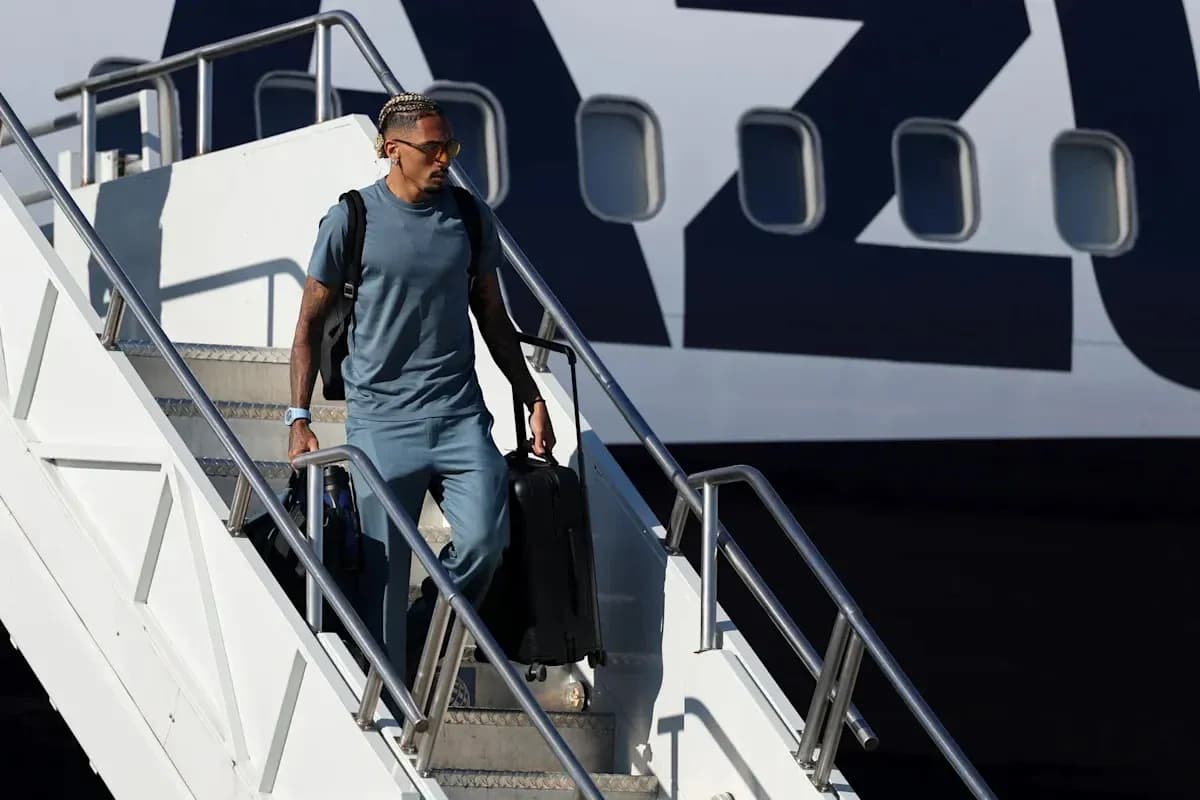
Raphinha's Determination for World Cup Glory: A New Beginning
After a season that never quite found its rhythm at Barcelona, Raphinha has drawn a line under the injuries, the interruptions, the stop-start form. The stage in front of him now is bigger, harsher and far less forgiving: leading Brazil into the 2026 FIFA World Cup.
He arrives at this point with bruises, but not doubts.
When he did play for Barça, the 29-year-old remained one of their sharpest attacking outlets, a winger who still bent games to his will with direct running and decisive final balls. The numbers on the team sheet might not tell the whole story of his year, but the trust from coaches and teammates has never really wavered.
Now all of that funnels into one objective: a sixth star on Brazil’s shirt.
Backing Vinicius – and himself
Inside the Seleção camp, the talk is not about scars from past tournaments. It’s about the weapons they have now. At the top of that list stands Vinicius Jr., the Real Madrid forward who has turned Champions League nights into his personal stage.
Raphinha sees in him the same thing the rest of the world does – only closer.
“Vini is young, but given his experience and achievements, he can decide a World Cup match and bring home the sixth title,” he said, framing his teammate not as a rising talent but as a fully formed match-winner.
Then came the line that said just as much about his own mindset as it did about Vinicius.
“I include myself in that group.”
That is not empty bravado. It’s a declaration from a player who knows he has not yet shown his full range in a Brazil shirt at a major tournament, yet still sees himself as someone who can tilt a knockout tie with a single action. For a country that expects its wingers to carry both flair and responsibility, it is exactly the sort of posture the dressing room demands.
Defence first, no margin for error
For all the talk of attacking talent, Raphinha’s view of what will actually win this World Cup for Brazil is blunt.
“We’ve arrived very well prepared. We have to work hard on our defence. If we defend well, our chances of winning are very high.”
This is not the romantic vision of Brazil as a cavalcade of dribbles and backheels. It is the reality of modern tournament football, where one lapse can detonate an entire campaign. Raphinha knows it, and he wants the younger players to feel it too.
He stressed the need for leadership, for the older heads to carry the group through the chaos of a month that can turn on a single misplaced pass. In his words, the World Cup is “short and treacherous”. There is “little time to get organised”. You don’t ease your way into form; you arrive ready or you go home early.
So the work now is about adaptation, about sharpening details, about cutting out the kind of mistakes that have haunted Brazil in recent editions. The margin for error is razor-thin. He sounds like a man who has replayed those margins in his head more than once.
Ancelotti’s trust, even across the divide
If there is a figure who embodies calm in the storm, it is Carlo Ancelotti. For Raphinha, the Italy-born Brazil manager has become a central reference point.
“Ancelotti is very happy with what I’ve been bringing to training and matches, but I know I can do much more and I’m still searching for my best form,” the winger admitted.
It is a revealing balance: the coach’s confidence on one side, the player’s self-critique on the other. Ancelotti sees enough in his sessions and his cameos to keep him firmly in the attacking rotation. Raphinha, meanwhile, measures himself against a higher bar, the version of his game that once terrorised full-backs in England and now flashes in bursts in Spain.
The relationship between the two did not start from scratch in the national-team camp. They knew each other from opposite trenches in La Liga, Barça against Real Madrid, Clásicos laced with pressure and noise.
“Even though we were rivals (in Spain), we had a good relationship,” Raphinha said.
That mutual respect now underpins something more important than domestic rivalries: a shared attempt to restore Brazil to the top of the world game. Ancelotti offers authority and tactical clarity; Raphinha offers verticality, intensity and a willingness to carry responsibility when the ball burns.
He enters this World Cup with a body that has been tested, a season that has frustrated, and a coach who still believes. If he can finally align fitness, form and that fierce inner conviction, Brazil’s push for a sixth title might just run through his left boot as much as Vinicius Jr.’s.