RB Leipzig's Rebuild: Success on the Pitch but Doubts Remain
The numbers say one thing. The mood in Leipzig says something very different.
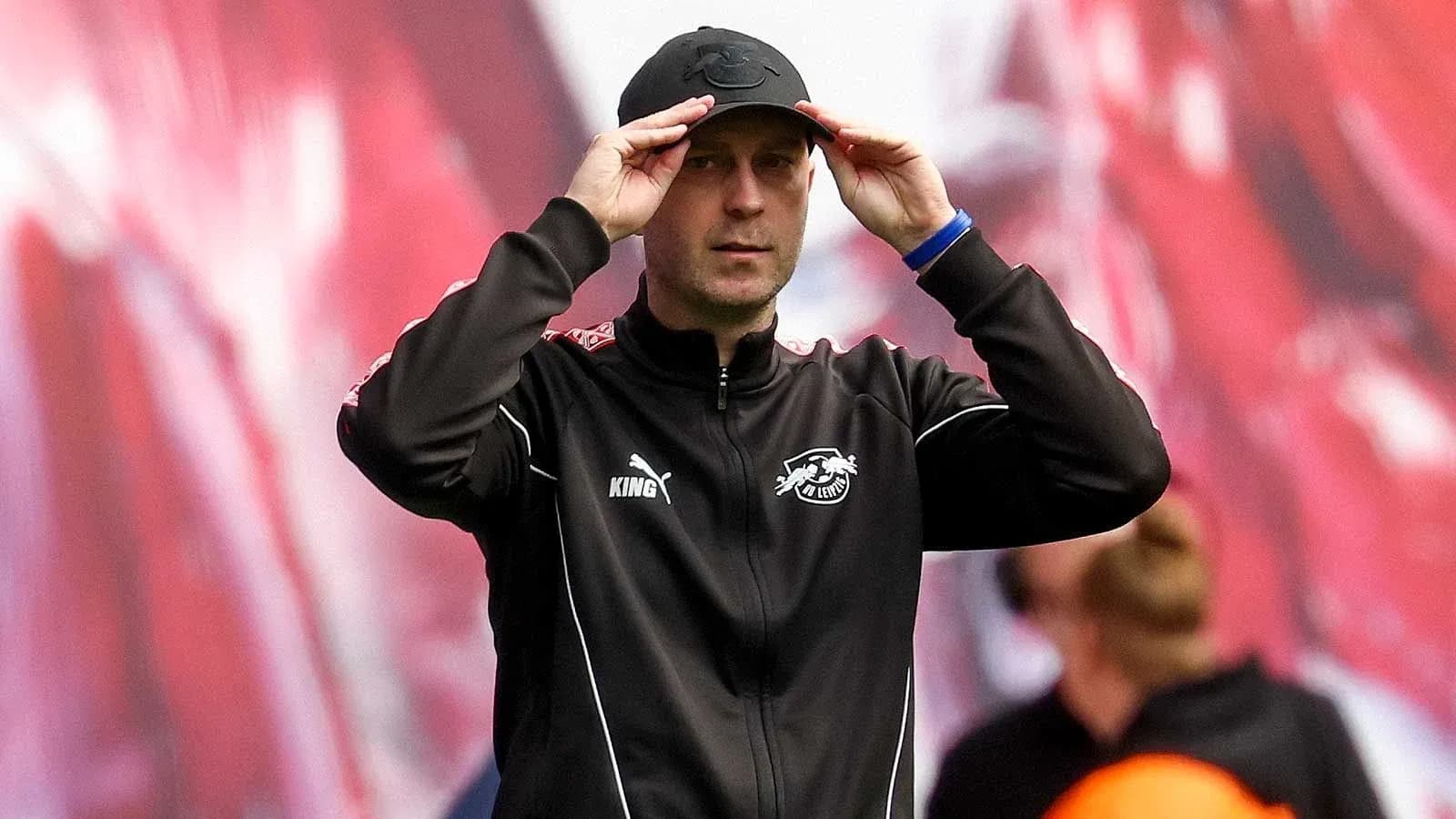
After the car crash that was RB Leipzig’s 2024/25 Bundesliga season, when the club crashed out of Europe altogether, Marco Werner walked into a dressing room stripped of its stars and its certainty. One year later, Leipzig have bounced back to within two points of their best-ever Bundesliga tally from 2016/17.
On paper, that’s a success story. Inside the “Global Team”, it feels more like a trial period.
A rebuild that worked – on the pitch
Werner’s record is blunt and impressive: 1.95 points per game over 38 matches. That’s title-chasing form in most seasons, and it came during a radical rebuild that would have broken weaker coaches.
Leipzig lost their three leading scorers from the previous campaign in one hit: Benjamin Sesko, Xavi Simons and Lois Openda. Yussuf Poulsen and Kevin Kampl, two of the dressing room’s most seasoned voices, also walked out of the door. The spine went, the hierarchy went, the safety net went.
Werner held the line.
He reshaped the side, leaned into what he had, and dragged performances out of players who had previously sat in the supporting cast. Christoph Baumgartner grew in influence. Nicolas Seiwald stepped up. Yan Diomande, the marquee signing, became the symbol of the new Leipzig, a player whose impact tilted games and narratives alike.
Inside the squad, Werner is said to have something every coach craves and not all keep: backing. Players respond to him, and several have clearly improved under his watch.
And yet, he looks over his shoulder.
Doubt in the boardroom
The scepticism around Werner is not whispered anymore; it is written down, broadcast and dissected. A Sky report distilled the mood in blunt terms: too much reliance on Diomande, too much randomness, not enough of a clearly convincing game plan. A bit of luck here, a bit of chance there – not the kind of foundation that reassures a restless hierarchy.
The tension had been simmering long before the final table gave Leipzig’s season a respectable sheen. By February, the discontent had already broken the surface.
The flashpoint came in the DFB-Pokal. A 0–2 quarter-final defeat to a dominant Bayern Munich side was, in isolation, no disgrace. The performance was described as “respectable” and “decent”. For many clubs, that might have been the end of it.
Oliver Mintzlaff chose a different angle.
The Red Bull CEO used the cup exit as a springboard to attack the Bundesliga form. Four points from games against Mainz, St. Pauli and Cologne was, in his eyes, a damning return for a squad that had been publicly granted the leeway of a transition season.
“In the league, that wasn’t anywhere near what we want. I hold the team accountable for that,” he said, and the temperature around Werner rose sharply.
Different targets, same pressure
All season long, RB Leipzig’s sporting leadership had preached realism. Massive overhaul. New core. New dynamics. The official line was clear: any European qualification would be enough.
Mintzlaff cut straight through that narrative.
“I want to be in the Champions League!” he declared, and he didn’t frame it as a dream. He called it “achievable” and laid out why: in his view, the problem wasn’t a lack of experience but a failure to deliver for the full 90 minutes, every Bundesliga match, every week.
That kind of statement doesn’t just set a bar. It paints a target on the coach’s back.
Not long after, Bild reported what many already suspected: the pressure on Werner was rising, the internal climate growing “increasingly frosty”. The numbers didn’t cool it. The turnaround in results didn’t thaw it.
Werner hit the stated goal with a rebuilt squad. Leipzig are back in Europe. The trajectory, from the outside, points upward.
Inside the club’s power structure, the question is no longer what he has done. It’s whether Oliver Mintzlaff and the Red Bull board believe he is the man to turn solid recovery into sustained Champions League football.
If Max Eberl’s successor in the sporting leadership around Rouven Schröder and Christopher Vivell cannot sell Werner’s work to the top floor, the coach who steadied Leipzig after their worst season could find himself fighting for his job at the very moment the project looks ready to accelerate.
The numbers back him. Will the people who matter do the same?