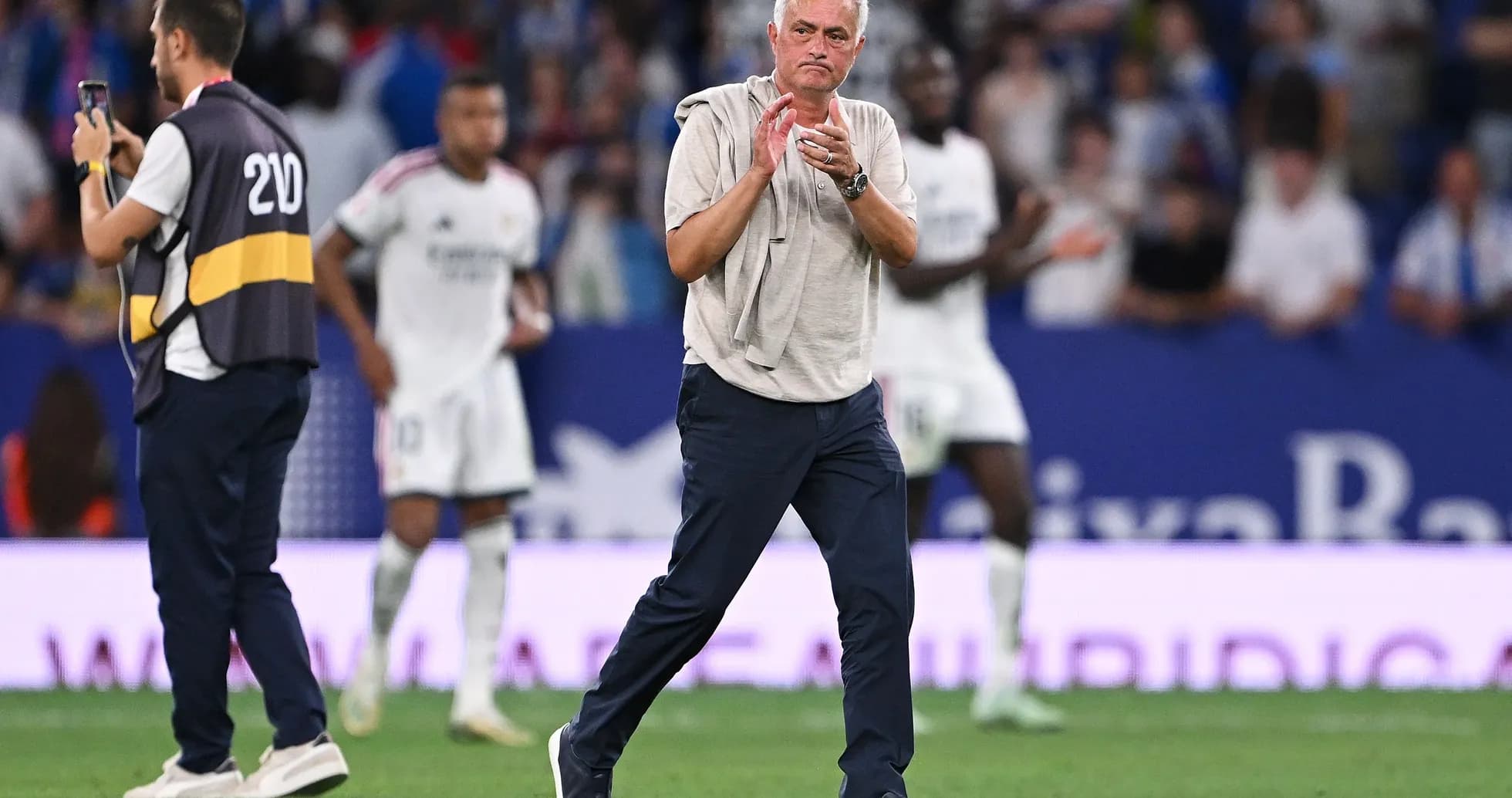
Real Madrid's Mourinho Era Begins with Late Drama Against Espanyol
Real Madrid opened the Mourinho era at full throttle. Within nine minutes they were ahead, and it looked ominous for Espanyol.
Arda Güler created it with a reminder of his quality. From the right, he bent in a wicked, teasing cross. Jude Bellingham timed his run, climbed above his marker and drove his header past Thibaut Courtois’ opposite number with authority. One chance, one goal, a classic early Real Madrid punch.
The goal brought noise, not calm.
Espanyol did not fold. They regrouped, pushed their lines higher and began to ask questions of a Madrid defence that still seems to be searching for its shape. Courtois, back in his familiar role as fireman-in-chief, had to intervene in the 26th minute, smothering a dangerous opportunity that exposed just how easily Espanyol could slice through when they found space.
The warning went unheeded. Minutes later, Alex Calatrava struck.
Espanyol’s equaliser did not come from nowhere. It grew out of sustained pressure and uncertainty at the back. Madrid’s defensive line stepped, then hesitated. No one cut out the danger early, no one read the decisive pass inside the box. Calatrava took full advantage and levelled the match, and for long spells after that the home side carried the sharper edge in attack.
On the balance of chances, Espanyol looked the livelier, more coherent unit through key stretches of the first half, even while the scoreboard said 1-1. Every Madrid turnover seemed to open up a yawning patch of grass in front of their defence, the kind of territory that punishes a team built around attacking talent but short of a true defensive anchor.
It was an old problem in a new season. A back line without a clear marshal. A midfield that can dazzle on the ball but leaves too much exposed when it loses it. For a coach like José Mourinho, who built his reputation on control and structure, this will not go unnoticed.
If he chooses to tighten the screws, this fragility will become the first big test of his second reign. Can he find the holding presence, the positional discipline, the early intervention that turns those half-chances against into dead ends?
For most of the second half, the match drifted towards a draw. Madrid probed but never truly imposed themselves. Espanyol, encouraged by their own threat, continued to find ways to unsettle the visitors without ever quite landing the decisive blow.
Then, right at the death, the game flipped.
From a scramble inside the Espanyol box in the 90th minute, substitute Espí reacted fastest. A loose ball, a moment of hesitation in the home defence, and he pounced. One clean, ruthless finish and Madrid were suddenly in front again, stealing all three points at the last possible moment.
It was a classic Madrid escape act, but not the kind that speaks of total control. The winning goal came not from a sweeping, choreographed move but from chaos, from Espanyol’s confusion and Madrid’s instinct to punish it. The bench delivered; the system did not.
For Mourinho, the numbers look perfect: three points, late drama, a match-winner from a substitute, the narrative of a victorious return. The performance told a different story.
The familiar issues that have stalked Madrid over the past two seasons reappeared: limited attacking variety once the early burst faded, long stretches without control of the tempo, and those recurring gaps that let opponents break into dangerous positions. Espanyol, no heavyweight, managed all of that in the opening chapter of the campaign.
One game cannot define a season, especially with a new coach bedding in and players still absorbing fresh demands. But patterns matter. If these same cracks open up against stronger rivals, what happened in Catalonia will stop looking like teething problems and start to feel like something ingrained.
For now, the table shows three points and a winning start under Mourinho. The questions, though, are already on the pitch. Is this just the messy beginning of a project that will harden and improve, or a warning that even with the Portuguese back in charge, the old flaws refuse to go away?