The Return of Europe's Great Absentees
For years, their names lived more in memory than in league tables. Now, across Europe, some of the continent’s most evocative clubs are forcing their way back into the top flight, dragging long, complicated histories with them. These are not just promotions. They are resurrections.
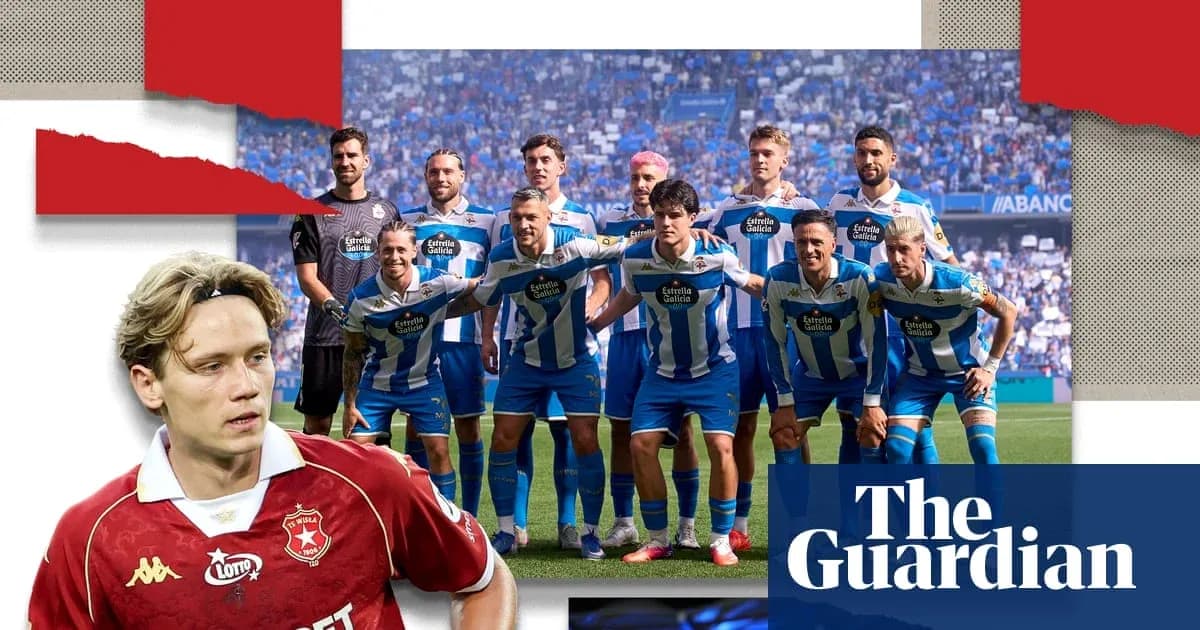
Deportivo La Coruña: Back From the Edge
Once upon a time, La Liga’s title race was not a closed conversation between Barcelona and Real Madrid. Deportivo La Coruña crashed that party.
Between 1993 and 2004, Dépor finished in the top three nine times, won the league in 1999 and stood one tie away from a Champions League final before running into José Mourinho’s Porto in 2004. For a decade, they were the team that refused to bow to Spain’s established order.
Then came the slide. First to mid-table. Then out of the top flight. Then the unthinkable: in 2020, Deportivo fell into the regional third tier, a club of European pedigree suddenly marooned among semi-professionals.
It has taken four hard years to drag themselves back to the Segunda. From there, the climb accelerated. A team that finished 15th in 2024-25 surged all the way to automatic promotion last season. No slow burn, no gentle reintroduction. Just a straight sprint back towards the light.
The Valerón and Diego Tristán era belongs to another footballing age, but the intent in Galicia is clear. Deportivo have moved for Mallorca goalkeeper Leo Román and rolled the dice on veteran striker Pierre-Emerick Aubameyang, a marquee name with goals on his CV and miles in his legs. The message is simple: survival is not going to be passive.
They will not be alone in trying to re-establish old reputations. Racing Santander, champions of the Segunda, return to La Liga after 15 years in exile. Málaga, who briefly sank into the third tier in 2023-24 after their own 2018 relegation, are back as well. Spain’s top division suddenly looks a little more like the one older fans remember – only the landscape, and the money, have changed.
Elversberg: The Village Club in the Land of Giants
Germany’s promotion races have become a study in contrasts: grand old names clawing at the walls of the Bundesliga while small-town clubs punch far above their weight. Last season was no different.
Schalke, a club built for the top flight, finally escaped a division they have inhabited for four of the last five campaigns, winning the 2. Bundesliga title. The story that cut through the noise, though, came from a far smaller stage.
Elversberg, runners-up, come from a town in Saarland whose population could fit inside the Veltins Arena four times over. Three years ago, in 2021-22, they were still in the regional leagues. Now they are staring down the barrel of Leverkusen and Bayern Munich.
The rise has been breathless. Horst Steffen, the coach who engineered their surge, departed for Werder Bremen last summer after Elversberg lost in the promotion playoff. His move looked like a logical next step. It lasted nine months.
Elversberg simply kept going without him. Vincent Wagner, hired from Hoffenheim’s second team, picked up the baton and finished the job, steering the club to automatic promotion and into a league where their name will sit alongside the giants of German football.
Off the pitch, the reality of their new world bites. The stadium will be expanded during the season to meet the 15,000-capacity threshold. On the pitch, there is no such gentle transition. Leverkusen and Bayern are the first two visitors. No time to settle. No room for awe.
Le Mans: From Financial Ruin to a New Project on the Circuit
Le Mans is known globally for speed, endurance and roaring engines. The football club, for a time, carried some of that energy.
A short spell in Ligue 1 during the 2010s hinted at something sustainable, but the project buckled. Financial collapse sent Le Mans tumbling down the ladder, their stadium – tucked inside the famous Circuit de la Sarthe – reduced to a backdrop for lower-league toil.
They clawed their way back to Ligue 2. That was the platform. The real shift came last August, when Brazilian consortium OutField took over and brought some heavyweight names into the ownership picture: Novak Djokovic, Thibaut Courtois, Felipe Massa, Kevin Magnussen. Tennis, football and Formula 1, all converging on a club rooted in motorsport country.
The temptation with that sort of star power is obvious: spend fast, talk big. Le Mans have chosen a different route. The club have reopened their academy and committed to a youth-focused rebuild, investing in potential instead of chasing instant glamour.
They have “moved through the gears” to get here. Now comes the hard part: staying in a league increasingly shaped by outside money. Paris FC have billionaire backing. Strasbourg sit under the BlueCo umbrella. City Football Group arrive with promoted Troyes, while another of their partner clubs, Lommel, step into Belgium’s top tier at the same time.
Le Mans are in a division that has become a laboratory for global investors. Their challenge is to prove they are more than just another experiment.
Amedspor: Promotion With Political Weight
Some promotions are sporting stories. Amedspor’s is political, cultural, and deeply fraught.
The club, officially Amed SK, come from Diyarbakir, a Kurdish-majority city in Turkey’s south-east, closer to Iraq and Syria than to Istanbul’s footballing axis. In recent years, Amedspor have become a symbol of Kurdish identity, a role that has brought both passion and peril.
They were once just another team drifting between Turkey’s third and fourth tiers. In 2014, they added “Amed” – the Kurdish name for Diyarbakir – to their identity. That single decision changed everything.
The new name drew a broader, more diverse fanbase, but it also attracted hostility. Amedspor supporters have faced abuse, intimidation and even physical attacks on the road. The Turkish FA’s response was drastic: a ban on Amedspor fans at away games that lasted until 2020.
Against that backdrop, their rise to the Super Lig is remarkable. This is not simply a club climbing divisions; it is a flashpoint entering the national spotlight. Questions around security, policing and the risk of violence will follow them into every away fixture.
There are, though, hints of a shifting tone. Recep Tayyip Erdogan, Turkey’s president, has long refused to acknowledge Diyarbakir by its Kurdish name. His public congratulations to Amedspor on promotion, shared widely on social media, surprised many. Whether that gesture signals a genuine thaw or a fleeting moment of pragmatism will become clear soon enough.
For now, Amedspor stand on the brink of a season that could redefine their place in Turkish football – and reopen old arguments far beyond the pitch.
Wisla Krakow: The White Star Rises Again
In Poland, the return of Wisla Krakow feels less like a promotion and more like a restoration.
Founded 120 years ago, Wisla are one of the country’s most decorated clubs, with 14 league titles and a long history as a permanent fixture in the top flight. That permanence vanished in 2022. The White Star fell out of the Ekstraklasa and spent four seasons in the wilderness.
They did not disappear. In 2024, while still a second-tier side, Wisla lifted their fifth Polish Cup, a reminder that their ceiling remains high when they get things right.
Behind the scenes, the club used their time away from the elite to modernise. Former player Jakub Blaszczykowski came on board as a minority investor, lending both money and credibility. Wisla leaned into analytics and their academy, trying to build a smarter, more sustainable model instead of chasing quick fixes.
Their return to the top division last month felt like a release. A 2-1 win over Katowice, red-and-white pyrotechnics fizzing around the stands, and a fanbase that had waited long enough to celebrate nights like this again.
The comeback reshapes Krakow’s football map. The “Holy War” derby with Cracovia, one of the most intense fixtures in Poland, is back on the calendar. It will not stand alone. Wieczysta Krakow have reached the Ekstraklasa via the playoffs, giving the city three top-flight clubs. Their own stadium does not meet league requirements, so they will ground-share with Wisla, a curious twist in a city where rivalry rarely softens.
For Wisla, the task now is clear. Staying up is not enough for a club of this size. The question is whether those years of introspection and recalibration can turn a return into a new era, rather than just a brief visit back where they feel they belong.