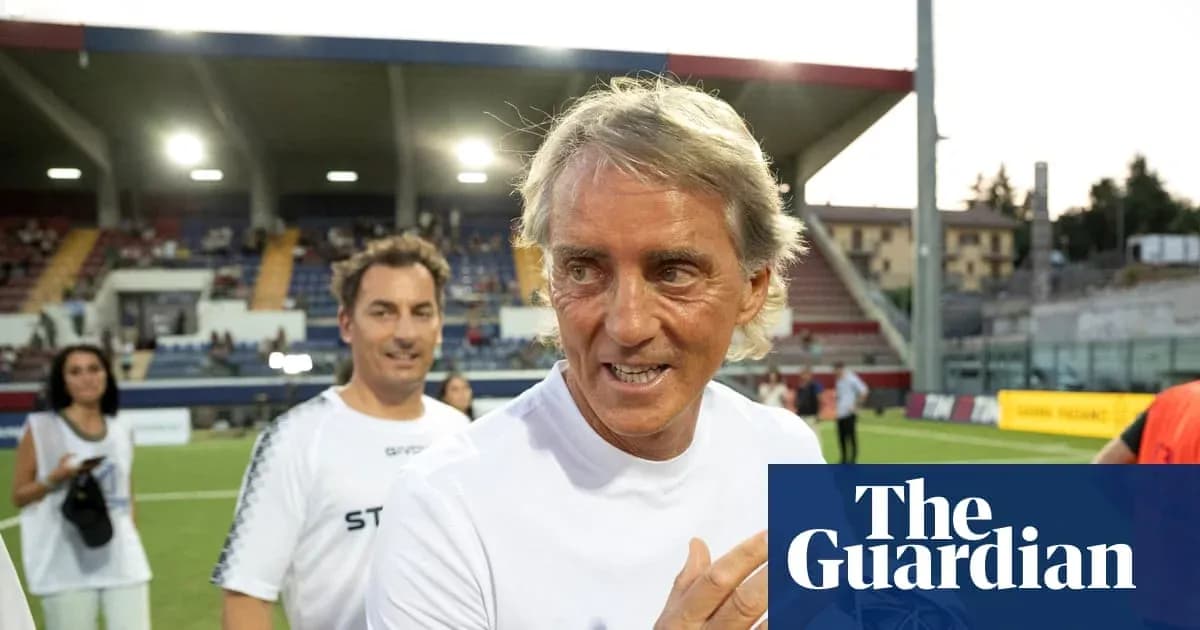
Roberto Mancini Returns as Italy Coach: A New Era for the Azzurri
Roberto Mancini is Italy coach again. The Italian Football Federation president, Giovanni Malagò, confirmed on Tuesday that the 59-year-old has agreed to return to the Azzurri bench, with Claudio Ranieri stepping in as technical director.
It is a dramatic reset at the top of Italian football, and it leans heavily on experience.
Mancini replaces Gennaro Gattuso, who walked away in April after Italy failed to reach a third consecutive World Cup. For a country that once measured itself by how far it went in June and July, simply missing the tournament once was a crisis. Three times in a row has become an open wound.
So the FIGC has gone back to the man who gave Italy its last great night.
From Wembley Glory to World Cup Pain
Mancini’s first spell in charge, from 2018 to 2023, delivered one of the most emotional triumphs in the nation’s modern football history. At Wembley in 2021, his Italy outlasted England in a penalty shootout to win the European Championship, a title built on bold selections, brave pressing and a rediscovered swagger in blue.
That summer felt like a rebirth. Then came the crash.
Italy failed to qualify for the 2022 World Cup, a failure that cut even deeper given the freshness of that Euro title. The momentum slipped again with a slow, stuttering start to Euro 2024 qualifying. The glow of Wembley dimmed under the harsh light of missed tournaments and misfiring campaigns.
Across his first tenure, Mancini oversaw 58 matches, reshaping a squad, blooding younger players and trying to drag the national team into a more modern style. Now he returns with that same body of work behind him, but a very different context in front of him.
“Mancini Is the Coach”
Malagò left no room for doubt when he spoke on Tuesday.
“Mancini is the coach,” he said. “I believed that the best person to become head coach was Roberto Mancini.”
The message is clear: Italy are not gambling on potential. They are doubling down on a coach who has already navigated the pressures of Coverciano and the unforgiving gaze of a football-obsessed nation.
Ranieri’s arrival as technical director adds another heavyweight to the structure. The veteran coach, whose club résumé stretches across Europe, brings the kind of institutional knowledge and calm authority that federations crave when the waters turn rough.
Turbulence Behind the Scenes
The decision comes at the end of a chaotic spell inside the FIGC. Former technical director Paolo Maldini and his adviser, Leonardo, resigned on Monday after the federation blocked Andrea Pirlo’s appointment as head coach.
Pirlo, a World Cup winner and one of the most gifted midfielders of his generation, saw his candidacy collapse over concerns about his ties to a Russian betting firm. The fallout was immediate and brutal: Maldini and Leonardo walked, leaving a power vacuum at the top of the technical structure.
The federation had already taken a swing at an even bigger name. Pep Guardiola was the first choice for the role but turned it down last month, forcing the FIGC to look elsewhere and, ultimately, back to a man they know.
A Return Framed by Expectation
Mancini does not arrive as a saviour. He arrives as a known quantity with a mixed ledger: a European crown on one side, a World Cup absence on the other.
His club career underlines why Italy keep coming back to him. He delivered Inter domestic success, guided Fiorentina through difficult waters, and, crucially, spent three years at Manchester City, where he ended a 44-year wait for a league title by winning the Premier League in 2011-12.
That title, sealed in stoppage time on the final day, showed his capacity to handle suffocating pressure and turn it into history. Italy now need that edge again.
This time, there will be no long honeymoon. No quiet rebuild. After three straight failures to reach the World Cup, every qualifying match will feel like a referendum on the direction of the national team.
Mancini has been here before. The question now is whether the man who once put Italy back on top of Europe can drag them, at last, back onto the World Cup stage.