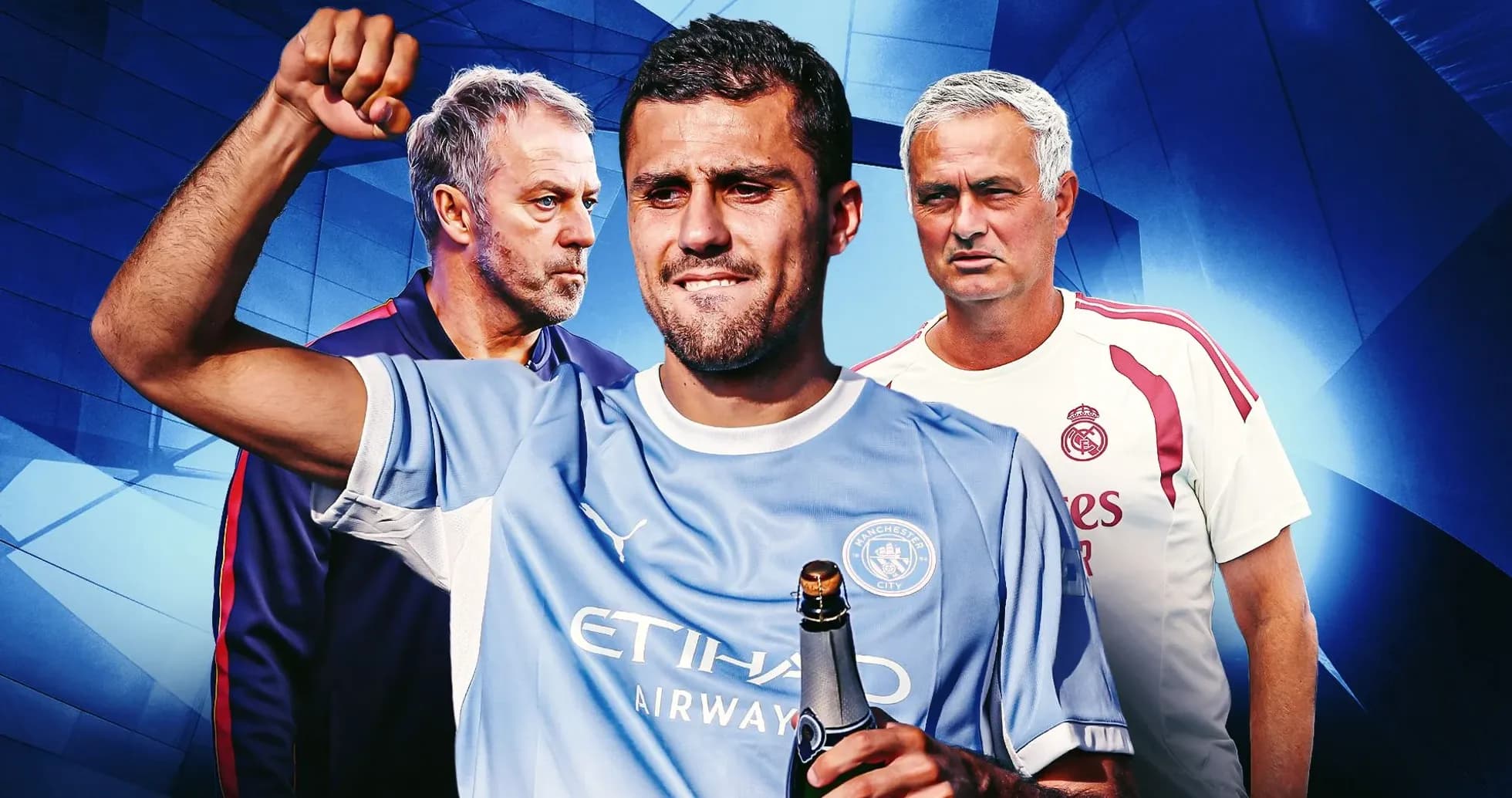
Rodri Chooses Barcelona: A Major Blow to Real Madrid
Every so often, the market opens a tiny window onto the impossible: the chance to sign the best defensive midfielder in the world, in his prime, at a cut price. This summer, that window has “Rodri” written all over it – and Real Madrid have just watched Barcelona climb through it.
Manchester City, boxed in by contract reality rather than sporting logic, are ready to let the 2024 Ballon d'Or winner go for as little as £60 million ($81m). For a player of his standing, that figure belongs to another era. Yet the clock is ruthless. Rodri has entered the final 12 months of his deal, and City know what happens to leverage when time starts to run out.
At 30, the Spaniard has started to look back towards home. Pep Guardiola’s departure has shaken the foundations at the Etihad. An era is over, the band is breaking up, and the sense of natural separation is impossible to ignore. John Stones, Bernardo Silva, and now Rodri all stand at the same crossroads. Stay for the rebuild, or leave at the height of your powers.
Rodri, with his body still strong and his mind as sharp as ever, knows he has two, maybe three elite years left if he manages those legs wisely. No one in his position reads the game better. No one controls a match’s temperature quite like he does.
For months, the road seemed to lead straight to the Bernabeu. Real Madrid had revived a long-standing interest after his imperious World Cup, where he anchored Spain’s triumph and walked away with the Golden Ball. It felt like the most obvious transfer in the world: the best midfielder of his type, going to the club that lives off collecting exactly that profile of player.
Then Barcelona walked into the room.
A twist that felt unlikely a week ago has become the defining story of the Spanish summer. While Madrid stumbled over numbers and negotiations, Barca moved. Quietly at first, then decisively. Talks with the player, then contact with City. In a saga that usually tilts towards the capital, the momentum swung the other way.
The Catalans’ interest isn’t just opportunistic. Frenkie de Jong’s serious knee injury – a torn medial collateral ligament suffered on World Cup duty, with a lay-off of around four months and the spectre of possible surgery – has ripped a hole in their midfield plans. When a player like Rodri suddenly becomes available in that context, you don’t ask twice.
It didn’t take long for the picture to sharpen. Rodri, presented with both paths, chose Camp Nou. The project suits him. Hansi Flick’s possession-heavy, ball-playing demands feel like a natural extension of what he has done for years under Guardiola. The dressing room is already packed with familiar faces from the Spain setup. And stylistically, he is as close as modern football gets to Sergio Busquets – the blueprint for the Barcelona pivot.
The preference quickly moved from whispers to confirmation. His agent, Pablo Barquero, spelled it out on Cadena SER: “Out of respect for Madrid, as they have been class, Rodri informed them that his decision is to join Barca.” No ambiguity, no half-measures. Madrid were told. Barca were chosen.
Spain’s media ecosystem did the rest. Within hours, the story splintered into competing versions of the truth. One line claimed Real Madrid had an agreement with City, only to try to shave down the fee at the last moment, stalling everything. Another suggested Rodri simply grew tired of waiting for Madrid to act decisively and pivoted to Barcelona, with reports that Los Blancos never wanted to go above £34m ($46m).
Then came the more incendiary theories. That Rodri never truly wanted Madrid, and merely used their interest to draw out Barca. That he had identical proposals from both clubs and still turned to Catalonia. And, most provocatively of all, that City and Barca might be working in tandem, dangling Rodri as bait to force Real into a higher bid.
While the noise raged, one thing became clear: inside Madrid, the mood turned sour. Reports in Spain claim Jose Mourinho has been left furious – not just at losing the player, but at losing him from a position of apparent control. The story of a telephone tirade aimed at chief scout Juni Calafat, and of Calafat telling his coach he must now make do with his current midfield options, paints a picture of a club suddenly on the back foot.
Strip away the spin, and the sporting damage is obvious. Madrid now look on as arguably the best midfielder on the planet heads to their greatest rivals for what still feels like a bargain, even if Barca’s first bid was knocked back. This, in a rivalry where every inch matters, is not a small detail. It is a wound.
The irony cuts deep. Rodri had never hidden his admiration for a return to Spain, or for Madrid specifically. During the March international break, he openly admitted: “Would I like to play in Spain again, in La Liga, in Madrid? I would like to return, yes, obviously.” Asked directly about Real, he added: “You can't turn down one of the world's best clubs.” Yet somehow, that club has contrived to miss their moment.
The consequences could echo across the season. Rodri is the kind of signing who shifts title races. At Madrid, he would have been a clear upgrade on Aurelien Tchouameni and Eduardo Camavinga in the holding role – both outstanding talents, but neither yet capable of dictating entire campaigns from the base of midfield the way the City man does. He would have been the conductor of a new era at the Bernabeu.
Instead, he is poised to become the cornerstone of Barcelona’s next phase.
Picture it: Rodri dropping between centre-backs, drawing pressure, then sliding passes through lines to Pedri, Gavi, or a fully fit De Jong later in the season. The same calm authority that won titles in Manchester now anchoring a side chasing a third straight La Liga crown and desperate to end a 12-year wait for the Champions League. This is not just a big signing. It is a seismic one.
On the pitch, he brings control, security, and the ability to tilt entire games in Barca’s favour. Off it, his decision lands like a slap across Madrid’s face. This is a club that almost never loses out in the transfer market, especially not to Barcelona, especially not for a player of this magnitude and value. To be outmanoeuvred, and so publicly, only months after surrendering the league title with a limp Clasico defeat in May, strikes at the ego as much as the squad list.
Real Madrid will tell themselves there are other targets, other windows, other chances. They usually find a way. But this one will linger. When Rodri steps out at Camp Nou in Barca colours, dictating another domestic season and perhaps something more in Europe, the question will hang over the Bernabeu:
How did they let this one get away – and what might it cost them when the trophies are handed out?