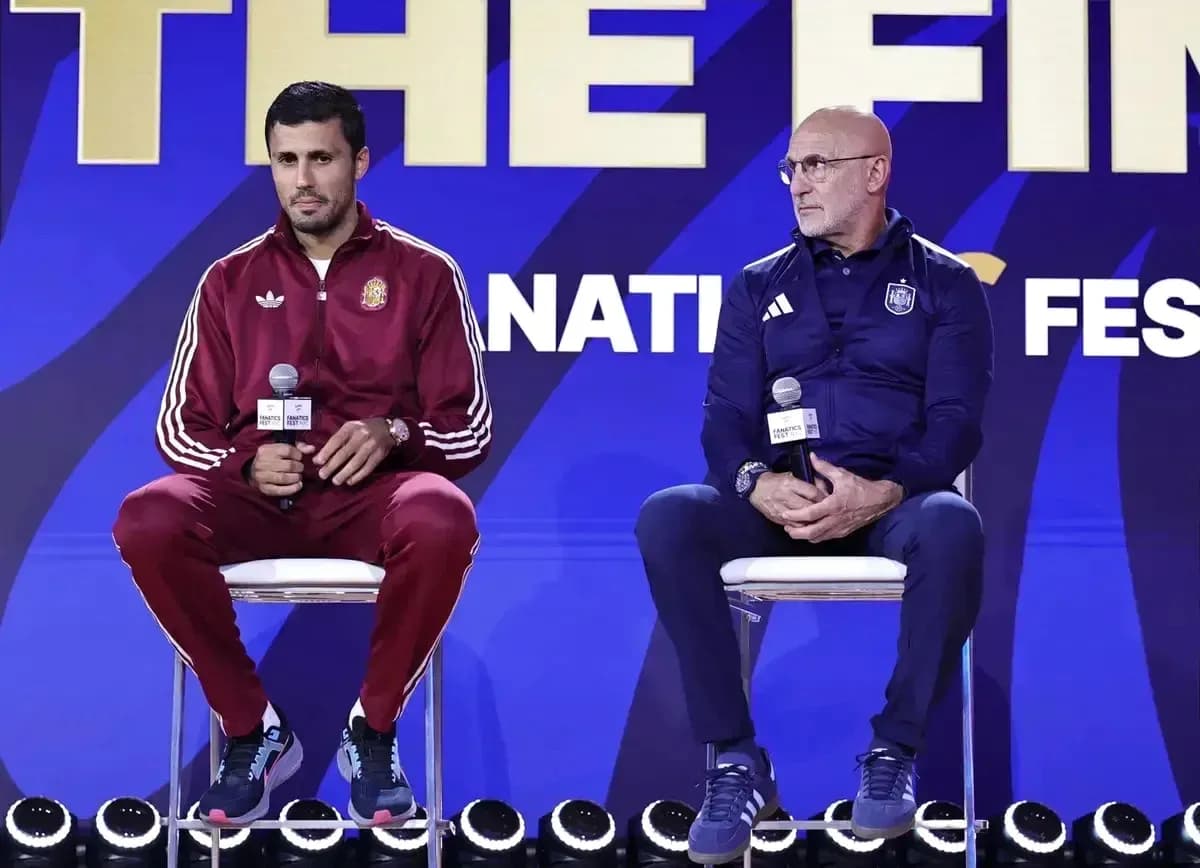
Rodri's Dominance: Luis de la Fuente's Defense of the Midfielder
Luis de la Fuente didn’t so much defend Rodri as draw a line in the sand.
For Spain’s World Cup-winning coach, the idea that anyone could doubt the Manchester City midfielder bordered on heresy. In the afterglow of Spain’s triumph in North America, De la Fuente made his feelings brutally clear: questioning Rodri, he said, was “an insult to one’s footballing intelligence.”
By the time he spoke, the evidence was overwhelming.
From fitness doubts to total dominance
Rodri arrived at the 2026 FIFA World Cup under a cloud. His recent injury problems, the strain of a long club season and the weight of being the 2024 Ballon d’Or winner all fed a narrative that Spain might be better served by a more explosive, more “dynamic” option in midfield. Some wondered whether his place in the squad – let alone the starting XI – was guaranteed.
Those doubts did not survive the group stage.
Across seven matches, Rodri became the metronome and the anchor of a Spain side that strangled games on its own terms. He completed the tournament with a staggering 93.4% passing accuracy, dictating tempo, resetting attacks and quietly extinguishing danger before it grew. La Roja conceded just one goal all tournament and finished by beating Argentina in the final, a run built on control, calm and the certainty that their No. 6 would always be in the right place.
The pressure eventually told on everyone but him.
Golden Ball for the quiet conductor
When the dust settled, Rodri walked away with the Golden Ball as the World Cup’s best player. It was not a sentimental award. It was a recognition of dominance.
This latest honour slots into an already glittering personal record: Ballon d’Or winner in 2024, Champions League champion with Manchester City, and now the standout performer at the biggest tournament of all. With each passing year, his case as one of the finest midfielders the game has seen grows harder to argue against.
De la Fuente had been making that case all along. Throughout the tournament he repeatedly used his press conferences to push back against domestic criticism, insisting that anyone failing to see Rodri’s value was missing the essence of modern midfield play. After lifting the trophy, he returned to the theme one last time.
“With all due respect – and without wishing to offend anyone – I said that doubting Rodri was, quite obviously, an insult to one’s footballing intelligence,” he told Spanish TVE, as relayed by ESPN.
Then came the verdict that will echo well beyond Spain.
“He is the best player in the world in his position, bearing in mind that we have Martín Zubimendi behind him, who is also one of the greats, surely the second best in the world. Rodri brings clarity, vision, balance. Rodri is an inspiration for us.”
Clarity. Vision. Balance. For De la Fuente, these are not abstract qualities. They are the pillars on which Spain’s World Cup was built.
The Etihad tension behind a perfect summer
While Rodri was running the tournament from midfield, another story was quietly building behind the scenes.
His performances on the global stage have only sharpened the focus on his club future. Real Madrid are understood to have reached a personal agreement with the player, with the saga now hinging on whether they can match Manchester City’s valuation. The two clubs remain apart on price, and that gap is currently the main obstacle to what has become one of the defining transfer battles of the summer.
City know exactly what they are defending. De la Fuente’s words serve as a pointed reminder of it: this is not just a top-class midfielder, but a player widely acclaimed as the best in the world in his role, fresh from being the standout performer at the sport’s most demanding tournament.
For any club that manages to sign him, the calculation is simple. You are not just adding a piece. You are building around a fulcrum.
For Manchester City, the calculation is harsher. Lose Rodri now, and they are not simply replacing a position. They are trying to replace the player Spain’s World Cup-winning coach calls the very definition of footballing intelligence.