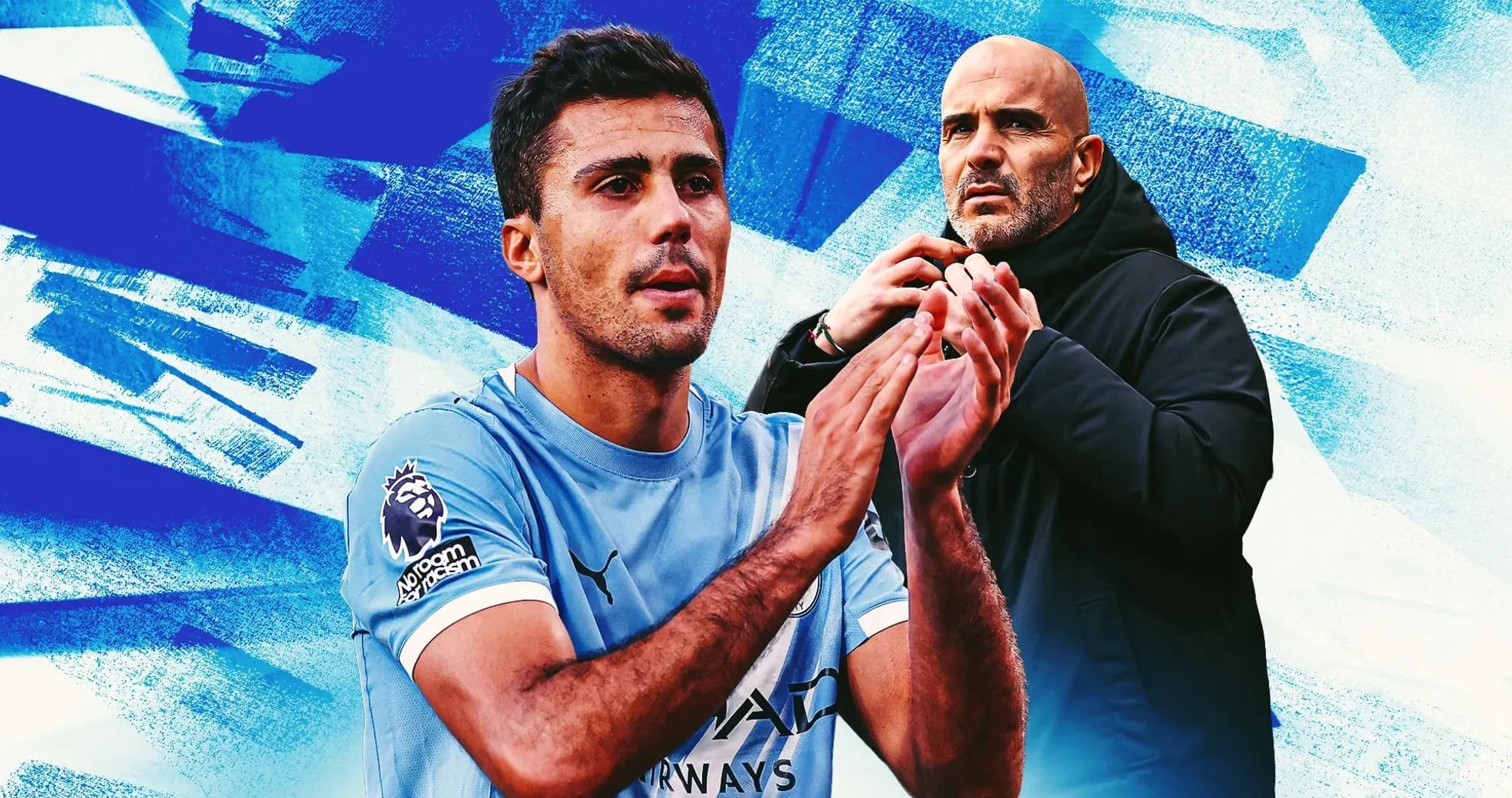
Rodri's Impact on Manchester City: A Midfield Crisis
Rodri’s body gave way before his crown ever did.
The anterior cruciate ligament went in September 2024, a month before he walked onto the Paris stage to collect the Ballon d'Or. Since then, a stream of minor injuries has kept him stuck in a stop-start rhythm, a metronome forever being unplugged just as the music begins.
For Manchester City, the cost has been brutal. Before that rupture, Rodri had missed only seven games in his entire City career. With him, they had ruled the Premier League. Without his steady presence, they have not lifted the title since the 2023-24 season. At the Etihad, they can point to many reasons for that shift, but his sporadic absence sits near the top of the list.
Pep Guardiola saw this coming, or at least believed in the recovery. Back in October last year, as Rodri worked his way back, Guardiola said: “In the World Cup, he will be the best Rodri, and next season he will be the best Rodri.”
He was right about the first part.
World champion, irreplaceable anchor
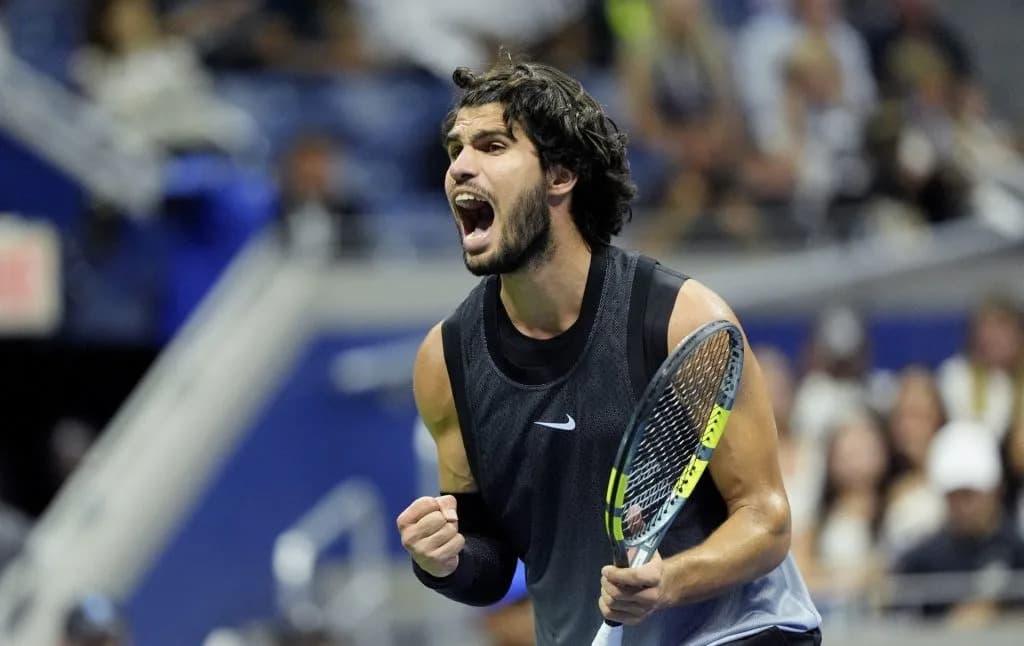
In North America this summer, Rodri ran Spain’s World Cup from the base of midfield. He dictated tempo for Luis de la Fuente’s side, snuffing out attacks, recycling possession, and quietly bending games to his will. The performances were a reminder, as if anyone needed one, that he is the kind of player clubs spend years trying and usually failing to replace.
For City, that thought is no longer theoretical. Guardiola’s glittering era has ended. Rodri has only a year left on his contract. If he decides the time has come to move on, and if Real Madrid turn admiration into action, City may never truly see “the best Rodri” in sky blue again.
Enzo Maresca, Guardiola’s former assistant and now the man charged with following him, knows exactly what is at stake. He understands why there is noise around his midfield general, even if he tries to treat it as background hum.
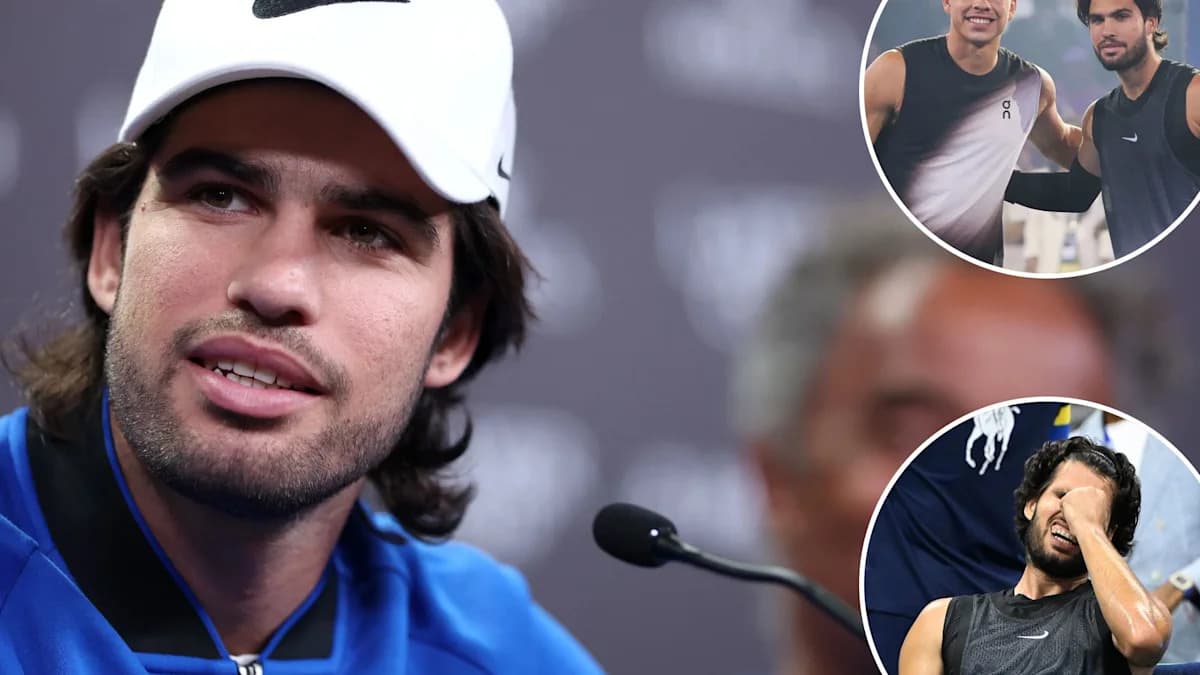
“First of all I have to say, that around big players there are always speculations so I am not worried about that,” Maresca said at his first press conference since taking over at the City Football Academy. “I think it is normal, also because they won the World Cup, because he is one of the best players.
“I think every manager wants to have Rodri because he is a top player. But now, surgery on Monday [on his back]. He needs a holiday, he needs to rest and recover and then he will be back with us.”
That final line is the one City supporters cling to. Back with us. Yet the reality is harsher: Rodri has been, and remains, the reference point for how City play. In Maresca’s fluid structure he would drift between roles, dropping into the back line, stepping into midfield, launching attacks from deep, all while carrying the authority of a World Cup-winning captain.
Take him out of that picture, and the whole canvas changes.
A thin midfield and a looming void
Look beyond Rodri and the £116 million signing Elliot Anderson, and Maresca’s midfield options suddenly look far less like a City engine room and more like a puzzle with missing pieces.
Nico Gonzalez was supposed to be the insurance policy. Signed partly to cover Rodri’s ACL layoff, the Spaniard has instead become a symbol of City’s misfires in the 2025 January window. He barely registered under Guardiola, spending most of the second half of last season on the bench. Now, there is talk he could be moved on.
Tijjani Reijnders told a different story at first. The Dutchman arrived from AC Milan for £46m and started brightly, only for his influence to fade as the season wore on. By the turn of the year he, too, was reduced to a bit-part role. The hope inside the club is that a year of English football hardens him, that he can step up next season. Hope, though, is not a plan.
Then there are the others: Mateo Kovacic, Rico Lewis, Kalvin Phillips. All three have reportedly been deemed surplus to requirements. Strip them out, remove Rodri from the equation as well, and City’s midfield goes from slightly thin to alarmingly bare. The transfer window would turn into a scramble.
Anderson the heir – ready or not
Amid that uncertainty, Anderson stands out as both a solution and a risk.
He arrives from Nottingham Forest with a reputation that grew at astonishing speed. Under Thomas Tuchel with England and at club level, the 23-year-old developed into one of the most complete midfielders in the league: a combative, deep-lying playmaker who seems to relish the dirty work as much as the creative flourish.
The numbers back it up. Last season in the Premier League, Anderson won possession more than any other player (306 times). He won the most duels (297). He still managed to top Forest’s chance-creation charts ahead of Morgan Gibbs-White, fashioning 54 opportunities, nine of them classified as big chances. At the 2026 World Cup, he finished with the joint-most tackles (18), sharing that distinction with Rodri himself.
Those are not the stats of a luxury signing. They are the profile of a player built for the No.6 role at a dominant club.
Anderson would surely have relished the chance to sit alongside Rodri, to learn from him and ease into that responsibility. Instead, if Madrid get their way, he may find the role of City’s new midfield lynchpin landing squarely on his shoulders from day one.
He looks capable. Whether he is ready to replace a Ballon d’Or-winning metronome is another matter.
Bouaddi, youth, and a changing dressing room
City may not leave him alone in there. The club have long tracked Ayyoub Bouaddi, the 18-year-old who burst onto the global stage as Morocco’s breakout star at the World Cup. The original plan was simple: sign him, then loan him straight back to Lille.
Rodri’s situation could rip that script up. Reports suggest City might accelerate Bouaddi’s integration if their Spanish anchor moves on. Throwing an 18-year-old into a reshaped midfield in a post-Guardiola landscape would be bold, but this is the scale of the rebuild facing Maresca.
And the upheaval is not limited to the pitch.
Bernardo Silva, captain last season and one of the club’s most reliable big-game performers, has gone to Madrid. John Stones, another serial winner and a leader in the dressing room, has joined Inter at the end of his contract. Add Guardiola’s emotional farewell to that exodus and you have a club undergoing a seismic shift in identity.
Keeping Rodri would not solve every problem. It would, however, give Maresca a pillar to build around, a continuity piece in a squad suddenly short on voices who have lived through title runs and Champions League nights.
Maresca’s gamble on time
The comparison is obvious, and City’s hierarchy know it. They have watched Manchester United and Arsenal stagger through the years after Sir Alex Ferguson and Arsène Wenger stepped aside. The fear is not that Maresca fails to copy Guardiola. The fear is that the club drifts, that the structure frays under the weight of too much change at once.
Maresca’s own record offers no guarantees. His spell at Chelsea was mixed, flashes of clear ideas punctured by inconsistency. This, at City, is the biggest challenge of his career by some distance.
He is not pretending otherwise.
“I want to say it is a privilege because the reason why the club decided to go for me, that is a privilege,” he said when asked about following Guardiola. “I have said many times, I consider Pep the best coach in the world in the last 20-25 years. It is a challenge.
“Also the history of the manager with many years in the same club, they struggle a bit. Sir Alex, Arsene. But it is also a challenge to do the right things.”
For Maresca, the key word is time.
“I know the organisation quite well and the people inside the club from years ago. I just said before that when a club has three [sic] managers in almost 20 years, it shows how serious [they are]. The structure understands to give time for everything.
The organisation is the main thing. This club and organisation has had three [sic] managers in 17 years. That is not normal and has not happened often. I am confident that we can continue to do a great job and continue to do the job that has been done in the last 14, 15 years since Roberto Mancini was here.”
Time, though, feels very different when your best midfielder is being courted by Real Madrid and your squad leaders are walking out of the door.
Next season at the Etihad will be rough, no matter how calmly Maresca speaks. The tactical tweaks, the new voices, the younger faces – all of it will take some absorbing. In that storm, one player could steady everything.
City know it. Their new manager knows it. As the club steps into life after Guardiola, the most important decision of all might not be Maresca’s tactics or Anderson’s adaptation, but whether Rodri chooses to anchor one more era or leave them to rebuild without the man who made their football make sense.