Rodri's Transfer: Barcelona's Coup Over Real Madrid
Florentino Pérez stepped up to the podium a little over two months ago and lit the fuse. A "very big offer" was coming, he promised. A player of the calibre of Cristiano Ronaldo or Kaká. Real Madrid, he implied, would again shake the market.
The bang never came.
Michael Olise did not arrive from Bayern Munich. The confirmed bid for Atlético Madrid striker Julián Álvarez went nowhere. The headline figure of "at least €150 million" still sits unused on the balance sheet. Instead, Real poured €125m into Yan Diomande from RB Leipzig – another forward in a squad already stacked with firepower.
The pattern is impossible to miss: Olise, Álvarez, Diomande. All attackers. All glitter. None of them the one profile Madrid have been crying out for since the legendary midfield of Toni Kroos, Luka Modric and Casemiro broke apart – a world-class holding midfielder to anchor the chaos.
They had one in their hands. Or so they thought.
Rodri says no – and points to Barcelona
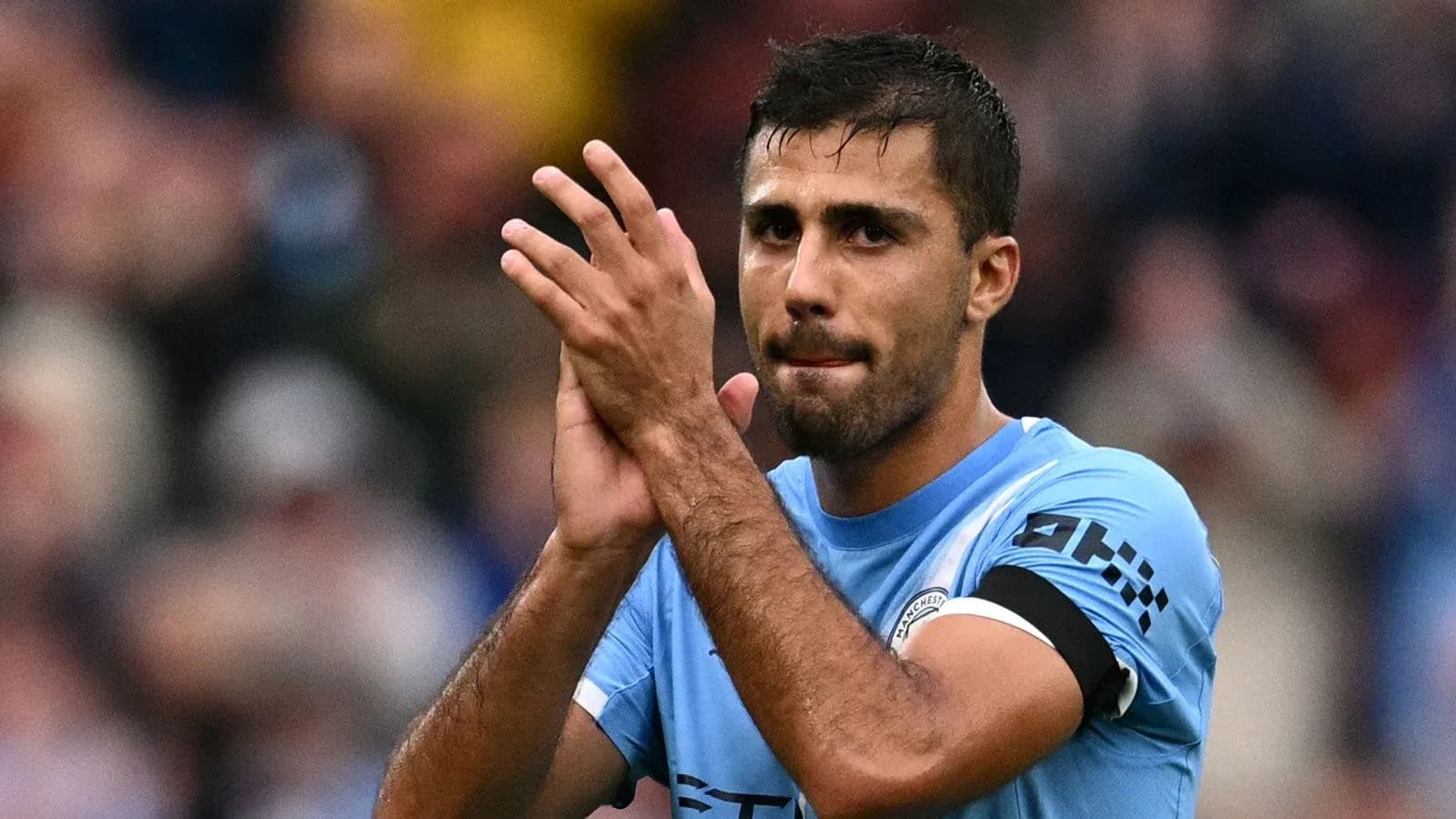
Rodri looked like the solution wrapped in white. Madrid-born, tactically flawless, the best player at the last World Cup and the heartbeat of Manchester City’s dominance. He had even opened the door himself in the spring, making it clear his Atlético past would not block a move across the city. Others had crossed that divide, he noted. So could he.
Inside Valdebebas, the belief grew: this was the signing that would close the gap, that would turn a trophyless season into an anomaly as José Mourinho starts his second revolution at the Bernabéu.
Then came the twist. Rodri turned them down.
His agent, Pablo Barquero, has now made it clear: Real’s offer was rejected. All signs now point to Barcelona, not Madrid, as the next destination for the World Cup-winning pivot.
For Real, it stings. This is not just losing out on a player. This is losing out on *that* player, at *that* position, to *that* rival.
Barca land the piece Madrid have been missing
On the pitch, the contrast is brutal.
Real again head towards a season without a true organiser behind their attacking line of Kylian Mbappé, Vinícius Júnior and now Diomande. Again, the responsibility to shield the defence and steer the build-up looks set to fall on Aurélien Tchouameni and Fede Valverde. Both outstanding players. Neither a natural conductor in the Rodri mould. The past two years have made that painfully clear.
Barcelona, by comparison, are about to land a coup.
Hansi Flick, whose side have already humiliated Real twice in a row in the league, is finally close to getting the high-end replacement he has needed for the perpetually injured Frenkie de Jong. Rodri will walk into a dressing room loaded with familiar faces, many of the same Spanish core with whom he just became world champion.
Tactically, it fits. Symbolically, it cuts.
The move adds another jagged edge to a rivalry that has not cooled for decades. If anything, the last few years have dragged it back towards the volcanic levels of the early 2000s, when Luis Figo’s move from Barcelona to Madrid turned every Clásico into a political event.
This time, the arrow points the other way.
A feud that never sleeps
The Rodri saga drops into a landscape already poisoned.
The Negreira scandal still hangs over Spanish football, a slow-burning crisis that exploded in early 2023 and shredded confidence in refereeing neutrality. Real Madrid joined the criminal case against Barcelona as a private prosecutor, a move that ensured every debatable whistle in a Clásico would be replayed not just in slow motion, but through the prism of suspicion.
From there, the mud started to fly.
Barça president Joan Laporta hit back, branding Madrid the "club of the regime", historically favoured by referees and still enjoying that advantage today. The accusation detonated what little institutional peace remained between the two giants.
Once, Pérez and Laporta could sit at the same table and sketch out the Super League. That fragile alliance is gone. The traditional pre-Clásico presidents’ lunch? Abandoned. The place of honour in the Bernabéu VIP box for Barça’s hierarchy? Withheld on several occasions.
Now Rodri, the player whose Ballon d’Or triumph over Vinícius Júnior in 2024 prompted Real to boycott the gala in protest, is heading to Catalonia. The same Rodri who became a symbol of grievance in Madrid two years ago is about to become the emblem of Barcelona’s midfield.
No wonder it feels like a slap.
The Alvarez gambit and another twist in the knife
The bitterness has been building in smaller episodes too.
Take the Álvarez affair. After Pérez’s public promise of a record transfer, Real issued a statement confirming a €150m offer to Atlético for the Argentine striker – and confirming that Atlético had rejected it. Barcelona, long seriously interested in Álvarez, suddenly looked like the ones left out in the cold.
By making the offer public, Real did more than show their financial muscle. They likely nudged Álvarez’s price higher for any future bidder. Right now, the 26-year-old remains under contract at Atlético, but the message was clear: Madrid can shape the market, even when they don’t get the player.
Now the roles have flipped. With Rodri, Barcelona are the ones landing the blow. Madrid are the ones watching.
And this one cuts deeper than any forward ever could. A defensive midfielder of Rodri’s stature is not just another signing. He is a system, a safety net, a platform. For Barça, he could be the piece that stabilises a team already capable of ripping Madrid apart. For Real, he is the missing link that once again will not be there when the season starts.
What now for Mourinho’s Madrid?
So Real Madrid stand at a crossroads.
They have Mbappé, Vinícius and Diomande to terrify any back line. They have glamour, speed, goals. What they do not have is the man to knit it all together from the base of midfield, to control tempo when the game starts to spin, to protect a defence that will inevitably be exposed by such an attacking tilt.
The transfer window is still open. There is time to react, time to throw money at another solution, time to spring a surprise. But the market for elite holding midfielders is thin, and everyone now knows Madrid are desperate.
Barcelona, meanwhile, are about to unveil the player Madrid once dreamed of building around. Rodri will walk into the Camp Nou as a champion, a symbol of a project that, for now, looks more coherent in the middle of the pitch.
The rivalry has rarely felt more toxic, more personal, more entangled in every decision off the field as well as on it. The next Clásico will not just be Mbappé versus Lamine Yamal, or Vinícius against Ronald Araújo. It will be Rodri, in blaugrana, dictating the rhythm that Madrid so badly wanted for themselves.
The eternal feud has its latest chapter. How Real Madrid choose to answer it – on the pitch and in the market – will define Mourinho’s new era before a ball has even truly settled.