Ronaldinho's Return to Ravenna: A Dream Come True
On a blazing afternoon in Ravenna, the heat shimmers off the cobbles in a city that usually sells itself with mosaics and Dante, not stepovers and no-look passes. Yet in the historic centre, the conversation has shifted from Byzantine gold to Brazilian flair. People are looking for one man.
Ronaldinho.
The same Ronaldinho who danced through a World Cup, who shared a half-time stage with Madonna and Ronaldo in a World Cup final show, who once bent the game to his will with a grin and a flick of his right boot. Now, at 46, he is being spoken about not as a guest of honour, not as an ambassador, but as a player for Ravenna, a club that only just climbed out of Serie D.
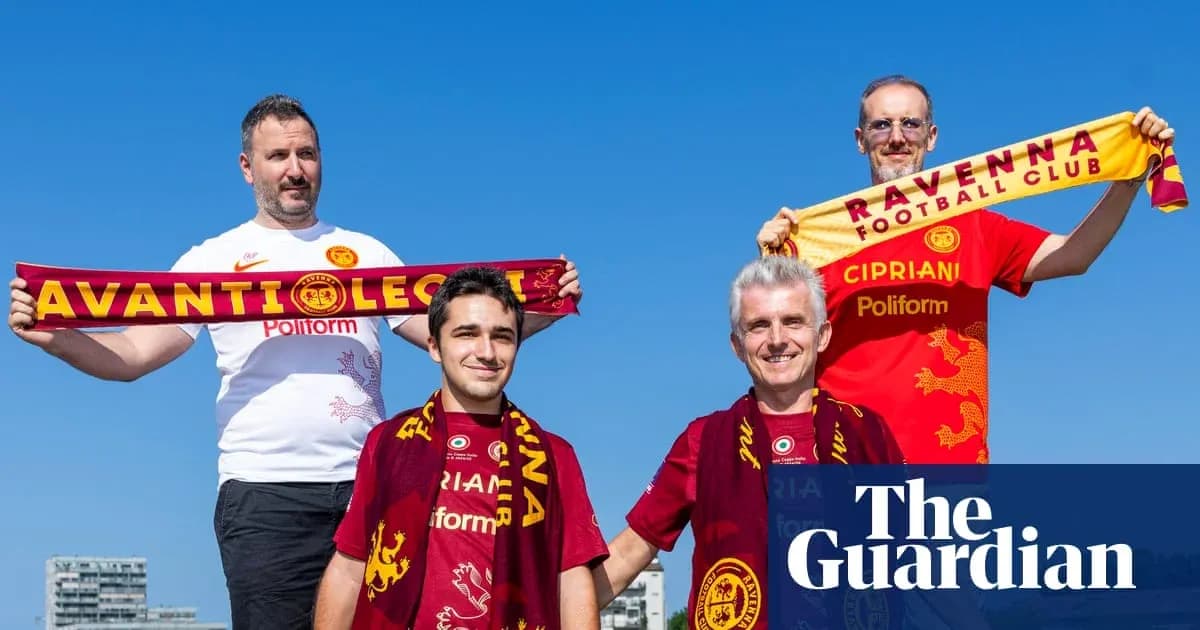
At a cafe table, four Ravenna supporters leaf through La Gazzetta dello Sport and smirk.
“We haven’t seen him yet,” they say, dryly, their scepticism obvious. To them, this looks like a commercial masterstroke rather than a sporting revolution. Yet behind the irony sits a stubborn, almost childlike hope: the dream of watching the 2005 Ballon d’Or winner and 2002 world champion pull on their yellow and red shirt, even if only for a handful of minutes.
That tension – between disbelief and possibility – sums up the whirlwind that has swept through this quiet corner of Emilia-Romagna.
Cipriani’s grand design
At the centre of the storm is Ignazio Cipriani, heir to the Venetian hospitality empire behind Harry’s Bar and grandson of Raul Gardini, the chemicals magnate and sailor who took Il Moro di Venezia to the 1992 America’s Cup final. A Ravenna native with a global Rolodex, he bought the club in 2024 when it was marooned in Serie D, the fourth tier of Italian football.
In his first season as president, Ravenna won the Serie D Cup and clinched promotion to Serie C. For most clubs, that would be a long-term project in itself. For Cipriani, it was merely the opening act.
“It’s not a provocation. Serie A is the goal I declared from day one because I intend to reach it,” he says. The ambition does not stop there. “And the Champions League remains the ultimate horizon we want to walk towards, step by step. I made this statement because I like working with my back against the wall: when you have no way out, you are forced to find solutions instead of excuses. I prefer to remove every alibi from the beginning.”
Those words set the tone. No hiding place, no half-measures. Then came the move that made the rest of Italy spit out its morning coffee.
Ronaldinho. Back in professional football. In Ravenna.
From dream to dressing room
The first reaction across social media and news tickers was disbelief. It looked like a prank, a summer hoax dressed up as a press release. Yet Cipriani insists the idea has been simmering since he first walked through the club’s doors.
“We met through Lorenzo Tonetti and Ariedo Braida,” he explains, naming two long-serving AC Milan figures who worked with Ronaldinho during his San Siro years. “The idea of involving him was a dream I cultivated as soon as I bought the club. Thanks to Lorenzo and Ariedo, we met, started talking, and a genuine friendship grew. From that relationship came many ideas for the club’s growth. And to the question everyone is asking, I am happy to answer: Ronaldinho will wear the Ravenna shirt as a player, and he will try – maybe scoring the last goal of his career with us!”
The marketing machine reacted instantly. A dedicated website launched a special-edition shirt stamped with Ronaldinho’s “R10” logo, his global personal brand. It sold out in hours. Small-town football collided head-on with big-time merchandising, and Ravenna – a club more used to regional derbies than global drops – suddenly found itself in the middle of a perfectly executed publicity coup.
Fabio, a lifelong fan, still laughs at the absurdity of it all.
“If someone had told me three years ago that Ronaldinho was coming to Ravenna, I would have sent them straight to the psychiatric ward,” he says. “The night the news broke, international headlines everywhere read ‘Ronaldinho to Ravenna’. It was an extraordinary operation.”
A modest club, a giant name
To grasp the scale of this, you have to understand Ravenna’s place in Italian football. This is not a sleeping giant. It is a club scarred by bankruptcies in 2001 and 2012, a yo-yo outfit that has drifted around the lower leagues for decades. Seven seasons in Serie B represent the peak of its history. The city has long been a volleyball stronghold; football here has usually meant modest budgets, local rivalries and an acceptance of life in the shadows.
Now, one of the sport’s most recognisable icons is about to share a dressing room with players who, not long ago, were slogging through Serie D.
“Ronaldinho is a unique icon,” says Cipriani. “His way of playing made my generation fall in love with the game. We want him today to make the next generation of fans, in Italy and around the world, fall in love with Ravenna. It’s not just a visibility stunt; it’s about building a bridge between different eras of football and growing a truly global fanbase around it.”
That bridge will need concrete and steel as well as nostalgia and stardust. The club is working with the municipality to renovate the Stadio Bruno Benelli, pushing capacity beyond its current 6,300. Cipriani’s vision stretches further: a new multi-purpose venue, open seven days a week, with retail spaces, concert facilities and an integrated Hotel Cipriani, dovetailing with Ravenna’s push to attract more international tourists.
This is not just about 90 minutes on a Sunday. It is a city project, wrapped in a football shirt.
City hall joins the show
Mayor Alessandro Barattoni sees Ronaldinho’s arrival as a gift to a broader strategy. Ravenna has been steadily repositioning itself, looking beyond its beaches and ports, re-engaging with the Anglo-Saxon world. A recent visit from the British royal family and the opening of the Lord Byron Museum signalled that shift.
“Ronaldinho brings a whole new level of global fame,” Barattoni says. “When the news broke, my phone exploded with messages from former schoolmates. For younger kids today, he might be someone to discover on YouTube, but the fascination remains intact.”
He even jokes that, diary permitting, he would happily play tour guide, leading Ronaldinho through the city’s UNESCO-listed treasures.
Yet the mayor is clear about the boundaries.
“Our common ground with the club is internationalisation: bringing Ravenna’s image to the world. Ronaldinho has been a global ambassador for countless brands. There is an overarching project that can bring great visibility to the team and allow the city to showcase its initiatives beyond standard routes.”
Then he points to something that predates the Brazilian’s name on the press release.
“Even before Ronaldinho’s arrival, the club did a fantastic job engaging younger generations. The average age in the stands is lower, more vibrant, and more engaged than ever before. A genuine sense of community is forming.”
Tradition, tickets and tension
Not everyone is ready to surrender to the glamour. In the Curva Mero, the ultras watch these developments with a wary eye. They have seen what “modern football” can mean elsewhere: rising ticket prices, sanitised atmospheres, supporters priced out of their own history.
“There is a certain reluctance among some factions,” Fabio concedes. “Modern football pushes values that many don’t share: rising ticket prices, losing accessibility for lower-income families. As a result, visibility and marketing stunts risk being viewed sideways.”
Cipriani does not duck the issue.
“Without roots, no global project makes sense,” he says. “Ravenna is not a brand we are building from scratch; it’s a history and an identity that existed before us. Tradition isn’t a brake on ambition: it’s the foundation. A club without its people is worth nothing.”
Giovanni, another fan who has been climbing the same terraces since his school days, feels the conflict but chooses hope.
“I’m 50 years old and I’ve been coming to the stadium since my school days,” he says. “I’m rediscovering the enthusiasm of the past. If it takes an icon like Ronaldinho and a local entrepreneur to make us dream of Serie A, then so be it. The important thing is never to forget the people in the stands.”
The numbers show how delicate that balance will be. Riding the “Ronaldinho Effect”, the club has launched its season-ticket campaign with a target of 2,800. Prices have gone up by an average of around 12%, with differences between sections. Demand is surging, but so are expectations.
Waiting for R10
For now, Ravenna lives in a state of giddy anticipation. On the pitch, the club is quietly assembling a squad designed not just to survive in Serie C but to push for the top. Off it, the city has circled one date in red: 20 August.
That is when Ronaldinho is expected to appear at a three-day summer festival in nearby Marina di Ravenna, staged in unmistakable Cipriani style. It will be the first real glimpse of how this improbable marriage between a global superstar and a provincial club looks in the flesh.
Until then, the cafes will keep serving coffee, the locals will keep squinting at every passing SUV, and the question will hang in the hot air over the Stadio Bruno Benelli.
How far can a city built on mosaics and memory really go with a smile, a number 10 shirt, and a president who refuses to accept excuses?