Sabalenka Advances Past Muchova as Andreeva Dominates Svitolina
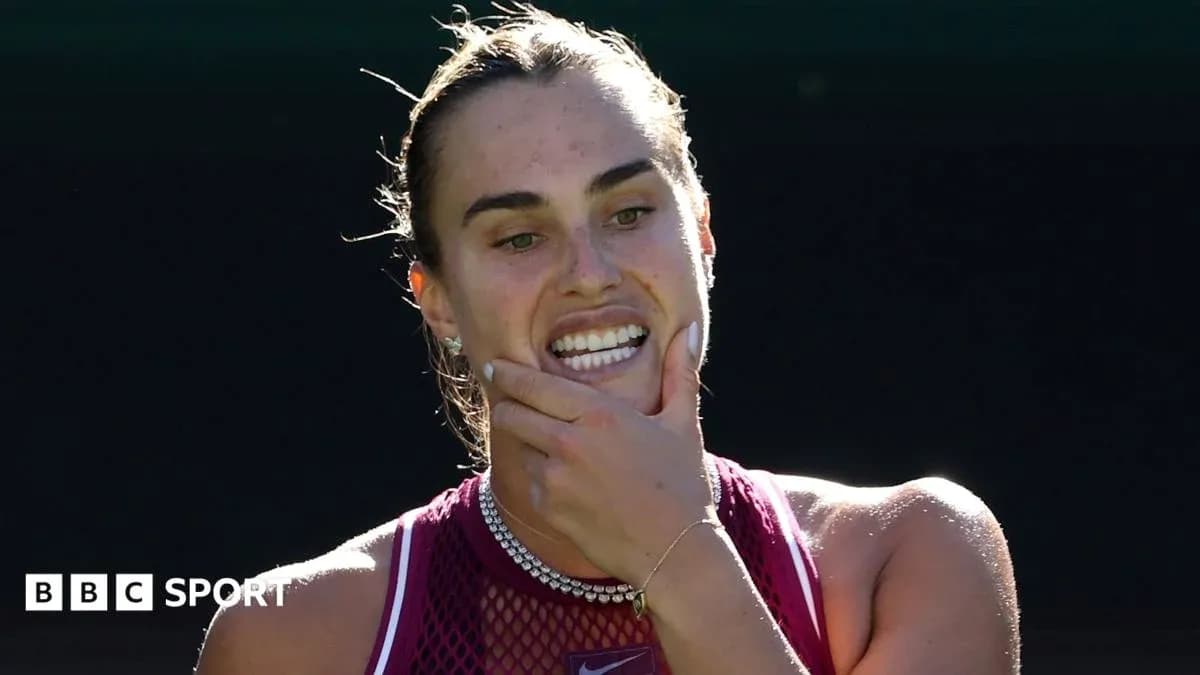
Aryna Sabalenka walked into the WTA Finals as the de facto favourite and looked anything but comfortable. She left the court with a straight-sets win, a roar of relief, and a reminder that her tennis this season has rarely followed a smooth script.
The world number two opened her campaign with a gritty 7-6 (7-2) 7-5 victory over Karolina Muchova, a match that was more about stubborn will than clean execution. The serve misfired, the temper simmered, the rhythm came and went. Yet Sabalenka, in her sixth appearance at the season-ending event and still chasing a first title there, found a way.
With world number one Elena Rybakina withdrawing on the eve of the tournament, the draw had cleared for the Belarusian on the same courts where she lifted the Indian Wells trophy in March. On paper, this was the ideal launchpad. On court, it was a scrap.
Muchova, the Wimbledon runner-up and the only player in the field holding a winning record against Sabalenka, immediately probed the second seed’s nerves. The Czech drew the first break of the match, using her variety to disrupt Sabalenka’s timing and drag her into uncomfortable patterns.
The response was instant. Sabalenka broke straight back, the first glimpse of a pattern that would run through both sets: Muchova would edge ahead, Sabalenka would slam the door.
The opening set turned into a tug of war. Muchova earned the right to serve for it, only to falter. Errors began to creep in at the worst possible moment, short balls and misfires that invited Sabalenka to step in and swing freely. The tie-break underlined the shift. Sabalenka, suddenly precise off the forehand wing, raced away 7-2, punishing every short reply.
Her serve, though, never fully settled. Seven double faults told the story of a day when the ball toss looked like a moving target. She offset the damage with a solid first-serve percentage — 59% — and ruthless efficiency when it did land, winning 33 of 44 points behind it. When she found the first ball, she controlled the rally. When she didn’t, the match descended into a scrap of angles and improvisation.
“It was a bit tricky with the sun and with the shade,” she told Sky Sports afterwards. “Sometimes I had to adjust my toss, sometimes I had to serve blind, but it's all part of the game.”
It sounded like a shrug, but on court it had looked like a battle with herself as much as with Muchova.
The second set veered into chaos. Five breaks of serve, momentum swinging almost point to point. Sabalenka again fell behind, again broke back, again barked at her box, then channeled that edge into heavier, deeper blows off the forehand. Muchova, usually so composed, offered up just enough loose shots to keep Sabalenka interested.
Serving for the match the first time, Sabalenka blinked. The racket speed stayed high; the decision-making didn’t. Muchova broke back, only to surrender her own serve once more. On the second attempt, Sabalenka locked in, driving through her groundstrokes and finally closing the door.
It was not pretty. It did not need to be. For a player whose season has felt oddly disjointed by her own lofty standards, this was about survival.
Sabalenka, who has not lifted a Grand Slam singles trophy this year after losing the Australian Open and US Open finals to Rybakina, has not won a title since Miami in March. A flat Asian swing — just one win from three matches — prompted a reset before the Finals. The rust showed. So did the resolve.
Andreeva announces herself again
If Sabalenka’s win was about wrestling control, Mirra Andreeva’s was about seizing it and never letting go.
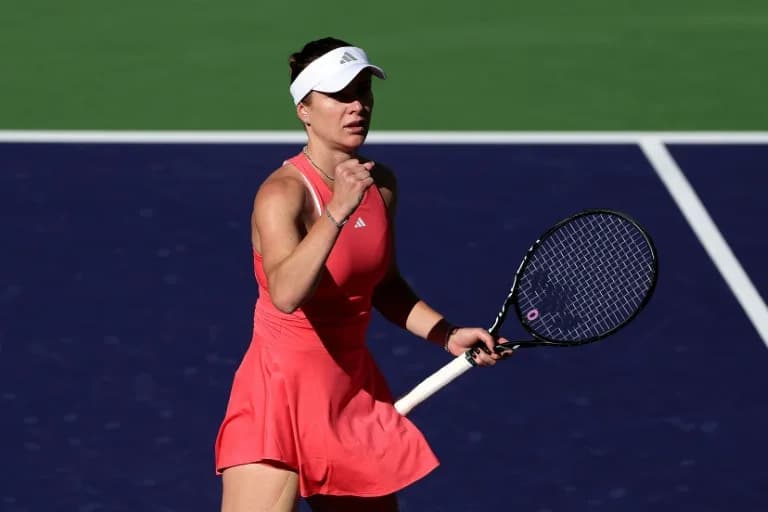
The French Open champion dismantled Elina Svitolina 6-4 6-0 later on Monday, a performance that crackled with authority. Once the teenager found her range, the match turned into a one-way march.
At 4-4 in the first set, the contest still felt balanced. Then Andreeva tightened the screws. She broke, held, and never looked back. From 5-4, she reeled off seven games in a row, her backhand dictating rallies and pinning Svitolina into deeper and deeper corners.
Svitolina, usually so reliable under pressure, sprayed errors and struggled to convert any of the chances she did carve out. Andreeva saved all six break points she faced — four of them in a tense final game — and did it with calm shot selection rather than desperation. Over 77 minutes, she struck nine winners to 12 unforced errors, numbers that reflected clarity rather than caution.
This is the same Andreeva who beat Sabalenka in the 2025 Indian Wells final, and her display here only sharpened the sense that the teenager is no longer just a rising name but a genuine threat in any draw.
British interest: Norrie and Samuel advance
Away from the Finals, Cameron Norrie banked a much-needed win in Stockholm. The Briton beat Australia’s James Duckworth 7-5 6-0 to reach the second round of the Stockholm Open, shaking off a tight opening set before racing through the second.
Norrie now faces top seed Taylor Fritz, a timely test as he tunes up for this month’s Davis Cup Finals. For a player who thrives on rhythm and repetition, the manner of the 6-0 second set will feel as important as the result.
At the same event, fellow Briton Toby Samuel produced a composed 6-3 6-2 victory over Leo Borg, son of 11-time Grand Slam singles champion Bjorn. The name on the other side of the net carried history; Samuel treated it like any other assignment and handled it with assurance.
In one day, Sabalenka scraped, Andreeva soared, and the British contingent quietly moved forward. The Finals have only just begun, but the tone is already set: nothing will be handed over, not even to the favourites.