Scottish Football's Summer of Discontent and New Season Hopes
Only the most hopeless optimists can look at Scottish football right now and see a game ready to spring from its summer of discontent. The new season should bring a crackle of anticipation. Instead, it drags behind it the heavy shadow of what came before.
The Scottish Football Association has slipped back into its familiar silence. No detailed review, no public blueprint, no sense of urgency after a wretched World Cup that ended with Steve Clarke walking away. Mike Mulraney, the president, has vanished from view since being spotted in the background at Trump Tower, lurking behind Gianni Infantino and the US president. Ian Maxwell, the chief executive, surfaced only briefly to condemn “hysterical commentary” about Scotland’s World Cup showing, days after Clarke’s resignation.
These are the same executives who all but laughed off the idea that tying Clarke to a four-year contract before the squad flew to the United States might be a reckless gamble. The contract is now a monument to misjudgment. The anger has not cooled.
Maybe Mulraney and Maxwell are buried in the search for Clarke’s successor, trying to find a coach brave enough to oversee the painful transition a visibly ageing squad demands. They should be given the room to get that appointment right. But their silence on the broader health of the national game only feeds the sense of drift. The World Cup merely exposed a problem many inside the club game would rather ignore.
That fury around the national team bleeds directly into the Premiership’s return. The league is back, but the mood is sour. This season has all the ingredients to turn nasty.
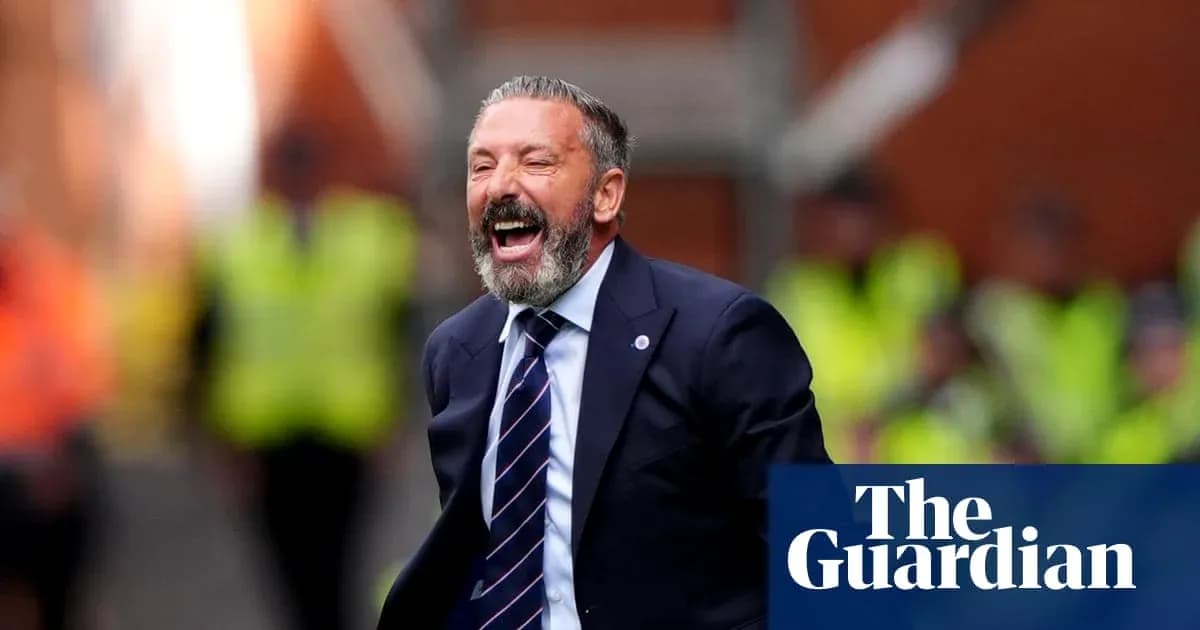
At Celtic, resentment towards the board still simmers. Supporters see a hierarchy too comfortable, too removed from the realities in the stands. Across the city, Rangers have handed the job to Derek McInnes, a manager whose arrival has not exactly sent the blue half of Glasgow into rapture and is deeply unwelcome to many on the green side.
The grievances do not stop there. Hearts followers are still raw after the way the 2025-26 campaign ended, when a first title in 66 years slipped away in agonising fashion. The most galling chapter came on 11 June, when the Scottish Professional Football League finally published the disciplinary verdict on the pitch invasion that curtailed Celtic’s title-clinching game against Hearts.
The sanctions read like a bad joke. Nestled among light-touch punishments for Hamilton Academical, Inverness and Stenhousemuir sat a modest fine for Celtic and a suspended, token reduction in ticket allocation. Rangers fans, never shy of a conspiracy, had been relatively quiet until McInnes picked up a touchline ban for comments about a refereeing decision. The club has already taken aim at parts of an independent report into the mayhem that followed their Scottish Cup defeat to Celtic in March.
The discontent stretches further. Motherwell are in talks with lawyers after being fined by the Scottish FA over a social media video. Hibernian’s support erupted online after a 2-0 defeat in Kosovo in the first leg of European qualifying – a result that would once have stunned Scottish football but now barely raises an eyebrow. This is the new normal.
Yet not every story is bleak. Some clubs can look at the summer and allow themselves a smile.
Celtic’s signing of Kasper Høgh for a club-record fee was a statement, and not just on the balance sheet. It was the kind of financial muscle their support has long wanted to see flexed. The 25-year-old arrives from the cosseted, relentlessly successful world of Bodø/Glimt, a background that invites scepticism about how he will cope away from that environment. Without those doubts, and at a fee that many English Championship clubs would scarcely notice, he would surely have moved earlier in his career.
Yet Høgh’s physical profile and direct, uncomplicated style look built for Scottish pitches and Scottish winters. He should fit. The question is what comes next.
Celtic face a familiar dilemma: how to cash in on prime assets such as Arne Engels and Alistair Johnston if irresistible offers land, without turning the club into a trading house that celebrates net profit more loudly than silverware. Høgh’s arrival has been embraced. It will not be enough on its own.
Across the city, Rangers have burned through staggering amounts of money while watching Celtic, Hearts and others take turns at hoisting trophies. The stands are restless, the club’s reputation has taken hits, and the new American ownership has so far shown little appetite to confront that anger head-on.
McInnes, though, feels like a different kind of appointment. Rangers open the league season away to Dundee United on Friday night with a manager who understands the club’s psyche as well as anyone they have hired in recent years. His first meaningful move in the market, the capture of Vanja Dragojevic from Partizan Belgrade, looks astute business in midfield. Rangers still lack the attacking spark to truly frighten opponents, but McInnes has immediately set about hardening the spine.
This is the job he has always coveted. Nobody will accuse him of lacking drive or stamina. On structure alone, this Rangers side should be tougher, more coherent, more competitive. Yet when it comes to knowing how to last the pace and clear the final hurdle, Celtic still hold the edge. They remain favourites for a reason.
In Edinburgh, Hearts are still trying to make sense of how close they came to history. Minutes from a first title in more than six decades, only to watch it vanish. The fallout was always going to linger.
McInnes’s exit for Rangers ripped out a familiar voice from the dressing room. In his place stands Wouter Vrancken, with a completely new style and a fanbase whose expectations have shot through the roof. Hearts’ tilt at the championship arrived ahead of schedule and dragged the club into conversations far beyond Scotland’s borders. Then came a sobering Champions League qualifying defeat to Sturm Graz, a reminder of the work Vrancken faces. Hearts need calm heads now. Patience would be wise.
Motherwell offer a different kind of template. Under Jens Berthel Askou, and in the months that followed, they showed that clubs outside the traditional elite do not have to cling on for dear life. They can be ambitious. The football was bold, crowds grew, and scouts took notice. The big-money sales of Elijah Just and Elliot Watt vindicated a model that dares to think creatively rather than simply survive.
St Mirren want to follow a similar path, with a clearer route for young players and a more attractive style. Kilmarnock hinted at something brighter under Neil McCann at the end of last season. Aberdeen, under Stephen Robinson, look primed to be far more robust this time around. The Premiership has also shed another of its synthetic eyesores: only one artificial pitch remains in the top flight. For players and purists alike, that alone is worth celebrating.
The obsession endures. In Scotland, football still dominates conversation, mood, and weekends. But the game itself feels fragile, a patient with deep-rooted problems that can no longer be masked by habit or loyalty.
A new season has arrived. The question is not whether people will turn up. They always do. The question is whether anyone in power is finally ready to try something different.