Senegal's Legal Battle for AFCON Title: A Moral Crusade
The African champions are not giving up their throne without a fight.
Senegal’s football authorities have launched a fierce legal offensive against the Confederation of African Football (CAF) after being stripped of their Africa Cup of Nations title, vowing to take the battle all the way to the Court of Arbitration for Sport (CAS) — and, if needed, into the very heart of how football is governed.
From Rabat to the courtroom
This is no routine disciplinary spat. Lawyers involved in the case warn it could reshape the sport’s legal landscape and strike at one of football’s sacred pillars: that the referee’s decision on the pitch is final.
At the centre of the storm is the AFCON final in Rabat on January 18. Senegal walked off in protest after the referee awarded Morocco a potentially decisive penalty. The Senegalese players eventually returned, pushed the game into extra time and scored, winning 1-0.
CAF’s appeal board later ruled that Senegal had forfeited the final because of that walk-off, effectively overturning the result and stripping the country of its title. That ruling has ignited fury in Dakar and beyond.
“This decision cannot even be considered a true sporting justice ruling — it is so crude, so absurd, so irrational,” said Juan de Dios Crespo Perez, one of the lawyers representing the Senegalese Football Federation (FSF), at a press conference.
He did not stop there. “It openly violates the Laws of the Game and the principle that refereeing decisions are final. (If CAS would rule against Senegal), the winners of the next World Cup could be decided in law firms rather than on the pitch.”
The message was clear: this is about far more than one trophy.
‘Administrative robbery’ and a call to arms
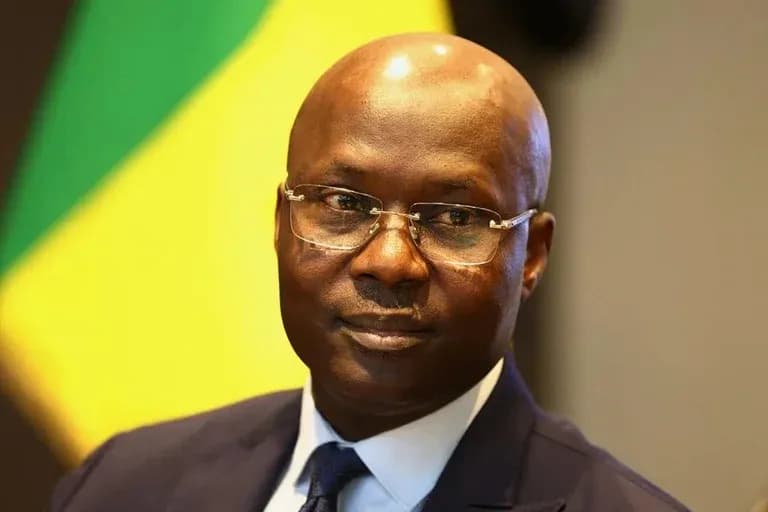
FSF president Abdoulaye Fall matched that legal fire with political and emotional force.
“In the face of this administrative robbery, the FSF refuses fatality. We will fight a moral and legal crusade,” he declared, framing the dispute as a battle for justice rather than a technical appeal.
The federation has already moved. On Wednesday, it lodged an appeal with CAS, contesting CAF’s decision to overturn the result of the Rabat final. The aim is not just to restore the title, but to reaffirm where football’s battles should be decided — on grass, not in boardrooms.
Race against time
Time matters. Senegal, already qualified for this year’s World Cup, face Peru in a friendly at the Stade de France in Paris on Saturday. The legal team wants momentum off the pitch to match the intensity on it.
“Such a procedure usually lasts nine to 12 months but we want it to go faster. However, all parties must agree to it,” said Serge Vittoz, one of six lawyers working on the case in Paris.
If CAS agrees to accelerate the process, the implications will be felt quickly. If not, Senegal could head to the World Cup with their continental crown hanging in limbo.
Trophy in the spotlight
The dispute will not stay hidden in legal filings. It will be on show in Paris.
Asked whether the Africa Cup of Nations trophy would be presented to fans at the Stade de France on Saturday, Fall offered a teasing answer: “I’ll see you at the Stade de France on March 28.”
The FSF’s actions spoke louder than his words. On Thursday, it published the match programme on social media, listing the official presentation of the AFCON trophy at 15:45 local time (14:45 GMT), just over an hour before kick-off against Peru.
Senegal are behaving as though they remain champions — because, in their eyes and those of their lawyers, they are.
“To be valid, a decision must be explained. It has not been, so Senegal are still African champions,” Vittoz argued, highlighting another key line of attack: CAF’s appeal body, he said, had not properly explained why it overturned the final’s result.
A case that could echo worldwide
Strip away the legal language and one question sits at the heart of this clash: who truly decides a football match?
If CAS backs CAF, governing bodies may gain broader scope to revisit results after the final whistle. If CAS sides with Senegal, it will reinforce the long-standing doctrine that, however flawed, the referee’s decisions form the unshakeable foundation of the game.
For now, Senegal’s players will run out at the Stade de France with a trophy scheduled to gleam under the Paris sky and a legal storm gathering behind them.
The battle for their African crown has moved from Rabat’s penalty area to sport’s highest court. The next verdict will say as much about football’s future as it does about its latest champions.