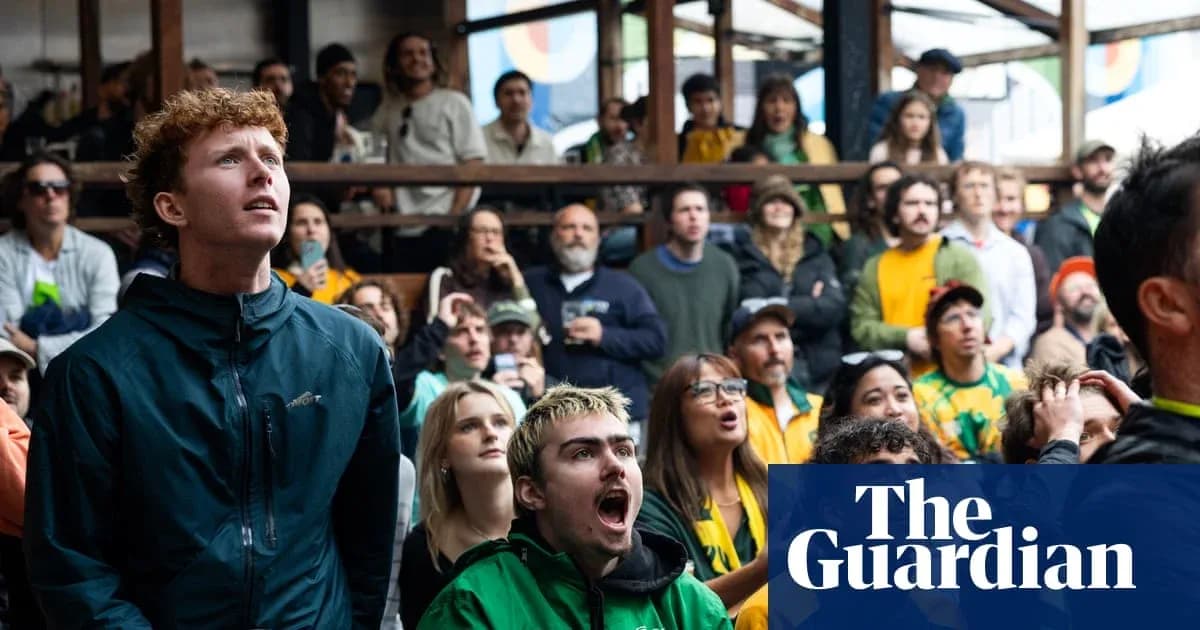
Socceroos Hold Paraguay to Nil-Nil Draw, Reaching World Cup Knockout Stage
Australia used to stop for a horse race. On Friday, it stopped for a stalemate.
For 90 taut minutes and a sliver of added time, the country held its breath as the Socceroos ground out the point they needed against Paraguay to reach the World Cup knockout stage for a second straight tournament. Nil-nil, and utterly priceless.
A nation clocks off at kickoff
This was history before a ball was kicked. For the first time, a Socceroos World Cup match fell neatly inside Australian working hours. The nation’s productivity chart dipped right on kickoff.
In Sydney, pubs in the inner west turned into makeshift offices. At the Golden Barley, the glow of work laptops mixed with the flicker of the broadcast. In one corner, small business owners Jamie and Rick Hayman tried to pretend they were still on the clock.
Rick, who runs a local construction company, tapped away at admin with his staff nearby, but his eyes kept drifting back to the screen. He has followed the Socceroos “forever” and has felt the shift in recent years as football tightens its grip on the national imagination. The bar around him proved the point.
“It unites the community,” he said. “Pubs get filled up, there’s all the talk around town, it’s really good to see.”
A few metres away, four old friends had turned the front row of bar stools into their own private grandstand. Nick, Guinness in hand, sat closest to the television, wearing an original 1974 Socceroos jersey – a threadbare relic from the year Australia first reached a World Cup.
He and his partner Robyn have lived through the old ritual: alarms at 2am, blankets on the couch, the glow of a distant tournament. They almost miss it.
“We were just saying this morning, we used to wake up in the middle of the night, it used to be really good,” he said, laughing. “It’s a unique experience. A family experience.”
This time, the family experience came with decent coffee and a lunch rush.
Rain, nerves and a dog’s howl
Down the road at the Vic on the Park, the mood tightened as the game wore on. Hundreds of fans were crammed into the beer garden and bars, shoulder to shoulder, the place humming with that strange mix of hope and dread.
When the rain swept through in the first half, jackets and Socceroos scarves were yanked over heads. Ponchos appeared from bags like emergency flares. No one moved. No one was giving up their spot.
As the clock ticked into the final 10 minutes and the scoreboard stayed stubbornly at 0-0, a few scattered “Aussie, Aussie, Aussie” chants broke out. A dog in the front bar joined in with a perfectly timed howl, drawing nervous laughter. Every clearance, every interception, drew roars as if it were a goal.
In the dying moments, as extra time drained away, the tension finally snapped. A bald man with a stick-on Australian flag tattooed across his head grabbed his friends and hugged them hard. They had their point. They had their passage.
Some fans had planned their day around this. Others simply walked out of work.
Sophie and her son Orson, a year 11 student, had already ridden the emotional rollercoaster at the Vic the previous weekend, watching Australia lose 2-0 to the USA in the early hours. This time, Orson skipped the last day of term. Sophie worked quietly from her phone, eyes flicking between emails and the screen.
“This is of national importance,” she said. “I really want Oscar to hear a goal in the pub, just to hear us lift.”
The goal never came. The lift did.
Oscar, who dreams of becoming a football coach, looked around at the heaving crowd and saw something bigger than one game.
“Football’s growing,” he said. “It’s been brilliant, so cool to see so many people supposed to be working coming to support their country.”
Federation Square heaves
In Melbourne, the pilgrimage began hours earlier. Federation Square – now a familiar stage for Australian football’s biggest days – filled rapidly. By 10am, Victoria Police said the crowd had swelled to 7,500 and the square was at capacity.
Fans killed the wait with high-stakes bottle-flip contests, each successful landing greeted with shrieks and mock tears. Teenagers compared stories of how they had “wagged” school or secured parental permission to miss class. This was a lesson in something else entirely.
When the national anthem rang out, seven flares answered it, sending plumes of colour into the air and triggering a swift police response. A 16-year-old was arrested. Later, three teenagers were issued penalty notices for riotous behaviour and moved on.
The crowd was restless, volatile, alive. At times, some unseen shove rippled through the mass, sending bodies stumbling. Each time they righted themselves, thousands turned as one towards the perceived culprit and launched a single, booming insult. The unity was raw, if not exactly polite.
Watching on, former Socceroo and broadcaster Craig Foster saw something more controlled in the team on the screen.
He called it a “near perfect game” for Australia. The result, the resilience, the rotation of players – all of it, he said, underlined the squad’s depth and composure under pressure.
“They’ve done exactly what was required … Australia is managing well, learning very quickly, and it’s a beautiful day anytime the Socceroos get through to knockout rounds,” he said.
“We are here. We’re still in this tournament, and we’re fighting all the way. There’s nothing better in life.”
Down at the barricades, teenager Ali Abolhasani and his friend had a less measured afternoon. In the chaos of limbs and celebrations, they tumbled to the ground and lost their shoes somewhere in the crush.
Asked how he felt after the final whistle, Abolhasani didn’t hesitate.
“Amazing,” he said. “I can’t wait to come back next week. We did an all-nighter, we couldn’t sleep because we knew we’d make it … We’ll do it again.”
Capital fever, makeshift screens
Even Canberra, often accused of being a step removed from the country’s passions, fell under the spell. More than 500 fans gathered at Garema Place, huddled around a modest two-screen setup that hardly matched the scale of the occasion.
It didn’t matter. The noise was real, the investment total.
Among them stood ACT senator David Pocock, a former Wallabies captain now watching another code command the spotlight. He looked out at the diverse crowd and saw a snapshot of the country he represents.
“The Socceroos, as it’s been talked about this week in parliament, represents what is so great about Australia,” he said. “We do have so many people from diverse backgrounds coming together, and you see the way that that resonates across the country.”
From inner-city pubs to public squares and hastily arranged fan zones, the picture was the same: laptops shut, schoolbooks forgotten, phones held aloft to capture a goalless draw that felt like a victory.
Australia didn’t score. It didn’t need to. On a grey Friday afternoon, with the nation watching during office hours, the Socceroos did enough – and reminded everyone just how powerful a team in green and gold can be when it gives a country something to believe in.