Spain's Quarter-Final Win: Rodri's Role and Portugal's Crossroads
Spain reached the quarter-finals the hard way in Dallas, needing a 91st‑minute header from substitute Mikel Merino to finally break Portugal’s resistance in a tense 1-0 win that had just about everything: late drama, frayed tempers and a flashpoint involving one of the game’s most respected midfielders.
The goal, a thudding finish deep into stoppage time, sent the Spanish bench racing down the touchline and Portugal to their knees. For Roberto Martinez’s side, it was the end of the road. For Spain, it was a surge of relief rather than triumph. They had lived on the edge.
And in the middle of it all stood Rodri.
Rodri’s moment of brilliance – and regret
Across 90 minutes he ran the game. Spain’s metronome took 106 touches, stitched together attacks with 87 successful passes and, for long spells, dictated the tempo as if the ball belonged to him by right. When La Roja needed control, he supplied it.
Yet the defining image of his night may not be a pass or a tackle, but a reaction.
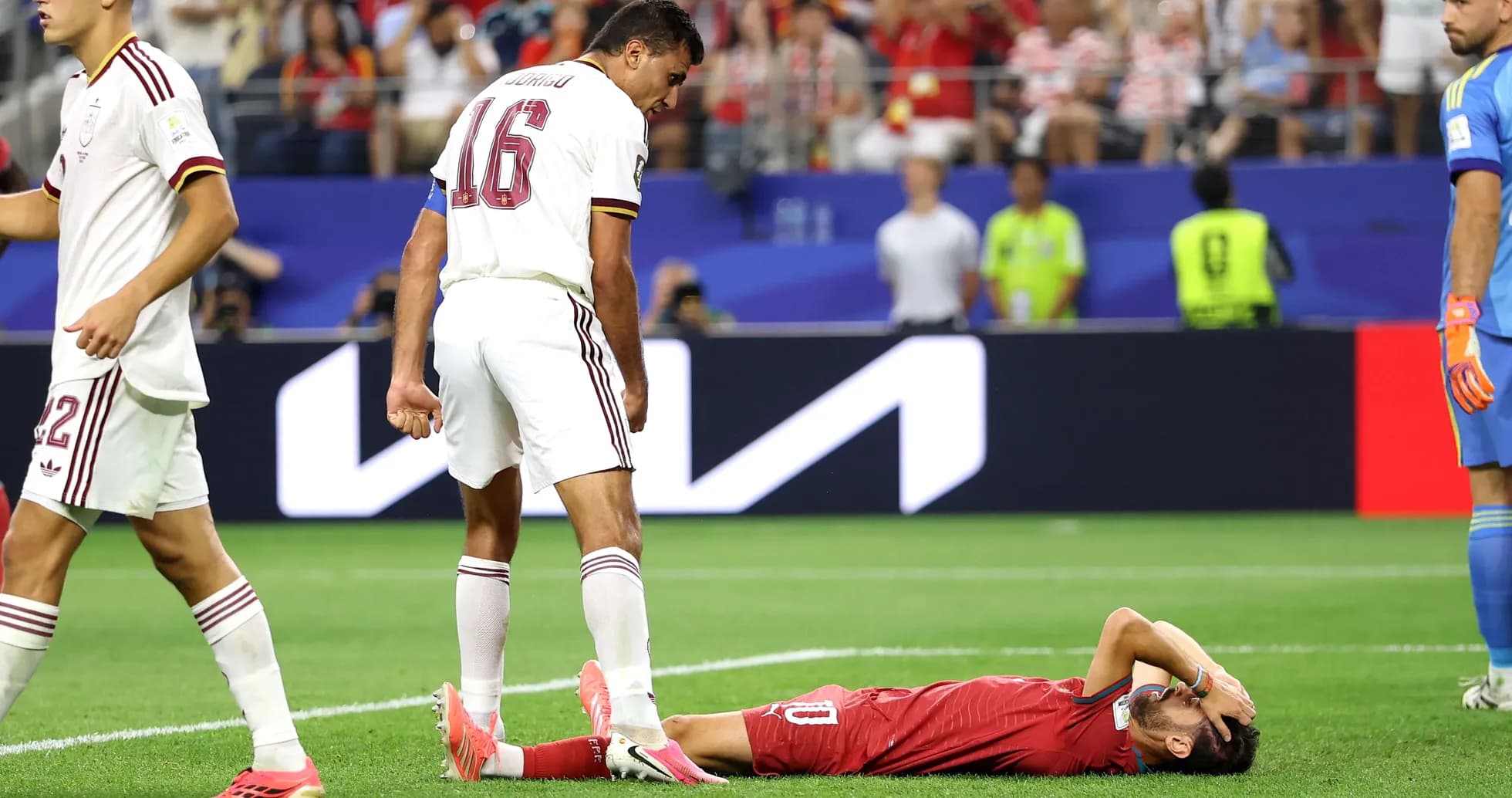
Late in the game, Portugal carved out the sort of chance they had been chasing all evening. Bernardo Silva – a player who once shared a dressing room with Rodri at club level – rose to meet a cross in the dying moments. The header went begging. Agony for Portugal. And in that split second, Rodri let emotion get the better of him, celebrating his former team-mate’s miss.
The gesture lit the fuse. Tempers flared, players converged, and a match that had simmered under the weight of knockout tension briefly boiled over. What should have been remembered only for Merino’s late winner suddenly had another storyline.
Rodri did not try to hide from it.
Speaking afterwards, he fronted up: “I’ve said this before, I made a mistake because I celebrated when he had failed. I apologised to him immediately, but that’s where it stands because of the trust we have, and that’s it.”
No excuses. No deflection. Just a rare crack in the composure of a Ballon d’Or winner on a night when the pressure of international football pushed emotions to the edge.
Portugal’s frustration, Ronaldo’s uncertain horizon
Silva’s missed header summed up Portugal’s evening. They battled, they stayed in the game, they waited for their moment. When it finally arrived, it slipped away by inches. Seconds later, Merino punished them at the other end.
The consequences stretch beyond a single defeat.
Portugal, champions in 2016, now face a crossroads. Cristiano Ronaldo’s international future again hangs in the balance, the questions louder with every major tournament exit. This time, the uncertainty feels heavier. Another shot at glory gone, another summer ending with him staring down the tunnel at what comes next.
On the touchline, the change has already begun. Roberto Martinez confirmed his resignation in the aftermath, closing his chapter with the national team almost as soon as the final whistle went. The project he was hired to guide has been handed back to the federation with more questions than answers.
One name has already surged to the front of the conversation. Veteran coach Jorge Jesus has emerged as the firm favourite to take over, a move that would signal a very different era for this squad. New voice, new ideas, and a group that suddenly feels in transition rather than at its peak.
For Portugal, Dallas may be remembered as the night one cycle finally gave way to another.
Spain through, but not yet convincing
Spain, by contrast, fly on to Los Angeles with momentum on the scoreboard but not entirely in their performance. The win was dramatic. It was not polished.
Luis de la Fuente’s side controlled the ball, as they almost always do, but after the break they lacked a cutting edge. The second half drifted into a sluggish pattern, Spain probing without incision, Portugal lurking for counters that never fully materialised until Silva’s late chance.
That will not be enough against Belgium.
The quarter-final in LA on Friday, July 10, sets up a clash of styles that will test Spain’s discipline as much as their technique. Belgium carry a rapid counter-attacking threat, the kind that punishes even the smallest lapse in structure. Any drop in intensity, any loose turnover in midfield, and the game can flip in seconds.
Which brings the focus back to Rodri and the area of the pitch he owns.
Spain’s dominance in midfield remains their best weapon and their best shield. If Rodri and his supporting cast can smother transitions, recycle possession and keep Belgium pinned back, La Roja can bend the match to their rhythm. Fail to do that, and they risk being picked off by pace and precision on the break.
The late winner in Dallas kept Spain’s tournament alive. The question now is whether they can turn survival into statement – and whether the emotional edge that spilled over against Portugal becomes a strength or a fault line when the stakes rise again in Los Angeles.