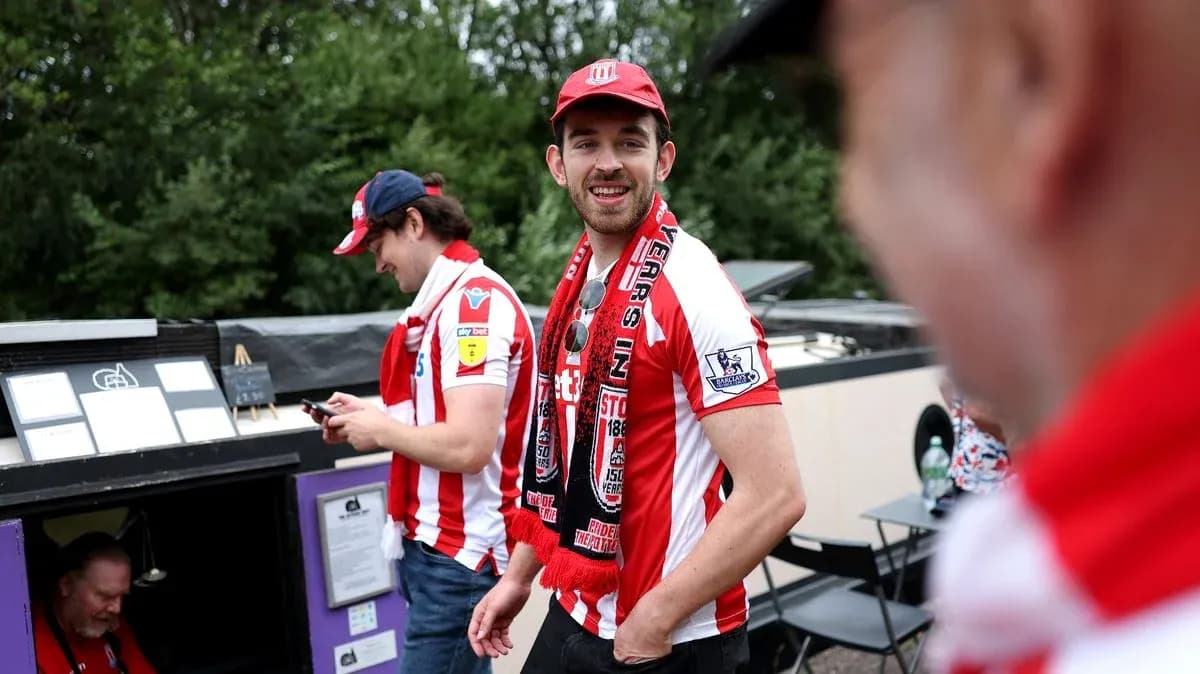
Stoke City Prepares for New Season with Tyler Martin's Debut
Stoke City will start this season with a different kind of curiosity on the bench and a reminder from history that their opening act is not always a straightforward league fixture.
Tyler Martin, an 18-year-old midfielder who arrived from Liverpool to join the under-21s in February, has forced his way into the first-team picture over the summer and now gets his shot among the substitutes. He has trained with the senior squad throughout pre-season and steps up as Milan Smit heads out on loan to Darmstadt in Germany.
Back when Martin signed, youth coach Sam Stockley did not hold back in his assessment. “He is dynamic and quick, has an eye for goal and is versatile in terms of his ability to play through the middle and in wide areas," he said. Those are big words. Martin now has a platform to show they were justified.
Unusual openings are not new territory for Stoke City. The club is so used to kicking off with a league game that anything else feels strange, yet the exceptions have been memorable for wildly different reasons.
There was the League Cup tie against Blackpool in 2020, played in front of empty stands and echoing coughs. The season began behind closed doors, stripped of noise and colour, the kind of curtain-raiser nobody wanted but everyone had to endure.
Go back further and the tone changes completely. In 2011, Stoke launched into a Europa League adventure, facing Hajduk Split home and away before a Premier League opener against Chelsea. European nights under the lights, flags waving, a fanbase pinching itself. That summer felt like a reward.
Then there is 1972, when fixture lists and common sense seemed to part company. Stoke had just staggered through a 70-game marathon in 1971/72, only to tack on one more – an FA Cup tie that technically belonged to the old season but was played a week before the new one.
On August 5, they walked out at St Andrew’s to face Birmingham City in an FA Cup third-place play-off, a game that existed purely because of a short-lived experiment. Stoke had lost a controversial semi-final to Arsenal four months earlier. Leeds had already lifted the cup at Wembley on May 6. Yet here Stoke were, still chasing a place on the podium.
A crowd of 25,841 turned up and watched a drab, goalless affair drift towards history. The drama finally arrived from 12 yards. This was the first penalty shoot-out in English domestic football.
Tony Waddington used it to blood his summer signings. Geoff Hurst and Jimmy Robertson both made their debuts, players who under normal rules would have been cup-tied. Robertson had actually gone out of the competition months earlier, knocked out in the fourth round by Birmingham while at Ipswich.
The rules of the day added their own quirks. Goalkeepers were not allowed to move their feet before the kick was taken. John Farmer did, twice, and the referee booked him. He still managed to save from Tommy Carroll, who then blasted his re-taken penalty over the bar. Farmer then kept out Bobby Hope, only to see Hope score from his second attempt.
Waddington snapped. He stormed onto the pitch to protest, but referee Vincent James stood firm, insisting he had warned the keeper enough times.
At the other end, Birmingham’s Paul Cooper turned mind games into an art form. He swung his arms, leaned to one side and unsettled takers. The technique would serve him well at Ipswich and Leicester, where he saved penalty after penalty. This time it worked against Jimmy Greenhoff and Peter Dobing. Stoke’s challenge faded at the spot.
Their reward for finishing fourth in the FA Cup? A tankard. Not a trophy, not a medal. A tankard to mark the end of a five-year flirtation with third-place play-offs. The experiment died that day.
Stoke, though, responded where it mattered. Seven days later they opened their league campaign at home to Crystal Palace – and won.