The Summer Game of Noble Rage: Transfer Dreams and Reality
“We were so close … At the end of the day, really, they made him an offer he couldn’t refuse.”
Glenn Hoddle said it in 2002, not Mikel Arteta in 2024. The target back then was Rivaldo, not Vinícius Júnior. The punchline, as ever with Tottenham, came in the shape of Robbie Keane, the boyhood fan who became the consolation prize for a dream that never quite made it through the fax machine.
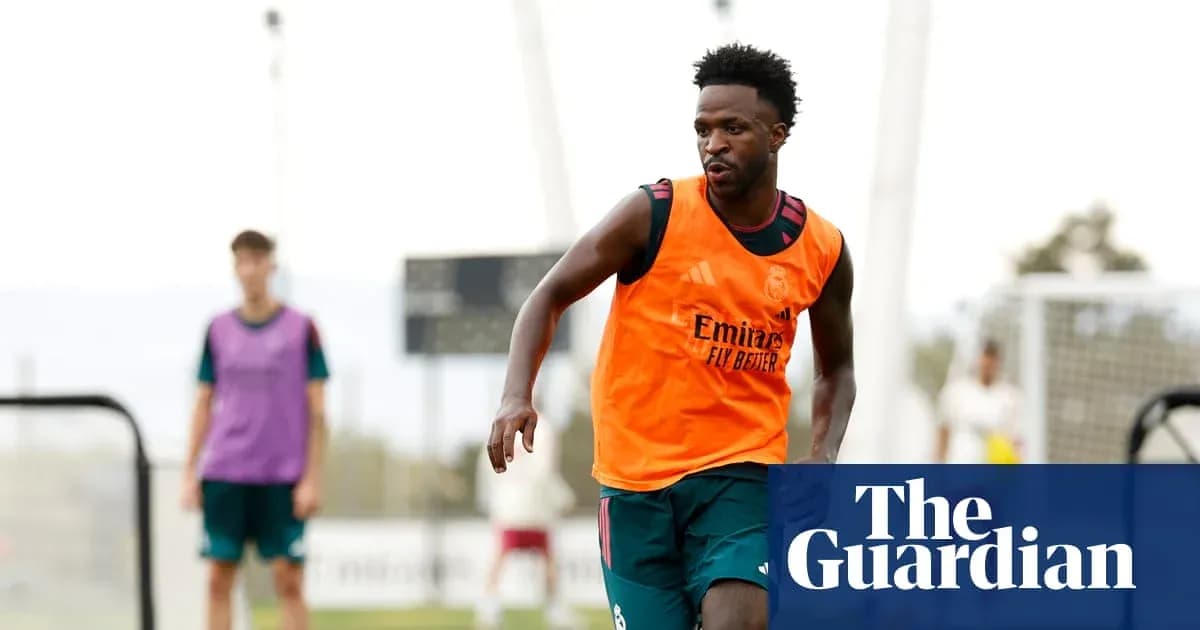
Swap the shirts, change the decade, and the feeling at Arsenal is painfully familiar. Vinícius has inked his future to Real Madrid, and the Emirates is left staring at a Brazilian‑shaped hole in its transfer fantasies. The question hangs in the air: what now?
Cristian Romero, you say?
The Fantasy Window
This is the time of year when football stops and imagination takes over. No league tables. No muddy pitches. No reality. Just a transfer window and a fanbase free to drift into a world where every signing is a revelation and every YouTube compilation a prophecy.
In that world, Vinícius doesn’t just beat full-backs, he ruins careers. There are no cold Tuesday nights at Stoke, no hamstrings pinging on debut, no awkward quotes about “settling in”. Players glide into Our League, score a gazillion goals and make a mockery of xG. It’s football as daydream, stripped of doubt and consequence.
The other side of the coin is less forgiving. When the business stalls, the romance sours fast. Scroll through Liverpool’s more excitable corners online and you’ll find fury that Virgil van Dijk, 73 in the gallows humour of their own fans, is apparently the only senior centre-back in sight. Each quiet day in the market becomes another reason to panic.
Maybe Bradley Barcola calms them. Maybe he doesn’t. For now, he remains potential rather than presence, not yet a DONE DEAL, just another name to argue about.
Arsenal supporters, denied their glimpse of Vinícius in red and white, have already started soothing themselves with a different vision: Bruno Guimarães threading passes into the runs of Gabriel Martinelli. If you can’t have the Brazilian superstar, take the Brazilian playmaker instead. Dream adjusted, not abandoned.
When One Deal Moves the Earth
Every summer has its hinge moment. One contract signed in Madrid or Manchester can tilt the entire market. Vinícius choosing to stay at Real Madrid is exactly that sort of move.
His renewal doesn’t just keep a galáctico in place; it closes a door. With Kylian Mbappé already on astronomical money and Vinícius now locked into the same rarefied air, there is no space – or budget – for another superstar attacker. The Bernabéu’s inn is full.
That matters for Rodri. The Manchester City midfielder, fresh from lifting the 2024 Ballon d’Or and still smarting over the reaction in Brazil and at Madrid, has long been linked with a return to Spain. Under different circumstances, that path might have led straight to Real. Not now. The numbers don’t add up, the roles don’t align.
So attention drifts towards Barcelona. Rodri, Spain’s captain and arguably the outstanding player at the Geopolitics World Cup, is said to want the Camp Nou. For City, losing the metronome of their midfield would be a seismic blow. For the Premier League, it would be another reminder that even its wealth can’t keep everyone forever.
This is the emotional cruelty of the window. To love and lose a player, or even the idea of one, still feels better to many fans than enduring a summer where nothing happens at all.
The Wider Noise
The rest of the footballing world refuses to stay quiet while the big clubs juggle superstars.
On Friday night, the calendar throws up a nostalgic echo: Middlesbrough against Wrexham in the Littlewoods Cup, a tie that belongs to another era in name if not in intensity. The penalties may decide it, but the real drama lies in the layers of history and expectation that cling to fixtures like this.
Beyond the pitch, the power struggles grow sharper. Lise Klaveness, president of the Norwegian Football Federation, has delivered another direct hit at Gianni Infantino, saying the trust is “now gone” and “there is no way back” for Fifa’s president in her eyes. Mexico and Argentina have lined up on Infantino’s side, deepening the civil war running through the game’s corridors of power.
On another front, a deal worth at least $1bn in secured income over eight years has been scrapped by Caf after the decision to move Afcon from a biennial to a four-yearly event. Money that once looked guaranteed has vanished, leaving a continent to rework its plans.
Shifts, Stumbles and Side Stories
Back in England, Leeds United have pushed their chips in on James Trafford, paying around £40m to make him the fourth-most-expensive goalkeeper of all time. Trafford is not shy about his own confidence. “I know my own abilities,” he said. “I go out and try as hard as I can and have as much fun as I can.” Leeds are betting that this blend of self-belief and exuberance will anchor their future.
In north London, Cristian Romero threatens to crash the rumour mill’s favourite narrative. Tottenham are in talks with Atlético Madrid over selling the defender, even as Micky van de Ven prepares to sign a new deal. One cornerstone of Ange Postecoglou’s defence could be on his way out just as another is being tied down.
On the international scene, Belgium have handed their fabled Golden Generation™ to Mark van Bommel. The former midfield enforcer has stepped in without a backward glance at the Netherlands job. “Did I want to wait for the Dutch national team? No, not at all,” he said. “I didn’t even think about that. I am very happy to be here. It is different from coaching a club, but this challenge suits me well.” Belgium, still chasing the major trophy that has always eluded them, now have a coach who knows all about walking into high-pressure dressing rooms.
Lower down the English pyramid, reality bites early. Bristol City are already out of the Coca-Cola Cup, beaten 1-0 at home by League Two side Walsall. Lee Grant chose to look at the positives. “Clearly there were encouraging signs,” he said. “The collective effort was outstanding.” Encouragement is one thing; exits in August are another.
Europe’s Frayed Nerves
North of the border, the mood has darkened again. Scottish football briefly felt like the centre of the universe in late May. By early August, it has slumped back into its familiar state of self-recrimination.
Hearts have been stripped of Derek McInnes and Lawrence Shankland, and the cost is brutal. A 6-0 hammering by Sturm Graz in Bigger Cup was followed by a 6-1 defeat to Benfica in the first leg of their Bigger Vase tie. Rangers, who raided Tynecastle in the afterglow of last season, are hardly thriving either. A 1-1 league draw at Dundee United and a 2-1 first-leg loss to Jagiellonia Bialystok of Poland have left McInnes staring at early pressure in Glasgow.
There is at least a sliver of light. Motherwell drew 1-1 away at HJK Helsinki, and Hibernian beat Shkendija of Macedonia in Tin Pot’s qualifiers. Small steps, but in a Scottish summer like this, every scrap of progress matters.
Memory, and What Comes Next
Beyond the noise of deals and disputes, the game keeps circling back to its own history. Newcastle United are about to mark 100 years since their last league title. The images of St James’ Park from the 1926-27 season show a very different ground, long before Shearer’s Bar and corporate gloss, when Hughie Gallacher was rattling in 36 goals and would probably have been first in and last out of any bar within walking distance.
Those ghosts watch over a sport that has never been richer, never been louder, and never more consumed by the fever of the window. One superstar stays. Another might leave. Clubs reshuffle, fans rage, executives posture.
The captive void of noble rage sits where the fantasy signing should have been, and the question lingers over boardrooms from Madrid to Manchester to north London: in a market that never sleeps, who dares blink next?