Sweden's Unlikely Path to the World Cup
Sweden are going to the World Cup by accident. Or at least that’s how it feels.
A team that did not win a single qualifier. A team that finished bottom of their group. A team that needed the Nations League’s back doors, side doors and fire escapes to stumble into the playoffs. Yet by June, none of that will matter. They will be in North America, lining up the anthem and pretending this was all part of the plan.
It wasn’t.
The goal that didn’t seem to matter
If there is a single moment that tipped this whole story, it came in a game that had nothing to do with World Cup qualification. On a cold night in November 2024, in the third tier of the Nations League, Alexander Isak took a ball on his right foot, rolled it onto his left and thrashed it past Slovakia’s goalkeeper for a 2-1 win.
Nobody celebrated like it was historic. It was just a Nations League C match, another date on a crowded calendar. Sweden were pleased to top the group; that was about it.
Only later did it become clear how much that goal had really been worth.
As Sweden stumbled through their World Cup qualifying group — drawing two, losing four, not winning once — winger Anthony Elanga admitted he had no idea that topping that Nations League C group guaranteed them a playoff spot. Sweden finished rock bottom in their World Cup qualifying section, behind Switzerland, Kosovo and Slovenia. On the face of it, they were out.
They were saved by failure. Relegated from Nations League B in 2022 after finishing below Serbia, Norway and Slovenia again, they dropped into League C, where they could actually win. They did, finishing ahead of Slovakia, Estonia and Azerbaijan. That obscure Isak strike suddenly became the most important goal of their campaign.
A playoff path paved with luck
The fortune didn’t stop there. Sweden entered the playoffs unseeded, which meant an away semi-final. They drew Ukraine. On paper, a tough assignment. In reality, it handed them another break.
Ukraine cannot currently play at home, so the one-off tie was moved to a neutral venue in Valencia. The stands were a sea of yellow and blue — but mostly Swedish yellow and blue. The atmosphere tilted their way. So did the game. Sweden won 3-1, with Viktor Gyokeres ripping through Ukraine’s back line and walking away with a hat-trick.
Then came the next twist. The winner of that semi-final was drawn to host the final. Sweden, again, caught the break. Stockholm. Home. A packed Strawberry Arena. Poland in town, with a stronger squad on paper and a sharper performance on the night.
Poland moved the ball better, controlled large stretches and kept Sweden pinned back. It didn’t matter. Sweden threw bodies in front of shots, hacked clearances off the line, flirted with chaos in their own box and somehow stayed afloat. They survived almost comical moments of panic, then punished Poland with ruthless efficiency.
Elanga struck first with a thunderous drive, the kind of goal that bends a game’s mood in an instant. Gustaf Lagerbielke rose at a set-piece to nod in the second. Late on, the winner came from Gyokeres in a scramble that looked like pinball, the ball ricocheting around the box before falling for the striker to ram home. The stadium erupted, not in triumph so much as disbelief.
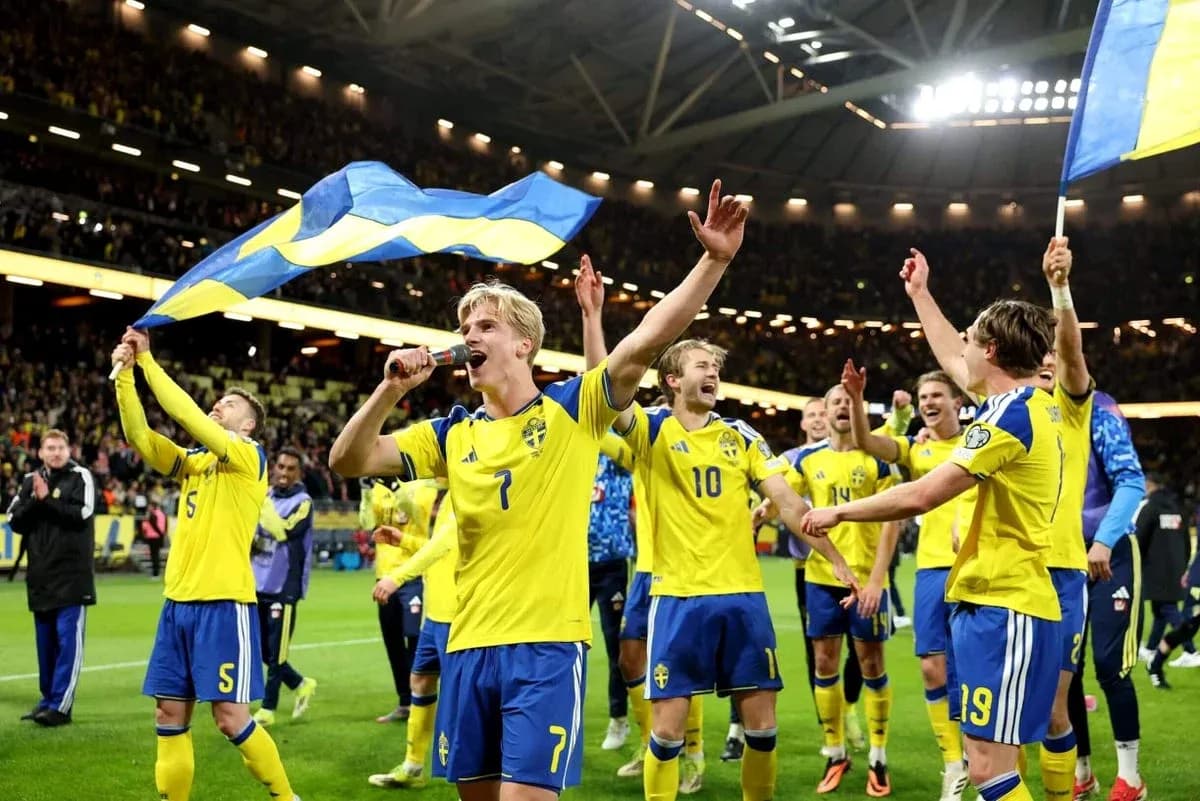
From last in the group to the World Cup. From a 0 per cent win rate in qualifying to celebrating on the pitch with flags and flares. On merit? Hardly. On the rules as written? Absolutely.
This is arguably the strangest, least deserved European qualification of the century. Yet the table in June will not show how they got there. It will simply say: Sweden.
From Tomasson’s wreckage to Potter’s repair job
The journey feels even longer because of what happened on the touchline. Jon Dahl Tomasson arrived with a fine playing career and a difficult passport. A Dane coaching Sweden was always going to be swimming against the tide. The results made sure he sank.
Performances were poor, the mood darker still. Sweden looked lost, the identity frayed. Eventually, Tomasson was dismissed.
The replacement raised eyebrows. Graham Potter, the English coach who built his reputation in Sweden with Ostersund, then took Swansea City, Brighton & Hove Albion, Chelsea and West Ham United, was not an obvious national-team appointment. He knew Swedish football, knew the culture, spoke warmly of his time there. That affection pulled him back.
Initially, it felt like a short-term rescue mission. Before he had even won a game, he signed a four-year contract, running to the 2030 World Cup. His first two friendlies ended without a victory. The rebuild looked fragile.
Then came this playoff window, and a team patched together with tape and trust.
Isak? Out since breaking his leg shortly before Christmas. Dejan Kulusevski, the playmaker and captain, sidelined all season. Goalkeeper Viktor Johansson and right-back Emil Krafth? Missing. Atalanta defender Isak Hien limped off in the first half against Ukraine.
Potter turned to old allies. In goal, 36-year-old Kristoffer Nordfeldt, a man who has spent a decade and a half as Sweden’s understudy, finally had his moment. Under Potter at Swansea in 2018-19, he had been a dependable presence. Here, he was decisive. Two crucial saves against Poland. Huge, flat kicks and long throws that launched counters, turning defence into attack in seconds.
This was not a slick, choreographed national team. It was a ramshackle, improvised side, held together by belief and a manager who specialises in building collective spirit. Potter, who holds a Master’s degree in leadership and emotional intelligence, has quietly stitched the dressing room back together after the gloom of the Tomasson era.
Gyokeres steps out of Isak’s shadow
At the sharp end of the pitch, Gyokeres became the trump card. His first season at Arsenal has not always convinced, yet the numbers are impossible to ignore: top scorer for the leaders of what is widely regarded as the strongest league in the world.
With Isak injured, Gyokeres no longer had to share the spotlight. He owned the attack. Against Ukraine, he was relentless, constantly darting in behind, bullying defenders, finishing with authority. Three goals, each one a punch to Ukraine’s hopes.
Poland handled him better. He was quieter, more often wrestling for scraps than rampaging in space. Still, when the ball bounced loose in that late melee, he was the one who reacted fastest. One swing of his boot, and Sweden’s World Cup place was sealed.
Around the Strawberry Arena, fans who had mentally checked out of this campaign months ago found themselves roaring, hugging strangers, trying to process how a team that couldn’t win a qualifier had just booked flights to North America.
A flawed team with a frightening ceiling
Strip away the chaos, and something more serious lurks beneath the surface. If Sweden can get their best players fit, they are not just gatecrashers at this World Cup. They are dangerous.
Isak is the third-most expensive footballer in history for a reason. At his best, he offers a blend of technique, movement and finishing that very few strikers can match. Kulusevski, at the start of last season, was producing attacking numbers in the Premier League bettered only by Mohamed Salah. When those two share a pitch, Sweden suddenly look like a side that belongs in the latter stages of major tournaments, not scrambling for Nations League loopholes.
Behind them, there is more. Yasin Ayari and Lucas Bergvall are viewed inside the country as potentially top-class central midfielders, the kind of technical, modern operators Sweden have often lacked. Many Swedes quietly believe this is their best generation in years, maybe decades. That belief only sharpens the absurdity of their route to qualification.
Yet they are there. Drawn to face Tunisia in Monterrey, the Netherlands in Houston and Japan in Dallas. A group that offers jeopardy, variety and, crucially, opportunity.
The last time the World Cup went to North America, in 1994, Sweden finished third, a golden summer etched into the country’s footballing memory. This time, they couldn’t even finish third in their qualifying group.
They have arrived by the back door, tripping over their own feet, rescued by obscure regulations and timely goals in forgotten competitions. But they have arrived.
Now comes the real question: with this talent, and this second chance, how far can they go when the games finally start to count again?