Sweden's Journey to the World Cup: From Chaos to Revival
Sweden should have been nowhere near this World Cup. Two points from six group games, one winless autumn, and a manager sacked after defeat to Kosovo – that is usually the prelude to a reset, not a resurrection.
Yet here they are, flying to North America with a new coach, a new backbone and a striker who has dragged a faltering generation back on to the biggest stage.
From chaos to Potter
The qualifying campaign under Jon Dahl Tomasson unravelled almost from the first whistle. One point from the opening four matches, confidence draining away, and then the nadir: a 1-0 loss to Kosovo in October 2025 that ended the Dane’s tenure. Sweden looked broken, tactically and emotionally.
Into that mess stepped Graham Potter – and into a country that already knew him. His work at Östersund between 2011 and 2017, taking a fourth-tier club to Allsvenskan, winning the cup and toppling Arsenal in Europe, had turned him into a cult figure in Swedish football. This time he arrived not as a curiosity but as a saviour-in-waiting.
Potter did not try to reinvent the wheel. He went back to what Sweden have long understood: defensive discipline, compact lines, and counterattacks that cut rather than decorate. He spoke early about preferring a back four. When the play-offs arrived, he chose steel over theory and rolled out a 5-3-2, determined to lock the back door first and argue about aesthetics later.
The change in mentality was immediate. Sweden stopped being easy to play against. They started to look like Sweden again.
The Nations League lifeline
The Nations League handed them a back-door route into the World Cup picture. Sweden grabbed it with both hands.
In Spain, against a slick Ukraine side in the semi-final, they produced the kind of performance that changes a narrative. Viktor Gyökeres tore through the game, scoring a hat-trick in a 3-1 win that felt like a statement as much as a result. The counterattacks had teeth. The defence had purpose. Potter’s blueprint had a showcase.
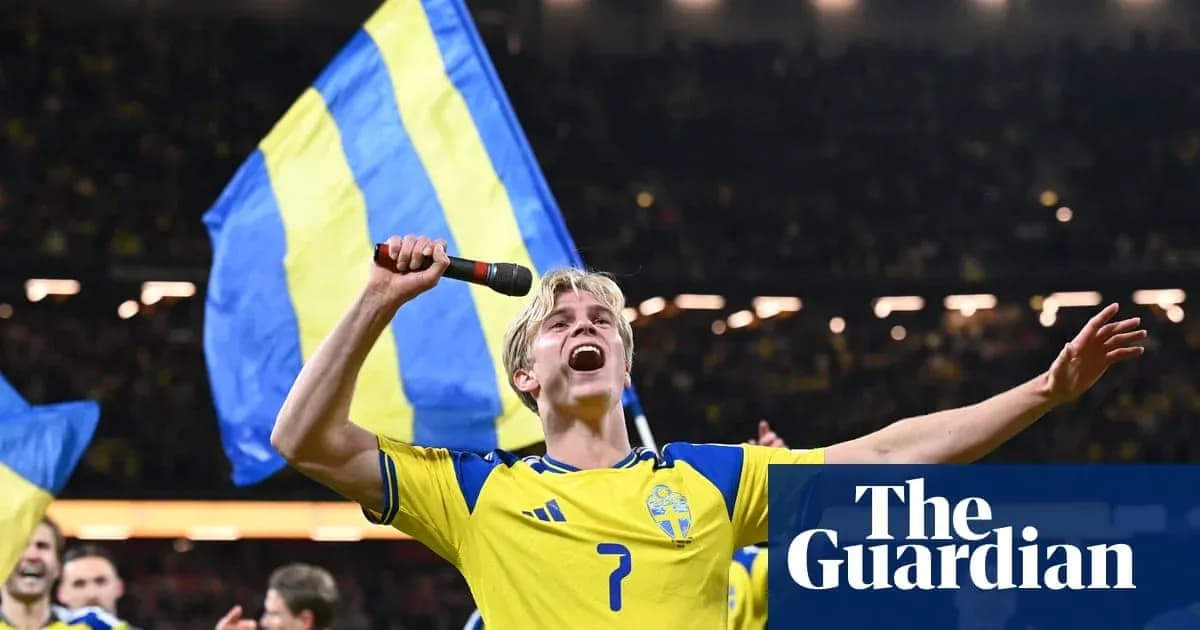
The final against Poland was something else entirely – tense, messy, and often one-way traffic in favour of the visitors. Sweden suffered for long spells. They bent but did not snap. Then, with the game drifting towards extra time, Gyökeres exploded again, thumping in an 88th-minute winner to seal a 3-2 thriller and send the bench, and much of the country, into delirium.
Potter, still relatively new in the job, called it the best night of his football life. For Sweden, it was more than that. It was the night a broken qualifying campaign stopped being an obituary and became a prologue.
They had somehow reached the World Cup after taking just two points from six group matches. That is not a plan; it is a plot twist. But it is also the essence of the “Potter effect”: clarity, conviction and a team that suddenly believes again.
A coach in his element
Potter’s appointment always felt like a natural fit. Months before he took over, he spoke openly to Fotbollskanalen about his affection for the country and its football, practically inviting the Swedish FA to pick up the phone. They did, and within days he was in the dugout.
The early results were not spectacular, yet the federation saw enough. By March he had a contract extension through to 2030. After turbulent spells at Chelsea and West Ham, he has found a job that suits him and a stage that respects him. He speaks the language, understands the culture and, crucially, understands what the national team needs to be.
Sweden under Potter are not trying to imitate anyone. They are trying to remember themselves.
Life without Kulusevski
The price of qualification has been steep. Dejan Kulusevski, the captain and creative heartbeat, will miss the tournament. His influence on this side is enormous, and there is no like-for-like replacement. Sweden lose a leader, a ball-carrier and a man who can change tempo with one touch.
Then there is Alexander Isak. On paper, he should be the star: the most expensive transfer in Premier League history after his £125m move from Newcastle to Liverpool. In reality, his first season at Anfield was a grind, and his form and fitness remain under the microscope. He did score after coming off the bench in a 3-1 defeat to Norway on 1 June, but that match underlined another concern – Sweden can still be overwhelmed by better-organised opponents.
So the burden shifts. The new talisman is not the record signing, but the relentless runner from Arsenal.
Gyökeres, the new face of Blågult
Viktor Gyökeres has become the symbol of this team’s revival. His early months at Arsenal were difficult, yet as his club form rose, so did his influence on the national side. He scored four of Sweden’s six goals across the two play-off ties and turned decisive moments into folklore.
The winning goal against Poland did more than book a ticket to the World Cup. It lit up a country. Social media filled with fans mimicking his celebration – borrowed from Bane, Tom Hardy’s masked villain in The Dark Knight Rises – as if to say that Swedish football, too, has ripped off the mask and found a new identity underneath.
Gyökeres is now the man opponents plan for and the man Sweden look for when the game starts to tilt. With Kulusevski out and Isak still searching for his sharpest self, his importance cannot be overstated.
A baron at the back
Beyond the headline names, Potter has found unlikely heroes. One of them carries a title as well as a tackle.
Gustaf Lagerbielke, now at Braga and formerly of Celtic, delivered a monumental display in the play-off final. He powered in a thunderous header and then spent the rest of the night keeping Robert Lewandowski quiet. That alone would have marked him out; the fact he is a baron and 254th in line to the Swedish throne turns him into a ready-made World Cup storyline.
There is already talk of a move to one of Europe’s big-five leagues. A strong tournament in North America will only sharpen that interest. On this evidence, Sweden’s back line has found a leader with presence, pedigree and timing.
Celtic’s Benjamin Nygren offers another intriguing thread, but Lagerbielke feels like the defender whose role could expand fastest when the stakes rise.
Karlström, the quiet anchor
If Sweden are to navigate a group containing a technically refined Netherlands and a sharp, relentless Japan, they will need more than romance and resilience. They will need control.
That is where Jesper Karlström comes in. The Udinese captain is a late bloomer, a player who took his time at Djurgården, moved on to Lech Poznan and fought through a gambling addiction with the help of his club and family. His story carries scars; his game carries calm.
Karlström is the classic deep-lying midfielder: strong in the challenge, tidy on the ball, able to dictate rhythm without fanfare. At 30, he offers the maturity that Yasin Ayari and Lucas Bergvall, the bright young talents around him, are still developing. His presence allows them to roam while he holds the middle together.
In a tournament likely to be decided in small pockets of space and short spells of pressure, his ability to slow a game down or speed it up may be as important as any goal.
The Swedish invasion
On the stands, at least, Sweden will not be short of numbers. Blågult fans travel in waves, draped in yellow and blue, noisy but approachable, turning host cities into temporary Nordic outposts. They sing, they joke, they mingle. Their soundtrack is “Kanna på”, a drinking song about beer pitchers that never stop arriving and a promise that “We are coming with 100,000 men.”
There will not be a Viking invasion of America, but World Cup venues can expect a loud, good-natured Swedish presence and more than a few empty kegs.
Old ghosts and new horizons
Relations between Sweden and the United States once became a punchline in global politics. When Donald Trump claimed in 2017, “Look what happened in Sweden last night,” as part of a speech on immigration and terrorism, Swedes were left baffled. Nothing dramatic had happened. Aftonbladet’s dry summary of the day – Owe Thörnqvist’s technical problems at rehearsals, a man setting himself on fire in central Stockholm, and road closures in the north due to harsh weather – said it all.
Now the focus shifts from misunderstandings to football. Sweden arrive in North America with a coach who knows them, a striker in full roar, a captain missing, and a group that offers both danger and opportunity: Tunisia, Netherlands, Japan.
They have already survived a campaign that should have buried them. The question now is simple: having dragged themselves back from the brink, how far can this team, under Graham Potter’s steady hand, push the story?