Todd Boehly's Departure Marks a Shift at Chelsea
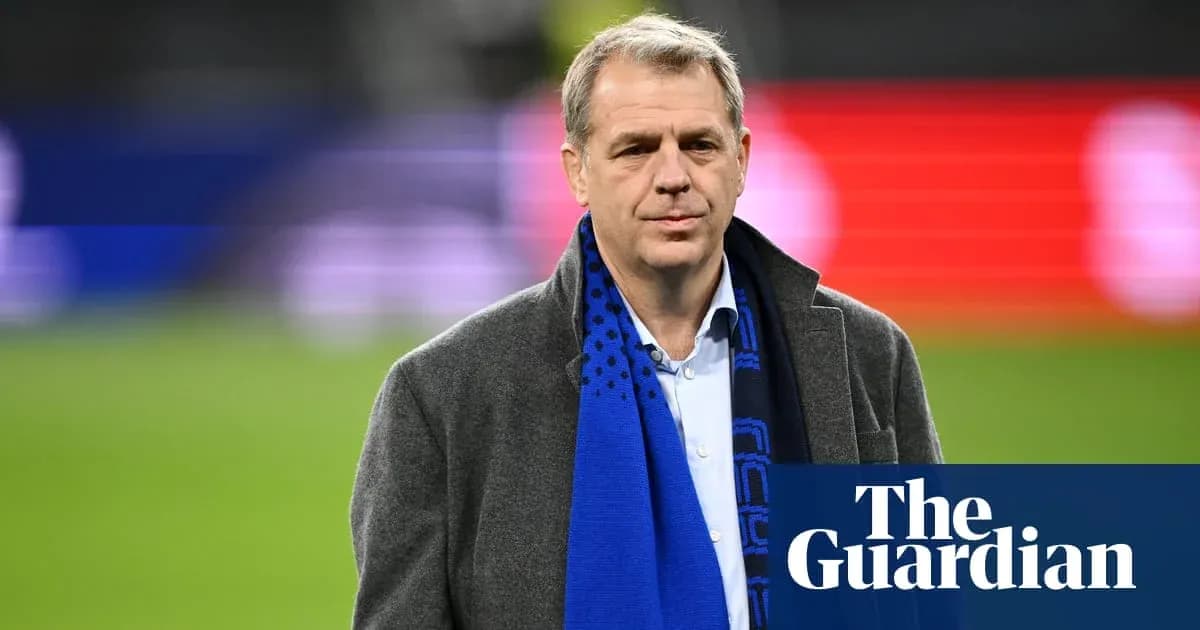
Todd Boehly arrived at Chelsea as the loudest voice in the room. He leaves as a footnote.
Four years on from the BlueCo consortium’s £2.5bn purchase from Roman Abramovich, the American and his fellow investor Mark Walter have been bought out. Their departure, confirmed on Wednesday night, sounds dramatic. In reality, the power had shifted away from them long ago.
Clearlake’s club now
Clearlake Capital, the US private equity firm fronted by Behdad Eghbali and José E Feliciano, was already running the show. The trio of Boehly, Walter and Swiss billionaire Hansjörg Wyss held an equal share of a 38.5% stake, but their influence had steadily drained away as Clearlake tightened its grip.
Eghbali has been calling the shots for some time. The formal buyout of Boehly and Walter simply makes public what insiders already knew: Clearlake has full control, and has effectively had it for a while.
This split has been brewing for two years. Cracks in the ownership group spilled into view as tensions rose. Boehly’s relationship with Clearlake frayed, and he pushed for a resolution. People close to him insisted he had investors lined up to fund a full takeover. Inside Clearlake, that talk prompted eye-rolling, not alarm.
Clearlake’s counter was blunt. One option: buy Boehly out. Another: ask him to step down as chair and accept governance changes that would reduce him to a ceremonial presence. It was a clear message about who held the real power.
No surprise, then, that relations cooled. After an uneasy truce, Clearlake simply kept going on its chosen path, with Eghbali increasingly visible and increasingly targeted. As Chelsea’s post-Abramovich struggles mounted, the focus of supporter anger shifted. Chants aimed at Eghbali became a regular soundtrack.
Feliciano stayed largely in the background, recently adding an investment in the San Diego Padres to his portfolio. Eghbali, not Boehly, became the face of the project.
The Boehly experiment
It wasn’t always that way. Early on, Boehly stood front and centre. When senior figures left in the wake of Abramovich’s exit, he installed himself as interim sporting director. It looked bold. It proved costly.
Agents liked him personally but doubted his grasp of the sport. They were right to. Chelsea tore through around £300m on an ill-fitting squad. The headline deal – Raheem Sterling on £325,000 a week – turned into a warning sign, not a statement of ambition.
The chaos deepened. Thomas Tuchel was sacked, Graham Potter was hired, and Chelsea lurched through the 2022‑23 season with no clear identity. The club struggled to untangle itself from the financial and tactical fallout of that first window.
Boehly’s own explanation for signing Marc Cucurella from Brighton said plenty. He moved because he heard Manchester City wanted the Spain left-back. If there is a handbook for sporting directors, “copy your rival’s shortlist” does not feature near the front.
His fingers were badly burned. The “All-Star game” suggestion at a business conference turned him into a punchline beyond Stamford Bridge. So did the breezy prediction that Chelsea would beat Real Madrid 3-0 before a Champions League quarter-final in 2023. They did not.
He became the caricature of Chelsea’s excess: big ideas, big spending, little coherence.
A new model, same owners
Inside the club, the story shifted. Boehly’s allies insist he never intended to stay so deeply involved and always meant to step aside once specialists were in place. Either way, Chelsea’s approach changed sharply after that first wild window.
The club moved from one interim sporting director to a sprawling structure: Paul Winstanley, Laurence Stewart, Sam Jewell, Joe Shields and Dave Fallows all in permanent roles. The strategy pivoted towards younger players, long contracts, heavy incentives.
Eghbali has driven that vision. The ride has been rough. Under this ownership, Chelsea have reached the Champions League only once. Managers have come and gone. Yet inside Clearlake, the message is that lessons have been learned over the past year.
Last summer’s business carried a different feel. Chelsea hired a serious manager in Xabi Alonso and leaned more towards established talent rather than pure potential. The club still looks like a work in progress, but not the same runaway experiment of 2022.
Through it all, Boehly retreated. The buyout talk quietened until this past summer. The spark, by those close to the situation, came from Walter, who needed to liquidate assets to address financial issues in the US. The sale of his LA Lakers stake was the sign that his time at Chelsea might also be nearing an end.
Now it is. Boehly and Walter are understood to have made a modest profit from their Chelsea investment. Jonathan Goldstein, a close ally of Boehly, has also left the board. Wyss remains involved, having invested in a Clearlake vehicle rather than walking away entirely.
Same power, new question
Strip away the headlines and not much changes. Day-to-day operations stay with the same people. The leadership structure is intact. The strategy – multi-director model, youth-focused recruitment, long contracts – remains in place.
The real pivot lies elsewhere: the stadium.
That is the looming decision for Eghbali and Feliciano. The Guardian reported in September 2024 that Chelsea were in talks about leaving Stamford Bridge for Earls Court. The Earls Court Development Committee’s own project, which has planning permission, has stalled. That leaves space for Chelsea’s interest, which has not gone away.
At the same time, the club has not abandoned the idea of somehow redeveloping Stamford Bridge, a far more complex and constrained option. Both paths are open. Neither is simple. Both would define the next era.
Whatever Chelsea decide, they will do it without Boehly at the table. In their statement, Eghbali and Feliciano said he “will always be a part of the Chelsea story and family”.
Given how quickly his influence evaporated, that feels generous. The real question now is what kind of club Clearlake want Chelsea to become – and where, exactly, they plan to build it.