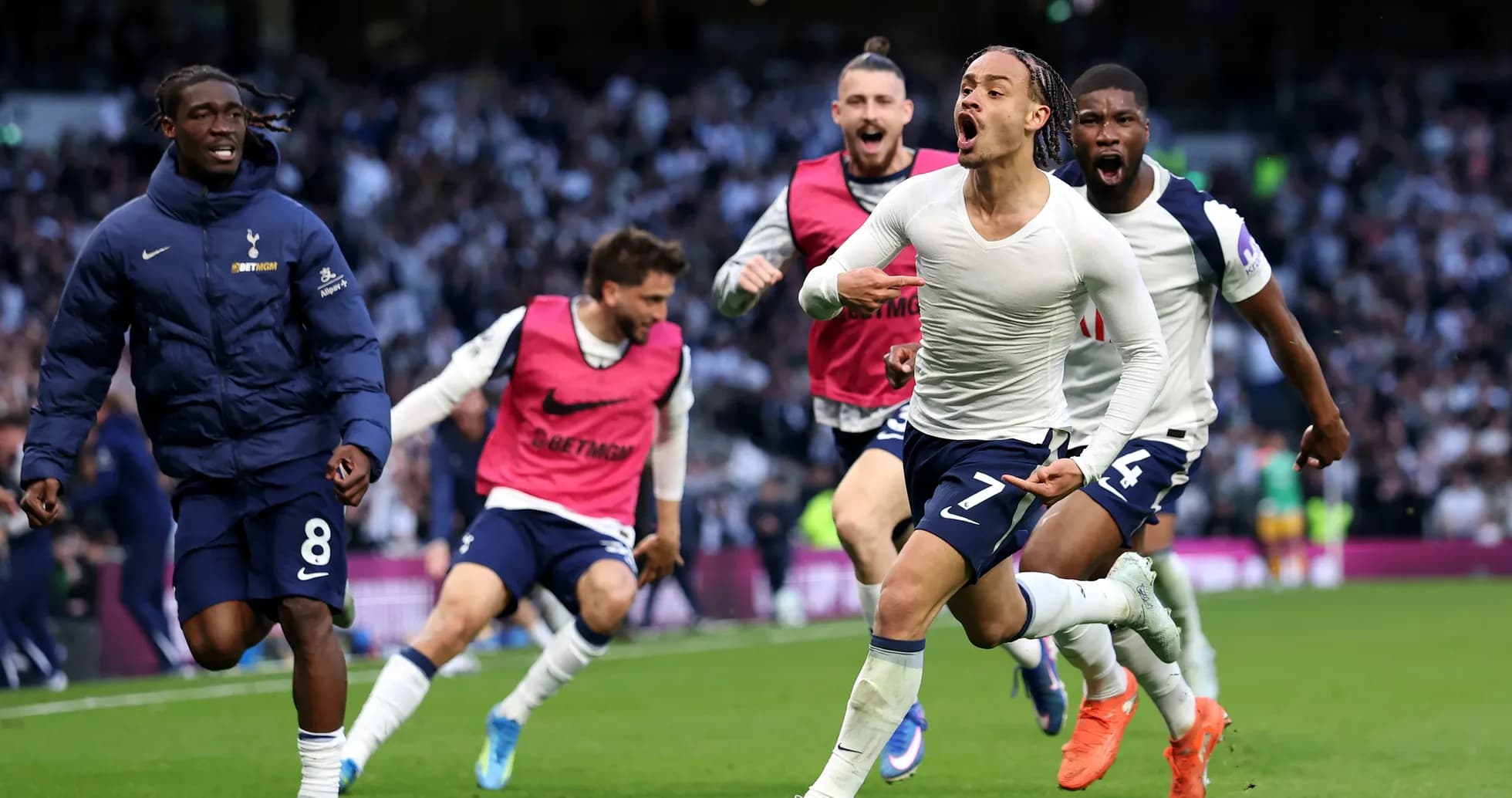
Tottenham and Brighton Battle to a 2-2 Draw in Premier League Clash
Under the grey London sky of a relegation fight, Tottenham and Brighton met at the Tottenham Hotspur Stadium in a 2-2 draw that said as much about their seasons as it did about this single afternoon. Following this result in the Premier League’s Regular Season - 33, the table still shows Tottenham marooned in 18th on 31 points with a goal difference of -11 (42 scored, 53 conceded), while Brighton remain comfortably mid-table in 9th with 47 points and a goal difference of 6 (45 scored, 39 conceded).
I. The Big Picture – Two Identities Colliding
Tottenham’s season-long profile is schizophrenic: overall they score 1.3 goals per game and concede 1.6, but the split between home and away is brutal. At home they average 1.2 goals for and 1.8 against, winning just 2 of 17 league matches. On their travels they are far more balanced, with 1.4 scored and 1.4 conceded. The 4-3-3 Roberto De Zerbi chose here felt like a desperate attempt to tilt the home narrative back towards front-foot football.
Brighton arrived as the more stable project. Fabian Hurzeler’s side are built on a 4-2-3-1 that has started 28 times this season, underpinned by a calm defensive record: overall they concede 1.2 per match, scoring 1.4. At home they are slightly more expansive (1.5 scored, 1.1 conceded), away a touch more pragmatic (1.2 scored, 1.3 conceded). This was the version on show in North London: controlled, patient, but always ready to spring through their front four.
The lineups captured the contrast. Tottenham’s back four – P. Porro, K. Danso, M. van de Ven, D. Udogie – sat behind a midfield three of Y. Bissouma, R. Bentancur and C. Gallagher, with a mobile, interchanging front line of X. Simons, D. Solanke and R. Kolo Muani. Brighton mirrored with B. Verbruggen in goal, a back line of M. Wieffer, J. P. van Hecke, O. Boscagli and F. Kadioglu, shielding midfielders P. Gross and Y. Ayari, and a fluid band of D. Gomez, J. Hinshelwood and Y. Minteh behind lone striker D. Welbeck.
II. Tactical Voids – Who Was Missing, and What That Meant
The absentees shaped the tone as much as the tactics. Tottenham’s list was long and loaded with personality: C. Romero, G. Vicario, D. Kulusevski, M. Kudus, W. Odobert and B. Davies all listed as Missing Fixture. Romero’s absence stripped the back line of its most aggressive organiser; his 58 tackles, 14 blocked shots and 31 interceptions this season usually set the defensive temperature. Without him, Danso and van de Ven had to step into leadership roles, with van de Ven’s profile (34 tackles, 21 blocked shots, 22 interceptions) suggesting a more measured, positional defender than a chaos-inducing stopper.
Higher up, losing Kulusevski and Kudus robbed Tottenham of two ball-carrying outlets. Kudus, with 102 dribble attempts and 52 successes plus 5 assists, is one of the league’s most direct progressors. His absence placed a heavier creative burden on X. Simons, who has 5 assists, 32 key passes and 767 total passes at 82% accuracy, and on Bentancur’s ability to link play.
Brighton’s void was more specific but just as important: L. Dunk suspended for yellow cards, plus J. Milner, S. Tzimas and A. Webster out injured. Dunk’s 10 yellows speak to his front-foot defending, but his 26 blocked shots, 29 interceptions and 92% passing accuracy are the bedrock of Brighton’s build-up. Without him, the responsibility shifted to J. P. van Hecke, whose own numbers – 48 tackles, 27 blocked shots, 36 interceptions, 2,111 passes at 87% – show he is more than a deputy, but the hierarchy of the back line inevitably changed.
Disciplinary trends added a subtle undercurrent. Heading into this game, Tottenham’s yellow-card distribution peaked between 61-75 minutes at 24.10%, with significant spikes just before half-time (31-45: 16.87%) and just after the break (46-60: 15.66%). Brighton’s yellows were most concentrated in the 46-60 window at 28.40%. That overlap hinted at a combustible middle third of the match – precisely when intensity and fatigue collide.
III. Key Matchups – Hunter vs Shield, Engine Room vs Engine Room
The most obvious “Hunter vs Shield” narrative was D. Welbeck against a makeshift Tottenham defensive core. Welbeck’s 12 league goals from 32 appearances, off 40 shots with 24 on target, mark him as a ruthlessly efficient finisher. He has also missed 2 penalties despite scoring 1, a reminder that he is not infallible from the spot. Against a Tottenham side conceding 1.8 at home, his movement between Danso and van de Ven was always going to be a decisive storyline.
On the other side, Tottenham’s most potent scorer on the season, Richarlison with 9 league goals, began on the bench. His profile – 36 shots, 22 on target, 3 assists and 110 duels won from 252 – shows a chaotic, combative forward who thrives in broken phases. His presence among the substitutes set up a potential second-half twist: a more direct, duel-heavy option if the starting front three could not puncture Brighton’s block.
The “Engine Room” battle was nuanced. For Tottenham, Bissouma and Bentancur offered contrasting yet complementary traits: Bissouma as the recycler and presser, Bentancur as the tempo-setter. Gallagher’s inclusion as the third midfielder added vertical running and pressing intensity, crucial against Brighton’s double pivot of Gross and Ayari.
Gross, with his reputation for metronomic passing and set-piece quality, was the brain of Brighton’s midfield. In front of him, D. Gomez added steel and edge – his 77 tackles and 48 fouls committed, alongside 9 yellow cards, frame him as the enforcer tasked with disrupting Tottenham’s rhythm and engaging Simons and Bentancur physically between the lines.
Simons, meanwhile, was Tottenham’s creative compass. His 5 assists, 32 key passes and 30 successful dribbles from 67 attempts underline his role as both playmaker and ball-carrier. Up against a back four lacking Dunk’s authority, his drifting into half-spaces around Boscagli and Kadioglu was a clear tactical lever.
IV. Statistical Prognosis – A Draw that Fits the Numbers
From a season-long lens, a 2-2 feels almost mathematically preordained. Tottenham’s home averages (1.2 scored, 1.8 conceded) and Brighton’s away profile (1.2 scored, 1.3 conceded) converge around a multi-goal, high-variance contest. Neither side is built to shut games down; both are conditioned to live with risk.
Brighton’s clean-sheet record on their travels – 5 away clean sheets from 17 – suggested they were capable of suffocating struggling attacks, but Tottenham’s desperation in a relegation battle, combined with De Zerbi’s attacking selection, tilted this towards an open game. Conversely, Tottenham’s 7 overall clean sheets from 33 and their 30 goals conceded at home made it highly unlikely they would hold Welbeck and company at bay for 90 minutes.
In the end, the 2-2 stalemate captured the essence of both squads. Tottenham showed enough attacking spark, led by the craft of Simons and the movement of Solanke and Kolo Muani, to suggest they are better than 18th in flashes. Yet the structural fragility left by Romero’s absence and a season-long habit of conceding too easily kept them from turning promise into points.
Brighton, even without Dunk, demonstrated why they sit in the league’s upper half: a clear identity, a reliable goalscorer in Welbeck, and a midfield blend of technique and tenacity through Gross and Gomez. But their inability to fully control the chaos away from home, where they concede 1.3 per match, left the door open.
Following this result, the numbers say neither side massively over- or under-performed their seasonal tendencies. Tottenham remain a side fighting their own volatility; Brighton, a team whose ceiling is European but whose floor is still defined by occasional defensive looseness. On this afternoon in London, those two truths met in the only logical outcome: a breathless, imperfect, statistically honest draw.