Tottenham's Collapse: De Zerbi Admits Team Identity Lacking
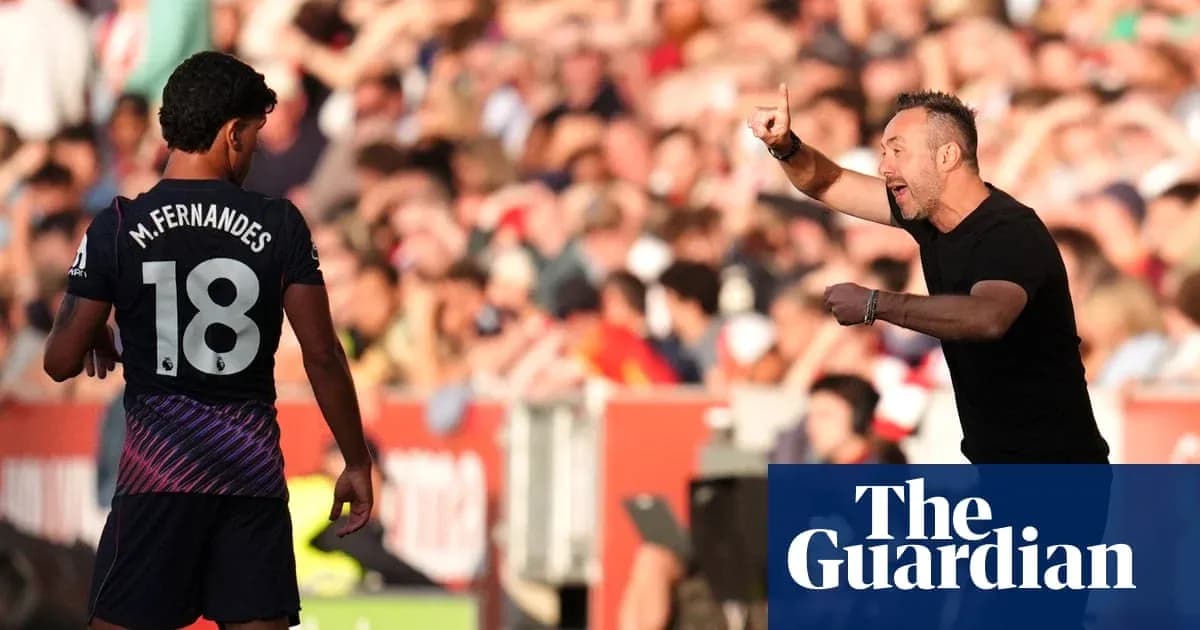
Tottenham’s season began not with a stutter, but with a collapse. A 3-0 defeat at Brentford, brutal in both scoreline and symbolism, left Roberto De Zerbi questioning the very foundations of his new project.
At the Gtech Community Stadium, Spurs were supposed to signal a fresh start after flirting with relegation last season and preparing a lavish summer outlay expected to pass £300m. Instead, they were outplayed, outfought and, at times, overwhelmed.
By the end, De Zerbi’s assessment was as stark as the performance.
“We are not a team yet for a lot of reasons,” the Tottenham manager said. “Before you become a team you can’t say what you can do.”
Brentford strike, Spurs crumble
Keith Andrews’s side did not need long to expose Tottenham’s fragility. Keane Lewis-Potter struck, Vitaly Janelt added another, and Michael Kayode completed a statement win that set the tone for Brentford’s second year under their manager.
The scoreline could have been worse. The pattern was damning enough.
Spurs lost duels all over the pitch. They arrived late to second balls. They barely laid a glove on Brentford’s rhythm. De Zerbi did not sugarcoat it.
“We could fight stronger than we did today,” he said. “We lost too many duels today. We arrived second in the second balls. We didn’t win one second ball, one duel, one tackle.”
This was not a defeat pinned on tactics or misfortune. It was about intensity, conditioning, and a group that has yet to find any sense of collective identity.
New faces, old problems
Tottenham handed debuts to Andy Robertson, Jan Paul van Hecke, Marcos Senesi, Mateus Fernandes and Sandro Tonali. On paper, it looked like the start of something bold. On grass, it looked like strangers thrown together.
De Zerbi stressed that no transfer splurge can shortcut the process.
“There are steps to become better,” he said. “Now the target is to become a team. You can’t become a team from the transfer market on paper. You become a team when the players find a connection, a spirit, a soul. It’s a project.”
Spurs are close to bolstering their attack with Omar Marmoush and Savinho from Manchester City, but the manager’s message was clear: signings alone won’t fix this.
Fitness and frustration
The Italian repeatedly returned to fitness and preparation. Tottenham’s pre-season tour of Australia, he suggested, had not laid the right foundations.
“We are not in the right physical condition for a lot of reasons,” he said. “Some players came back late from the World Cup. In Australia we don’t work in the right way but it is not excuses. It is a normal situation when building a new project.”
He pointed to absences as well. Pedro Porro, Kevin Danso and Micky van de Ven were all missing. Rodrigo Bentancur, who started on the bench, returned late in pre-season.
Yet De Zerbi refused to hide behind circumstances.
“I don’t want time but we have to pass through these problems. I cannot lose confidence in my players. I believe in my players, my club, myself. We are working well. We have to improve quickly.”
Belief, yes. But belief will need backing by actions, and fast.
Brentford’s bright beginning
While Tottenham wrestled with their identity, Brentford looked assured, organised and hungry. Their performance carried the air of a club that knows exactly what it is trying to be.
At the heart of that was Mamadou Sangaré. Making his debut in midfield after a £39m move from Lens, he delivered a commanding display that delighted Andrews.
“The club deserve a lot of credit for getting that deal done,” the Brentford manager said. “You’ve seen today what he’s capable of, the attributes he has. It adds to a talented midfield. I really enjoyed his performance today. He’s slotted in really well. He’s a humble young man who’s very, very hungry.”
Lewis-Potter, Janelt and Kayode provided the goals, but Sangaré gave Brentford control. He broke up play, drove forward, and set the tone in the centre of the pitch – precisely the sort of presence Tottenham lacked.
A project under scrutiny
Spurs came into this season talking about a new era, a heavy investment, a rebuild with ambition. Ninety minutes at Brentford did not end that conversation, but it changed its temperature.
De Zerbi called it “a project”. Right now, it looks like one in its earliest, most fragile phase: ideas on the training ground, big names on the teamsheet, but little sign of a true team on the pitch.
The manager insists he will not lose faith. The question, after such a chastening opening day, is how quickly that faith can be turned into something more tangible than words.