Tottenham's Goalless Draw: De Zerbi Sees Room for Improvement
Tottenham finally stopped the rot on Saturday. They didn’t win, they still haven’t scored this Premier League season, but they have a point on the board at last.
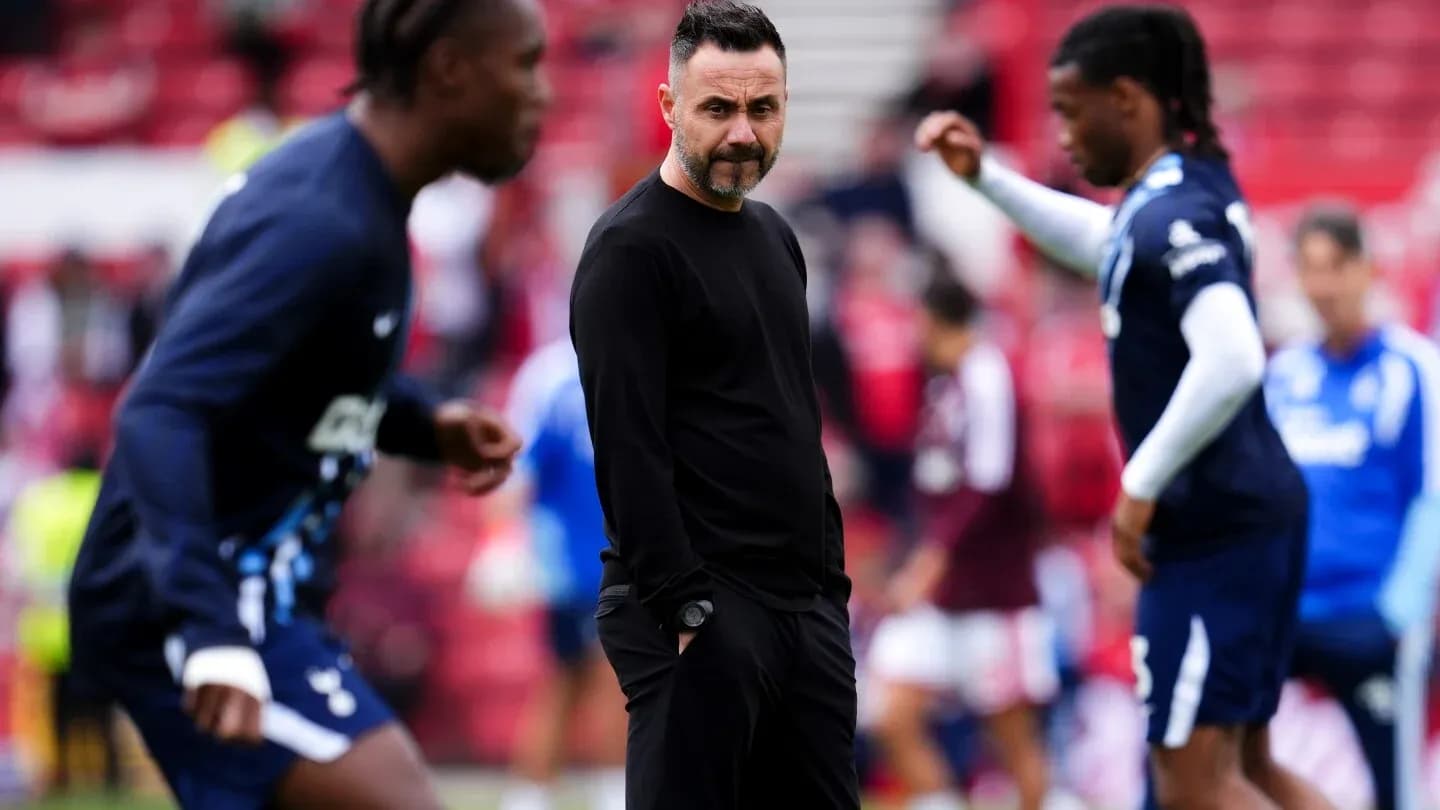
A bruising, goalless draw at the City Ground against Nottingham Forest gave Roberto De Zerbi his first tangible return as Spurs manager. It also underlined, in stark detail, where this team’s problems lie.
De Zerbi: Happy with the play, not the payoff
“Disappointing for the result, but for the performance, very happy,” De Zerbi said afterwards, sounding almost conflicted. “Considering we started working together on Thursday for the first time, we played well.”
He went straight to the heart of it: the final third.
“I think we can improve in the last pass. If we improve in the last third, I think we can score many, many goals because we have the players with big qualities. Now it’s a tough moment to accept this result, because I think we played well.”
The numbers will say 0-0. The feeling from the Spurs bench was something closer to frustration wrapped in cautious optimism. De Zerbi insisted this isn’t about unlocking some mystical attacking code.
“It’s not to unlock [the final third]. It’s the mistakes. We have to work in this part,” he said. “I think we played very well with the ball, we found the solutions because they press [our defenders] with three, but one of our full backs was always alone and we found him always in 90 minutes. So in build-up, we played very well. In the last third, I think we can be… better. Much better.”
The pattern was clear: Spurs could get there. They just didn’t know what to do once they arrived.
Key changes, key losses
The second half swung on two forced substitutions that De Zerbi clearly didn’t want to make.
“I’m sorry because the medical stuff pushed to change Savio and Udogie after 60 minutes,” he admitted. “Kudus and Robertson played very well, but maybe two substitutions in that moment was not so good. But now we can’t take risk with injuries again. Savio is too important for us, the same Destiny. Maybe we lost some balance, some connection [when they came off].”
That “balance” he mentioned had been hard-earned. This was a physical, scrappy contest, the kind that tests not just technique but temperament. Spurs showed they were ready to fight. What they didn’t show was the guile to turn territory into chances.
De Zerbi, though, took solace from what happened without the ball.
“I think today we defended very, very well. We have to improve the physical condition [of some players], the connection between the players,” he said. “We changed, I don’t know how many players in this transfer window. We brought very, very good players, but the team doesn’t adjust like the names on paper or Football Manager.”
Names on paper. That’s the nub of it. This squad looks exciting in theory. The reality so far is three games, zero goals.
A system with teeth at one end, questions at the other
You can see what De Zerbi is building. The structure deliberately drags the backline into uncomfortable situations. When it works, the risk at the back is repaid with overloads and chaos in the opposition half. When it doesn’t, you’re simply asking defenders to suffer for no reward.
Right now, Spurs are stuck in that halfway house.
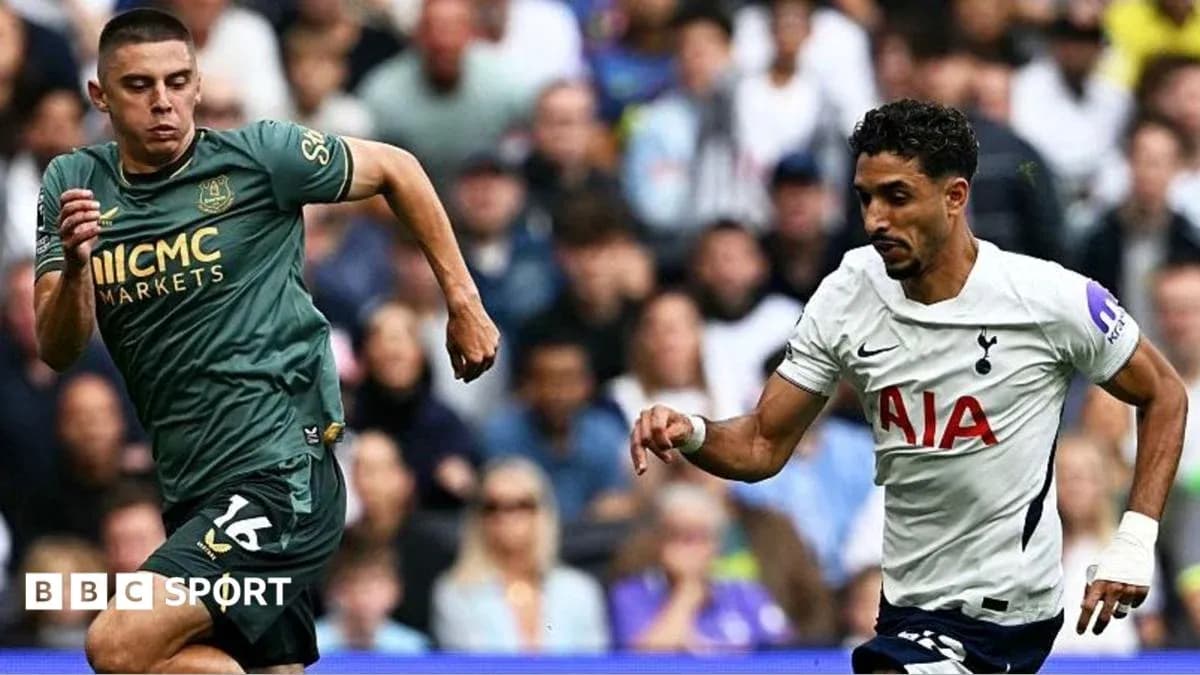
The saving grace? Micky van de Ven. The Dutch defender thrives in those exposed, high-wire moments and has started the season impressively alongside compatriot Jan Paul van Hecke. Even in last week’s defeat to Newcastle, it was set pieces that undid Spurs in what was otherwise another steady defensive showing.
Van de Ven doesn’t just help. He raises the floor of this team more than anyone else in the squad.
The ceiling, though, remains painfully low. The way Spurs are operating in the final third, Van de Ven could barely stand up in their attacking “house” even if he wanted to. There’s just not enough happening there.
De Zerbi knows he has attacking talent. He also knows games are not played on spreadsheets.
The missing creator
The issue is depressingly familiar. The squad has been overhauled since last season, yet the same flaw keeps dragging them back: no true creator in midfield.
Without a natural no. 10, Spurs can move the ball neatly through the first two thirds, but they almost always end up funneling attacks wide. That predictable pattern lets opponents drop, shuffle across, and set themselves. Forest did exactly that — pressing high early, then retreating into a deep block with nine or 10 men around the box.
And Spurs, stacked with mercurial dribblers but lacking that central schemer, ran out of ideas.
Maybe James Maddison returns soon and immediately rediscovers his sharpness after effectively losing a year to injury. That’s the optimistic version. The more realistic one? This might be what it looks like for a while.
The fight is there. The structure is taking shape. The defenders, led by Van de Ven, are holding up their end of the bargain.
Until someone in that white shirt starts seeing and playing the pass that no one else can, though, Spurs will keep circling that white rectangle without ever truly threatening to break it open.