Tottenham's Pitch Problems: A Deep Dive into Injury Concerns
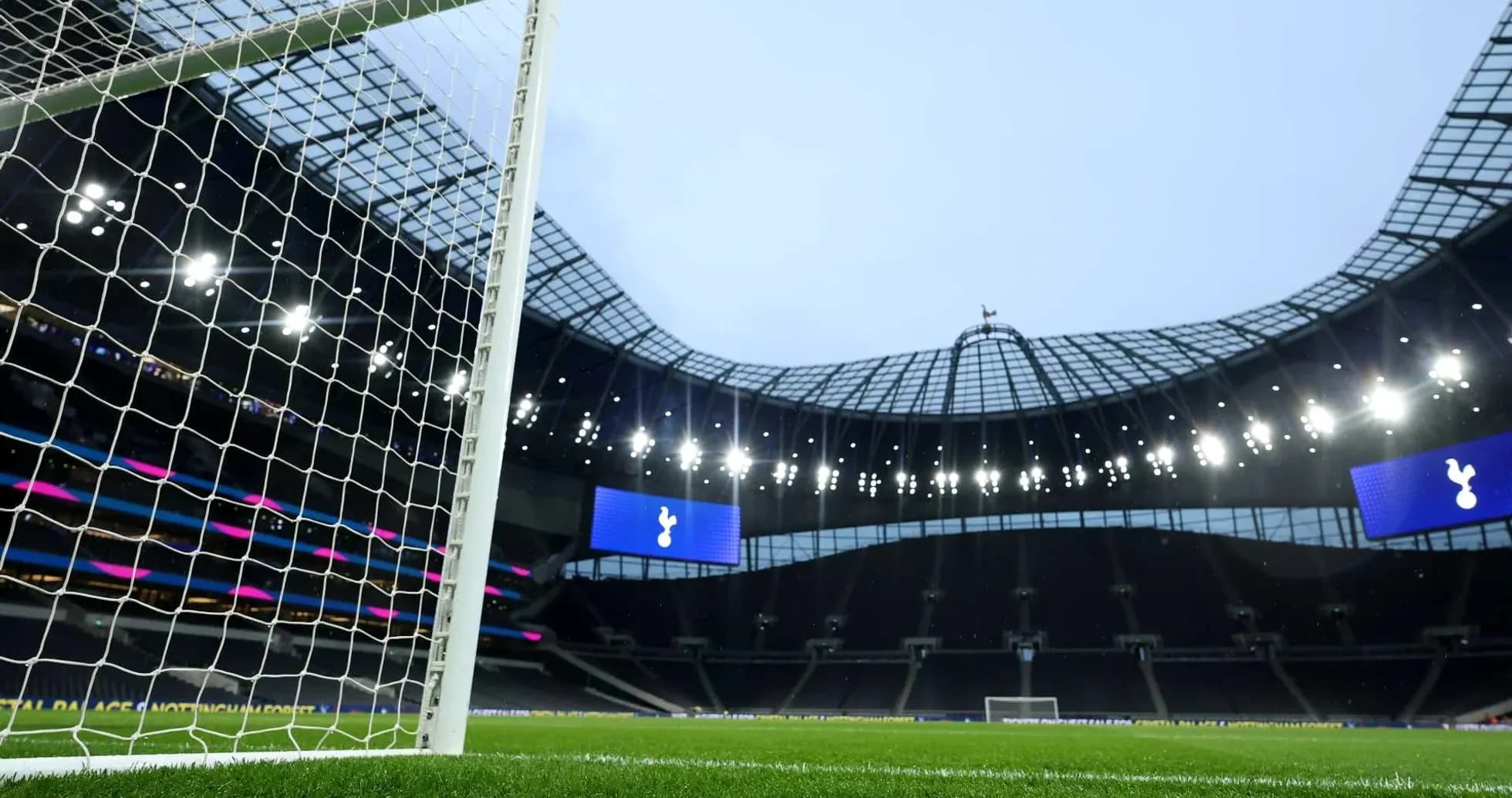
The Tottenham Hotspur Stadium was built to be a marvel. A sliding grass pitch that disappears to reveal a synthetic NFL field. A venue designed as much for spectacle as for sport.
Now that same engineering showpiece is under scrutiny for something far less glamorous: knees, ankles and careers.
According to Sky Sports, Spurs’ new performance director Dan Lewindon has launched a detailed investigation into whether the club’s dual-surface system is playing any part in a surge of serious leg and ligament injuries suffered in N17. Independent testing on bounce and surface tension has already been carried out. The data, though, has not delivered a clear verdict, forcing the club to widen the study and benchmark their pitch against others across the Premier League.
The timing is no coincidence.
A Stadium of Stars, and Too Many Stretchers
Some of Tottenham’s biggest names have gone down at home. Dejan Kulusevski, Radu Dragusin and Wilson Odobert have all suffered major setbacks on that pristine-looking grass. James Maddison first sustained a partial ACL tear during a home clash against Bodo/Glimt before later rupturing it completely.
One incident can be dismissed as misfortune. A cluster of them, in the same stadium, on the same surface, demands uncomfortable questions.
Spurs are not alone in that. Real Madrid are conducting their own inquiry at the renovated Santiago Bernabeu after a run of ACL injuries following the installation of a retractable pitch. Two of Europe’s flagship arenas, two cutting-edge surfaces, and a similar pattern of concern.
Beyond the Grass: A Club Under the Microscope
Lewindon’s work has not stopped at the turf. His three‑month review has reportedly exposed deeper structural problems inside Tottenham’s performance department.
The picture is of a club where medical and coaching teams have not always pulled in the same direction. A lack of integration, fractured lines of communication, and decisions made in silos rather than as a unified group. The result, in the eyes of some within the hierarchy, has been a damaging cycle of recurring injuries and players rushed back into the red zone.
Spurs now intend to rip up that model. The plan is a “small-team approach”: specific physios assigned to tight clusters of around six players, tasked with building tailored training plans and overseeing every detail of their physical preparation. Fewer faces, more accountability. Less bureaucracy, more ownership.
It is an attempt to turn a sprawling performance operation into something more intimate and precise.
Four Managers, One Body of Players
The chaos has not been confined to the treatment room.
Tottenham have rattled through four head coaches in a single, turbulent year: Ange Postecoglou, Thomas Frank, Igor Tudor and Roberto De Zerbi. Each arrived with their own fitness demands, tactical philosophy and training rhythm. Each tore up what came before.
For players, that meant constant adaptation – different drills, different intensities, different expectations week after week. Inside the club, there is a strong belief that this churn has taken a toll on bodies already under strain, as muscles and ligaments tried to keep pace with shifting workloads and new regimes.
The injuries did not just happen in isolation. They happened against a backdrop of tactical whiplash.
The Xavi Simons Flashpoint
The handling of Xavi Simons’ season-ending injury at Wolves became a lightning rod for anger among supporters.
During a victory at Molineux, Simons went down, received ice spray on the pitch and was allowed to continue. Minutes later, he left on a stretcher with a ruptured ACL. The images sparked fury and accusations that the medical staff had failed him.
Inside the club, the view is starkly different. Tottenham have defended their medical team and Lewindon, after reviewing the case, is understood to be very satisfied with how it was managed. Simons wanted to play on. An accurate ACL assessment is notoriously difficult to perform at pitchside in the heat of a game. In that context, Spurs maintain that the call to let him try to continue was the right one.
Crucially, the club insists his brief return did not worsen the damage. The ligament was already gone. The optics were awful, but the science, they argue, is on their side.
That episode, though, was only part of a grim opening chapter for De Zerbi. In his first three matches, Spurs also lost Cristian Romero and Destiny Udogie to serious injuries. The Italian has responded by pushing for a more robust support network around the squad, including the appointment of a team psychologist to improve communication between the dressing room, the performance staff and the medical department.
Maddison’s Reality Check
Maddison has become one of the most candid voices on the situation. He has not shied away from the scale of the crisis.
"Our situation with the injuries has been worse than any other club," he said recently. "People try and say, 'Oh, but we've got this and that'. But ours is astronomical, and we need to look at why that is."
He is quick to separate freak events from systemic issues. Maddison points to his own ACL and Kulusevski’s “horrendous knock” from Marc Guehi as examples where no pitch, no department, no theory can take the blame. “Sometimes that’s rubbish,” he said of the wilder explanations.
Yet the broader impact, in his mind, is undeniable.
"We've been a bit unlucky," he admitted. "But like I said, the big names that we've missed, it does affect you and you can't just deny that. Myself, Kulusevski and Mohammed Kudus, and Rodrigo Bentancur missed three months and whatnot. If you had had them for the whole season, we wouldn't have been in this situation, I strongly believe. That's just not me being naive, that's just a fact."
Spurs spent the run‑in fighting to avoid relegation. For a club of their size, with that stadium and that wage bill, it was a jarring sight. Maddison is convinced the injury list dragged them there.
"But it is the situation we find ourselves in," he added, "and I am just proud of the lads to dig deep today."
A Super-Club at a Crossroads
So Tottenham stand at a crossroads: a futuristic stadium, a retractable pitch, a high‑profile coaching hire in De Zerbi – and a squad patched together week to week.
Lewindon’s review is more than a technical audit of grass and rubber. It is a test of whether a modern super-club can align its technology, its staff and its football philosophy around the most basic requirement of all: keeping its best players on the pitch.
The dual-surface field was built to change in seconds. The real question now is how quickly Spurs can change everything around it.