Tuchel's Bold England Squad Decisions for the World Cup
When the World Cup kicks off on June 11, it will be a year and a day since Ivan Toney last pulled on an England shirt. Two minutes off the bench in a grim friendly defeat to Senegal at Nottingham Forest’s City Ground, then nothing. No call-ups, no cameos, not even a place in an extended squad.
Now he’s back. Not for a low-key qualifier, but as Harry Kane’s understudy at a World Cup.
Tuchel has swerved him for 12 months, then suddenly turned the wheel. In the end, a 40-plus-goal season for Al-Ahli in Saudi Arabia has shouted louder than any doubts. Toney has also made his case that he’s already acclimatised to the kind of heat England will face in North America. Tuchel has listened. Or at least, he’s decided he can no longer ignore him.
The No.10 earthquake
If Toney’s recall is the headline grabber, the drama at No.10 is the real fault line running through this squad.
Everyone knew Tuchel had a brutal choice to make among his playmakers. Morgan Rogers was effectively inked in, Jude Bellingham’s versatility made him untouchable, and that left a knife fight between Eberechi Eze, Cole Palmer, Phil Foden and Morgan Gibbs-White.
Gibbs-White, despite his form, had long been painted as the outsider. His omission, while harsh, fits the script. The real shock is that both Palmer and Foden are staying at home. Two of the most gifted attacking midfielders in the country, both cut. Social media did the rest.
Strip away the noise and there is a cold logic to it. Palmer’s season has been stop-start, his body repeatedly betraying him. He has barely featured for England since Euro 2024 and is only now beginning to resemble the fearless force who lit up his early Chelsea days. Foden’s slide has been longer and more troubling. Out of rhythm for club and country, his form has dipped since that subdued Euros two summers ago when calls for him to be dropped grew louder by the game.
Eze survives. A reward for a debut campaign with Arsenal that veered between flashes of brilliance and frustrating lulls, but still left Tuchel convinced he offers the right balance.
The manager knows he has invited criticism. Leaving out Gibbs-White, Palmer and Foden strips the bench of obvious game-changers. When challenged on his omissions in that crowded No.10 department, Tuchel was blunt: he wanted a balanced squad, not “five No.10s” shunted into alien roles. Picking stars and then misusing them, he argued, helps nobody.
He has chosen structure over stardust. The tournament will decide whether that gamble holds.
Mainoo’s revival, Amorim’s regret
Few stories in this squad are as stark as Kobbie Mainoo’s.
Midway through the season, his World Cup hopes looked dead. Ruben Amorim simply didn’t see a place for him in his back-three system at Manchester United. Mainoo was frozen out, his profile an awkward fit for a manager wedded to his tactical blueprint. A January exit was on the table.
Amorim left. Mainoo stayed. And everything changed.
Under interim boss Michael Carrick, the 21-year-old academy product walked straight back into the United midfield and never looked back. Calm on the ball, smart without it, he helped drag his boyhood club back into the Champions League and earned himself a new contract in the process.
That surge has carried him all the way to the World Cup. He has edged out Adam Wharton and James Garner for the final central midfield berth. Realistically, he sits behind Declan Rice and Elliot Anderson in the pecking order, but his presence tells its own story: Tuchel values his composure and range enough to trust him on the biggest stage.
A few months ago, that would have sounded fanciful.
Trent shut out again
For Trent Alexander-Arnold, the writing has been on the wall for some time, but that doesn’t soften the blow.
Injuries elsewhere at right-back appeared to open a path back. Ben White is out, Tino Livramento is only just returning. If there was ever a window for Trent, this was it. Tuchel slammed it shut.
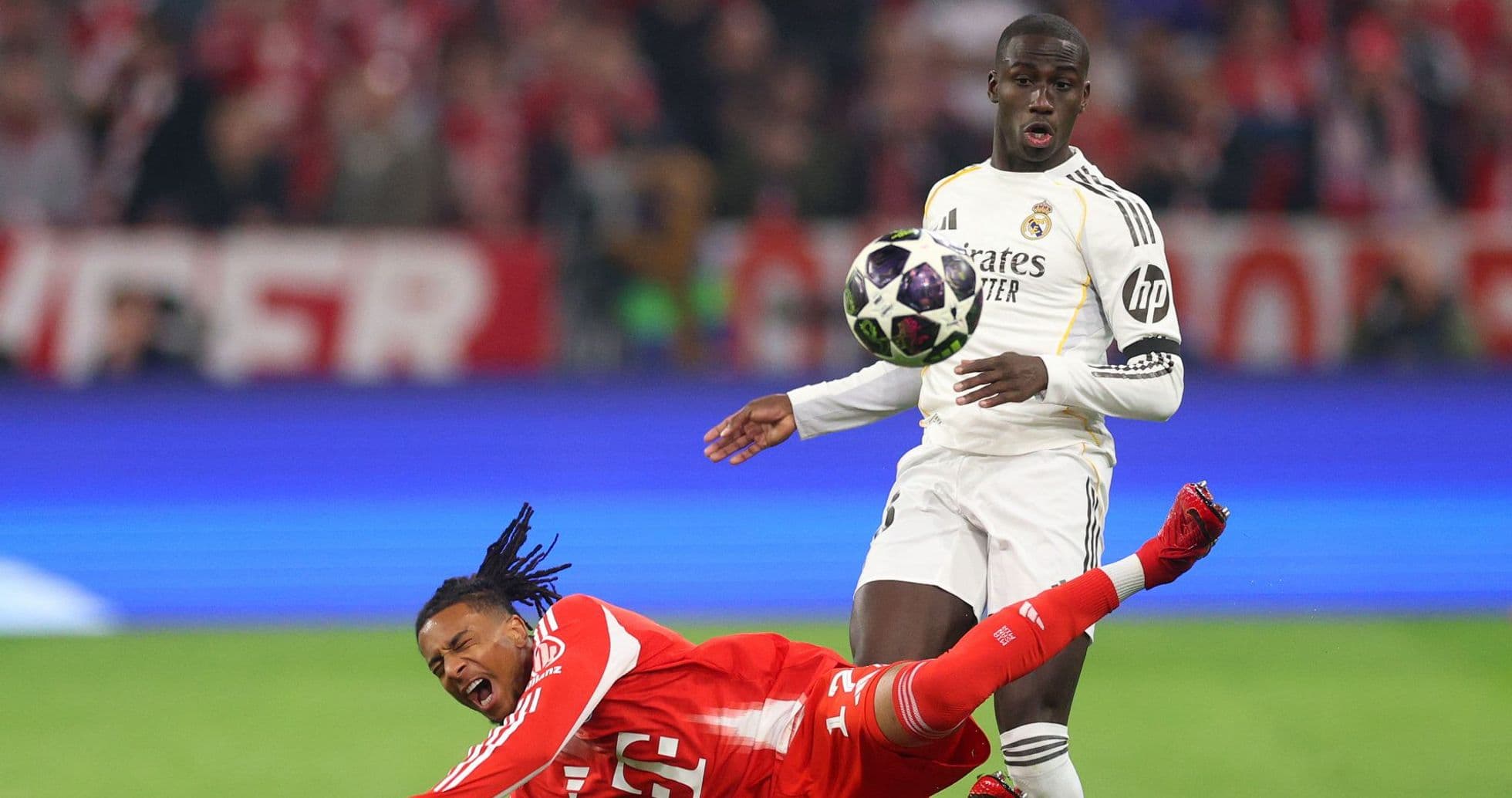
The Real Madrid defender has been overlooked again, Djed Spence of Tottenham preferred. The decision follows the earlier snub in March, when Alexander-Arnold didn’t even make Tuchel’s expanded 35-man squad.
It caps a deeply underwhelming first season in Madrid. Trent left Liverpool chasing the heights of a Ballon d’Or conversation. Instead, he finds his England career stalled, maybe even broken, under this manager. He hasn’t played for his country in close to a year, and every fresh omission hardens the sense that Tuchel simply doesn’t trust him.
The debate is obvious. Against deep defences, Alexander-Arnold’s passing could transform England’s attacking patterns. But Tuchel keeps circling back to the same concern: defensive frailty. Once again, that concern has trumped everything else.
Chelsea’s unexpected winner
There is one man quietly toasting Tuchel’s ruthlessness: Xabi Alonso.
The new Chelsea manager starts work at Cobham on July 1 and, unexpectedly, will have almost his entire English contingent at his disposal for a full pre-season. Reece James is the only Chelsea player in the England squad. Palmer has been overlooked, as have Levi Colwill and Trevoh Chalobah.
For Alonso, that is a gift. Palmer’s body has taken a beating this year, Colwill has only just returned from a long ACL lay-off, and now both can be carefully managed rather than thrown into a tournament.
With Brazil boss Carlo Ancelotti also leaving out Joao Pedro, Andrey Santos and Estevao, Chelsea’s World Cup travellers are likely to be limited to James, Marc Cucurella, Jorrel Hato, Enzo Fernandez, Moises Caicedo, Pedro Neto and Nicolas Jackson. For a new coach trying to impose ideas, that kind of access is priceless.
Tuchel’s problems are Alonso’s opportunity.
Maguire’s fall from certainty to shock
Harry Maguire’s season has been one of redemption. Restored to the Manchester United side, he clawed his way back into form and into the England squad for the last international break. He clearly believed the World Cup was the natural next step.
Tuchel thought otherwise.
The German has cut him, just as he hinted he might back in March when he admitted Maguire remained well down his list of options and that his stance on the centre-back had not changed. Concerns have swirled around Maguire’s ego and whether he would accept a back-up role, along with persistent doubts about his ability to play out from the back in a side that wants to build under pressure.
The reaction did not help his case. On the eve of the official announcement, Maguire – and some of his family – publicly vented. “I was confident I could have played a major part this summer for my country after the season I’ve had,” he wrote on social media. “I’ve been left shocked and gutted by the decision.”
Tuchel has made a cold, footballing call. The emotional fallout only underlines how big it is.
O’Reilly’s rise and Tuchel’s boldest bet
If there is a story of pure ascent in this squad, it belongs to Nico O’Reilly.
At 21, he has exploded as England’s breakout star of 2025-26, delivering 15 goal involvements from the left side of Manchester City’s defence. Now he is on the brink of heading to the World Cup as England’s starting left-back.
That status has been reinforced by two more shocks. Lewis Hall and Myles Lewis-Skelly, both tipped to travel, have been left out. Tuchel was expected to take at least one of them to push O’Reilly. Instead, he has cleared the runway for the City man, with Djed Spence likely to provide cover.
It is a daring move. O’Reilly is, at heart, a midfielder. There is no orthodox, specialist left-back in this squad. Spence is more at home on the right. Tuchel has chosen to trust O’Reilly’s intelligence and adaptability rather than a traditional full-back profile.
If it works, it will look visionary. If it fails, it will be thrown back at him all summer.
Tuchel’s vision on the line
From the day he took the England job, Tuchel has promised he would not manage by committee. He would pick his team, his way, and live with the consequences. This squad is the clearest expression yet of that promise.
He has made hard, unpopular calls: Toney in from the cold, Palmer and Foden out, Alexander-Arnold sidelined, Maguire axed, O’Reilly promoted. The core of his starting XI looks strong, but the depth behind it is thinner and riskier than many expected. Jarrod Bowen, Palmer, Alexander-Arnold, Gibbs-White, Wharton, Maguire – all could have changed games from the bench. Instead, Tuchel has put his faith in the likes of Jordan Henderson, Spence and Noni Madueke, players who do not inspire the same widespread confidence.
There is, at least, a ruthless clarity. The likely starting line-up almost picks itself. The Bellingham–Rogers question at No.10 is the only real toss-up. There will be no national clamour to shoehorn Palmer in, no exhausting arguments about Foden’s position, no weekly inquest into how to fit Alexander-Arnold into the system.
Tuchel wanted a squad free of noise. He has one. Now comes the real test: will that silence hold if England fall short of a World Cup semi-final, or will this 26-man list be remembered as the moment his grand plan began to unravel?