UEFA Champions League Final: Arsenal vs PSG Tactical Showdown
At Puskas Arena in Budapest, Paris Saint Germain and Arsenal meet in the UEFA Champions League Final, a one-off climax where Arsenal arrive as the dominant league-phase side and PSG as the dangerous outsider. In the league phase, Arsenal topped the table in 2025 with 24 points and a +19 goal difference (23 goals for, 4 against), while PSG came through as rank 11 with 14 points and a +10 goal difference (21 goals for, 11 against). This final will define the campaign for both clubs: for Arsenal, it is the chance to convert near-perfect league-phase control into a historic title; for PSG, it is an opportunity to turn a less consistent league phase into ultimate European success.
Head-to-Head Tactical Summary
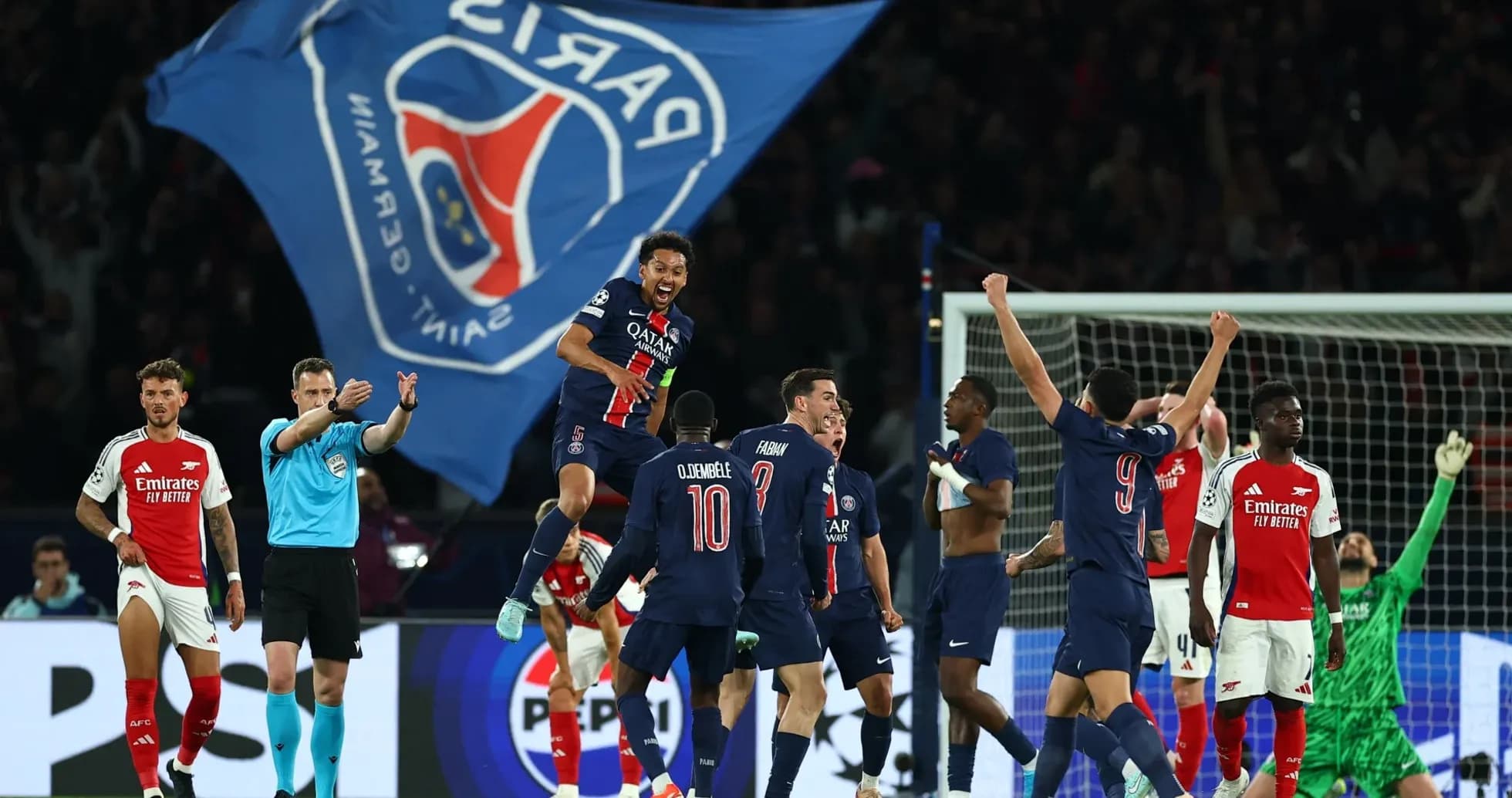
The recent Champions League semi-finals in 2025 underline how fine the margins are between these teams. On 7 May 2025 at Parc des Princes in Paris, PSG beat Arsenal 2-1, leading 1-0 at half-time and edging a tight contest in regular time. A week earlier, on 29 April 2025 at Emirates Stadium in London, PSG had already taken control with a 1-0 away win, also 1-0 up at half-time, built on defensive discipline and efficient counter-attacks.
In the 2024 league stage on 1 October 2024 at Emirates Stadium, Arsenal won 2-0, leading 2-0 at half-time and managing the game from a strong first-half platform. Earlier, in the International Champions Cup on 28 July 2018 at The National Stadium in Singapore, Arsenal produced a 5-1 win over PSG, having been 1-0 up at half-time, in a more open, pre-season environment. Going further back to 23 November 2016 at Emirates Stadium in the Champions League group stage, the sides drew 2-2, with a 1-1 scoreline at half-time, reflecting a more evenly balanced era in their rivalry. Overall, competitive meetings show PSG’s recent knockout edge against an Arsenal side that has previously shown it can control them in league-stage conditions.
Global Season Picture
- League Phase Performance: In the league phase, PSG ranked 11th with 14 points from 8 matches (4 wins, 2 draws, 2 losses), scoring 21 goals and conceding 11. Arsenal ranked 1st with a perfect 24 points from 8 matches (8 wins, 0 draws, 0 losses), with 23 goals for and only 4 against. PSG’s figures point to a high-output but occasionally exposed side (21 for, 11 against), while Arsenal combined control and resilience (23 for, 4 against) to dominate the standings.
- Season Metrics: Scope detection shows team_statistics games (PSG 16, Arsenal 14) exceed league-phase matches (8 each) by more than two, so these are across all phases of the competition metrics. Across all phases of the competition, PSG have scored 44 goals in 16 matches (2.8 per game) and conceded 22 (1.4 per game), reflecting a very aggressive attack and a defense that allows chances. Arsenal have 29 goals in 14 matches (2.1 per game) and just 6 conceded (0.4 per game), a profile of a controlled, low-risk side. Card data reinforces this: PSG accumulate more late yellow cards (42.86% of yellows between minutes 76-90), suggesting they often defend under pressure late on, while Arsenal’s yellows peak between minutes 61-75 (31.82%), consistent with a team that intensifies mid-second-half duels but rarely loses structural control.
- Form Trajectory: In the league phase, PSG’s form string “DLDWL” indicates inconsistency: draws, losses, and wins scattered, mirroring a volatile performance curve where they can both outscore opponents and drop points. Arsenal’s “WWWWW” in the league phase is a perfect upward trajectory, five straight wins that confirm sustained high-level performance and psychological momentum. That contrast sets up a final where Arsenal carry the more stable trendline, while PSG rely on peak-performance spikes rather than steady dominance.
Tactical Efficiency
Across all phases of the competition, PSG’s numbers describe a high-variance, attack-first side: 2.8 goals scored per match against 1.4 conceded. That ratio indicates a potent but occasionally porous defensive structure, especially when facing elite attacks. Arsenal’s 2.1 goals scored and 0.4 conceded per match show a more balanced and controlled efficiency: they create enough to win comfortably while conceding very few high-quality chances. In tactical terms, PSG’s “attack index” is driven by volume and risk, often accepting open games; Arsenal’s “defense index” is elite, with 9 clean sheets in 14 matches, underlining how rarely opponents generate clear opportunities.
When mapped against comparison-style expectations, PSG project as a side whose attacking output can exceed average xG in single games but whose defensive concessions also tend to be higher than a title-contending benchmark. Arsenal, by contrast, align with a model of sustained overperformance in defensive prevention: consistently limiting opponents to low xG and converting modest attacking volumes into decisive leads. The recent semi-final tie between them showed PSG can exploit transitional moments against Arsenal, but over a full campaign Arsenal’s efficiency profile is superior in both preventing goals and managing game states.
The Verdict: Seasonal Impact
This final will redefine the narrative of the 2025 UEFA Champions League campaign. For Arsenal, who dominated the league phase with maximum points and the best defensive record (23 for, 4 against in the league phase; 29 for, 6 against across all phases of the competition), anything short of lifting the trophy would feel like an under-conversion of an almost flawless year. A win would confirm them as the benchmark European side in 2025, validating a model built on defensive control and consistent output, and setting up 2026 with the status of defending champions and a clear tactical identity to sustain a title cycle.
For PSG, coming from rank 11 in the league phase (14 points, 21 for, 11 against) but with 44 goals across all phases of the competition, victory would transform a season of patches and volatility into a historic success. It would suggest that their high-variance attacking model is capable of peaking at exactly the right moments, compensating for league-phase inconsistency. A loss, however, would reinforce the perception that while PSG can win big knockout ties (as against Arsenal in the 2025 semi-finals), their structural imbalances limit their ability to convert strong spells into ultimate titles.
Looking forward, the result will shape the strategic direction of both clubs. An Arsenal triumph would likely encourage continuity: maintaining their current tactical framework, squad core, and defensive emphasis. A PSG win would validate a bold, attack-heavy approach and could reduce pressure for radical change. Conversely, if Arsenal lose, the question will be whether they need more attacking unpredictability for finals; if PSG fall short, the focus will turn to tightening a defense that concedes 1.4 goals per match across all phases of the competition. In either case, this final is not just about a trophy; it is a pivot point that will influence recruitment, tactical evolution, and the balance of power in Europe in 2026.