VfL Wolfsburg's Financial Dominance in 2. Bundesliga
VfL Wolfsburg were supposed to fall. Instead, they’ve landed on a financial trampoline.
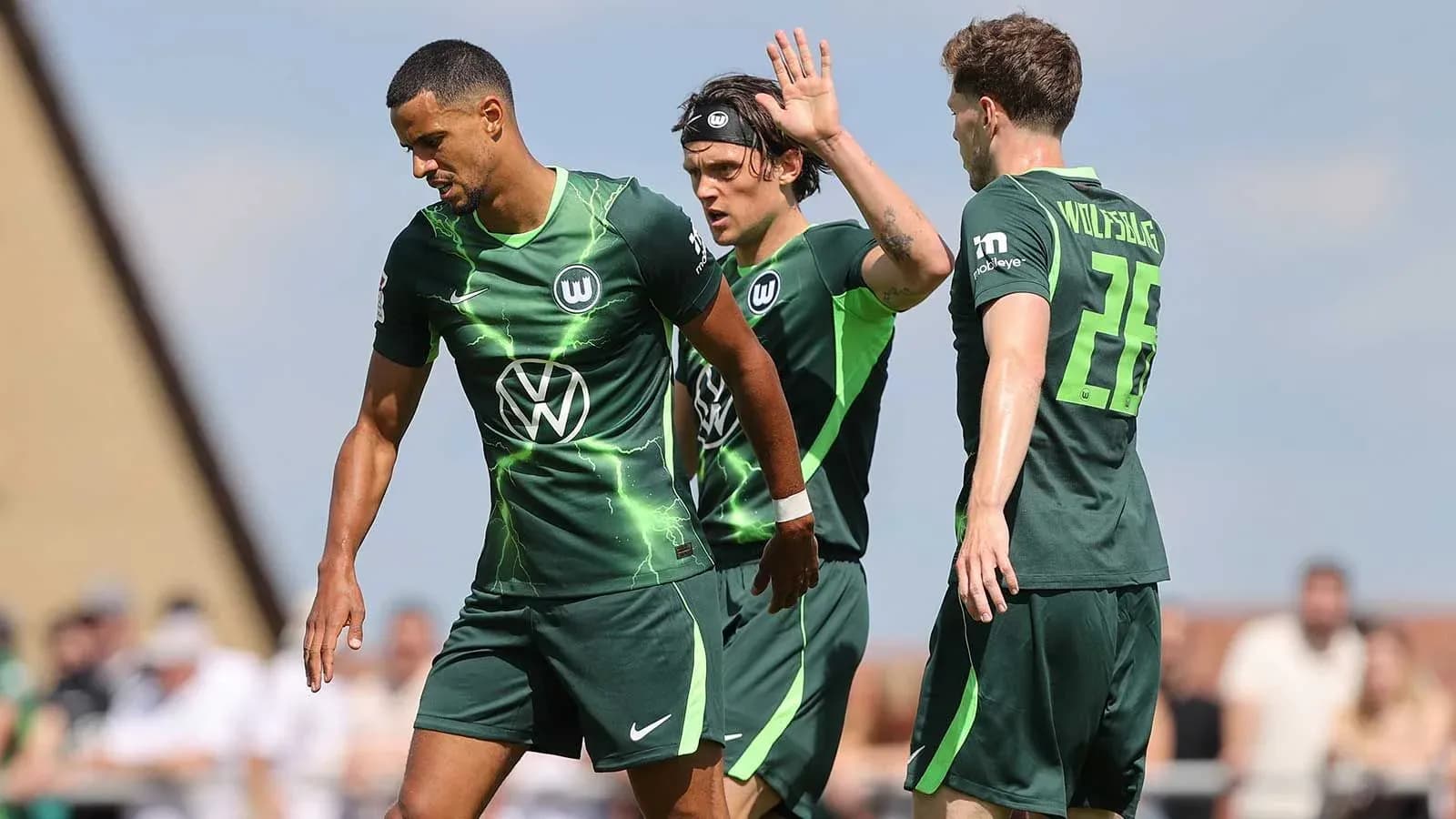
Relegation from the Bundesliga usually means belt-tightening, painful sales, and a slow rebuild. For Wolfsburg, it has become something else entirely: a chance to storm through the 2. Bundesliga with a squad that looks and feels like it belongs a tier above.
This summer, the numbers are brutal in their clarity. Wolfsburg have spent 22.7 million euros on new players. The other 17 clubs in the league, combined, have not even reached 19 million in disclosed fees. One club is outspending an entire division.
That is not a normal transfer window. That is a show of force.
Reese as a symbol of the new power structure
Nothing captures this imbalance better than Fabian Reese.
Eight million euros to Hertha BSC for their captain, their figurehead, their emotional anchor. In the 2. Bundesliga, that is not just a transfer; it is a statement.
Reese has been one of the league’s outstanding players in recent seasons. Ninety-one competitive games for Hertha, 35 goals, 31 assists. Wolfsburg sporting director Pirmin Schwegler called him “one of the strongest players in the 2. Bundesliga” when he arrived. The numbers back it up.
The move hurt because of what Reese had become in Berlin. He wasn’t just a winger or a forward. He was a symbol of a club trying to reconnect with its city after years of chaos. Hertha didn’t just extend his contract in November 2025; they built a campaign around it. A new deal until 2030, presented almost as a pact with the future.
Sporting director Benjamin Wieber said then it was no secret Hertha wanted to tie him down long term, stressing Reese’s total identification with the club. Reese himself spoke of Hertha as the club closest to his heart, of unfinished plans in Berlin. It sounded like something beyond the usual football rhetoric.
Less than a year later, that story is over. Not because Hertha changed their mind, but because a direct rival in the same division could simply put eight million euros on the table and take their symbol away.
For Hertha fans, this is not a normal departure. They have lost one of their best players on the pitch and their primary figure of identification off it. Wolfsburg gain both. And the way the deal came about exposes the reality of this new 2. Bundesliga: one relegated club can spend sums on a single player that others could not imagine for an entire squad.
The contrast could hardly be sharper. Hertha have not bought a single player. Wolfsburg are shopping like a Bundesliga club that briefly took a wrong turn.
A squad built like a battering ram
Reese is only one piece of a much bigger puzzle.
Fraser Hornby arrived from SV Darmstadt 98 for four million euros. Another direct rival stripped of an important player. Muhammed Damar joined from TSG Hoffenheim, Hauke Wahl came in from another relegated Bundesliga side for 1.8 million euros.
Then there is Robert Glatzel. The fee, around 1.7 million euros from Hamburger SV, looks modest next to Reese. The significance does not. With more than 180 second-division matches and a consistent record of hitting double figures, Glatzel is exactly the kind of proven striker most 2. Bundesliga clubs can only dream of signing – or paying.
This is where Wolfsburg’s advantage bites hardest. It is not just about transfer fees. It is about wages. VfL can offer established professionals contracts that blow the competition out of the water.
The pattern continues lower down the squad list. Alessio Besio cost 700,000 euros from SC Freiburg despite not making a single professional appearance there in three years and spending last season on loan in the 3. Liga with Verl. Timon Wellenreuther arrived from Feyenoord for around one million euros before a knee injury sidelined him for weeks. Elvis Rexhbecaj joined on a free from FC Augsburg, but his profile – more than 150 Bundesliga games – underlines the same point. Even “free” transfers operate on a different economic level when Wolfsburg are paying the wages.
This is not a youth project. It is not a speculative rebuild. The 2009 German champions are assembling a promotion machine: players proven in the Bundesliga or at the sharp end of the 2. Bundesliga, backed by a budget that looks completely out of place in this league.
The contrast with recent second-division heavyweights is stark. Schalke 04, in the 2025/26 season, took in around 8.75 million euros from sales and spent only 3.4 million euros, finishing with a transfer surplus. Their most expensive signing, Christian Gomis, cost 1.5 million euros.
Wolfsburg paid more than five times that for Reese alone.
Hamburger SV, before their promotion in 2024/25, pushed hard but still lived in another financial universe. They spent around nine million euros on new players, brought in about three million, and their record signing Alexander Rossing-Lelesiit cost roughly 2.8 million euros.
Hannover 96? Eleven million euros in income, 4.33 million spent, a healthy surplus. Careful balancing acts everywhere.
Wolfsburg have walked into this environment and dropped 22.7 million euros on new arrivals in one summer.
Not just spending – but recycling millions
The story is not as simple as a rich club turning on the taps and drowning everyone else in cash.
Wolfsburg have also sold aggressively. Patrick Wimmer moved to TSG Hoffenheim for around ten million euros. Jakub Kamiński went to 1. FC Cologne for 5.5 million. Lovro Majer left for AEK Athens for about six million. In total, Wolfsburg have brought in around 24 million euros this summer.
On paper, that means they have even posted a small surplus on transfers.
The real difference lies elsewhere: Wolfsburg can reinvest almost every euro they generate straight back into a squad built to go straight back up. No debt fire-fighting. No existential balancing acts. Just a clear, aggressive plan.
There is precedent. VfB Stuttgart did something similar in 2019/20 after relegation, spending around 25.4 million euros on new players. Silas alone cost eight million from Paris FC, Sasa Kalajdzic around six million from Admira Wacker. Stuttgart, though, sold players for roughly 79.5 million euros and finished that window with a massive surplus.
Wolfsburg are operating on a slightly smaller scale, but the principle is the same: trade big, spend big, bounce back fast.
The difference is the setting. Stuttgart’s spending surge came in a 2. Bundesliga that was not facing a club with Wolfsburg’s current squad value and backing.
Old habits, new surroundings
Heavy spending is nothing new in Wolfsburg.
Last season, they brought in around 37 million euros in transfer income and spent roughly 68 million. A transfer deficit of just under 31 million euros was the price of trying to stay in the Bundesliga.
Vinicius Souza cost about 15 million euros from Sheffield United. Mohamed Amoura, made permanent from Union Saint-Gilloise after his loan, came in at around 14.75 million euros. Million-euro transfers are part of the club’s normal operating mode.
What has changed is not Wolfsburg’s ambition. It is the league they are in.
In the Bundesliga, they were one of many clubs chasing Bayern Munich, Borussia Dortmund, Bayer Leverkusen and RB Leipzig, all of whom regularly invest double-digit millions in individual players. In that environment, Wolfsburg’s spending felt big but not outrageous.
In the 2. Bundesliga, the same sums look and feel completely different. When a single fee for Fabian Reese eclipses the entire transfer budget of some rivals, the power gap becomes impossible to ignore.
That is why this summer’s window has triggered talk of a distortion of competition. Not because Wolfsburg are breaking rules, but because they are playing a different financial game.
A Bundesliga squad in a second-tier league
The scale of that gap becomes crystal clear when you look at squad values.
According to transfermarkt.de, Wolfsburg’s squad is valued at 194.15 million euros. That figure would place them ninth in the Bundesliga. In the 2. Bundesliga, it is almost absurd.
Second place in the division belongs to fellow relegated club FC St. Pauli, whose squad comes in at 45.93 million euros. Wolfsburg’s squad is worth roughly 4.5 times as much.
Comparisons with Bayern’s dominance in the top flight almost underplay it. Bayern’s 1.07 billion-euro squad is not even worth twice as much as RB Leipzig’s (around 604 million). In the second tier, Wolfsburg are not just the big fish in a small pond. They are the shark in a swimming pool.
The strategy is obvious. Reese, Hornby, Glatzel, Wahl, Rexhbecaj, Wellenreuther – this is a squad built for a one-year stay. Anything less than immediate promotion would be a failure of historic proportions.
And yet, the ball still has to roll. Pressure, expectation, packed away grounds on cold Friday nights – all of that has undone big names before. Money does not guarantee chemistry, resilience or promotion.
But one thing is already beyond doubt. Financially, VfL Wolfsburg are not really competing with most of their new opponents. They are competing with their own past, their own ambitions, and the unspoken question hanging over this season:
With this kind of power, what excuse will they have if they do not go straight back up?