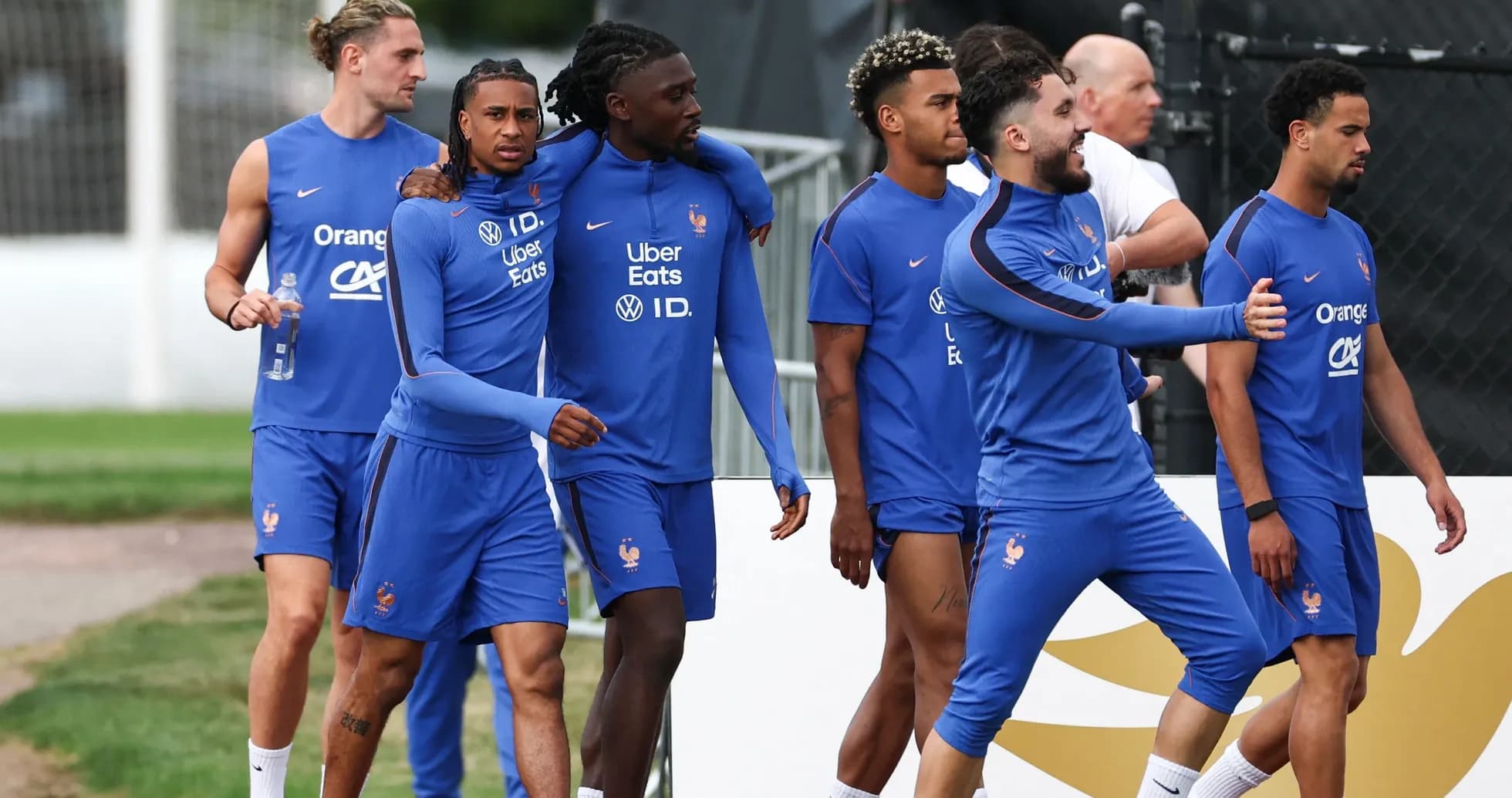
Warren Zaire-Emery's Frustration at World Cup: From PSG Star to France's Bench
In a French camp gearing up for a bruising World Cup quarter-final against Morocco, the loudest tension isn’t on the pitch. It’s simmering just behind the technical area.
France have marched into the last eight on the back of a gritty 1-0 win over Paraguay in Philadelphia, yet one of their brightest young stars has not kicked a ball. Warren Zaire-Emery, the 20-year-old heartbeat of Paris Saint-Germain’s midfield, is watching this tournament from the wrong side of the white line.
And it is starting to bite.
A starter at PSG, a spectator for France
Zaire-Emery arrived at this World Cup with every reason to believe he would be central to France’s title defence. He has just come off a commanding season for a PSG side stacked with talent and crowned by a second successive Champions League triumph. Fifty-four appearances in all competitions. Trusted in big nights. Even shunted out to right-back when needed and still delivering.
At the Parc des Princes, he is a fixture. For Luis Enrique, he is non‑negotiable.
For Didier Deschamps, so far, he is surplus.
Across five matches, as France have ground their way through the tournament, Zaire-Emery has not seen a single minute. Not a late cameo to see out a game. Not a tactical tweak to change the rhythm of a midfield battle. Nothing.
According to reports from Get French Football News, that absence is no longer just a curiosity. It is a problem. The midfielder is described as “increasingly frustrated,” struggling to understand how a season of such authority at club level has been rewarded with a place on the periphery. There is talk of “bewilderment” at his role, or lack of one, in Deschamps’ plans.
Luis Enrique’s “wonderful” player left waiting
The contrast with his status in Paris could hardly be sharper.
Luis Enrique has been effusive in public about Zaire-Emery’s quality. Back in February, the Spaniard labelled him a “wonderful” player and spelled out just how valuable he has become.
“Warren has changed, but it's not thanks to me, it's thanks to him. He's an incredible player, he can play anywhere. For me, as a coach, it's wonderful to have a player like him,” he said.
Those words carry weight when they come from a coach who has just steered PSG to the top of Europe again. They underline why this World Cup role reversal stings so much for the player. From linchpin in Paris to last resort with France, the drop-off is brutal.
Deschamps’ trusted core
Deschamps, though, has made his choice. His midfield belongs to Manu Kone and Adrien Rabiot, especially with Aurelien Tchouameni nursing a thigh injury. The Real Madrid man missed the Paraguay clash for that reason, yet even with a vacancy in the centre of the pitch, the France manager turned to Kone and Rabiot rather than his PSG prodigy.
The game against Paraguay, a physical scrap decided by a single goal, seemed tailor-made for fresh legs and energy from the bench. Zaire-Emery stayed seated. As the minutes ticked by and the challenges flew in, the decision not to use him even briefly only deepened the sense of isolation around him.
While fellow PSG teammates Bradley Barcola, Desire Doue, and Ousmane Dembele have all played prominent roles in France’s attack, Zaire-Emery has become the outlier. The one major PSG name whose World Cup is being lived through training sessions and warm-ups.
That hierarchy is now impossible for him to ignore. The reports suggest he has started to question his place in the pecking order just as the tournament reaches its most unforgiving phase.
Tension behind closed doors, but no revolt
Zaire-Emery has, by all accounts, taken his concerns to the people who matter. The same reports indicate he has spoken directly with the France coaching staff, laying out his dismay at being overlooked.
There is no sign of a dressing-room rift. No outburst, no open defiance. The camp remains intact. But the message has been delivered: he feels underused, and he does not understand why.
For a 20-year-old in a squad full of established names, that in itself is telling. It speaks to the confidence that has driven his rise at PSG, the conviction that he belongs at this level.
A chance born of misfortune?
Now, circumstance might do what tactics have not.
Tchouameni’s thigh problem threatens his involvement in the quarter-final against Morocco. If he does miss out again, Deschamps must decide whether to persist with the same Kone–Rabiot axis or finally turn to the player who has been waiting, watching, and wondering.
This is where the story sharpens. France are three wins from another world title, yet one of their most complete young midfielders has not yet joined the fight. Deschamps has trusted his veterans and his chosen core so far. The question is whether, under the pressure of knockout football and with fitness concerns mounting, he is ready to roll the dice on the man PSG already treat as indispensable.
Zaire-Emery remains on high alert, preparing as if his tournament is about to start rather than end with a whimper on the bench.
If the door opens in the quarter-final, how quickly can he turn frustration into fuel?