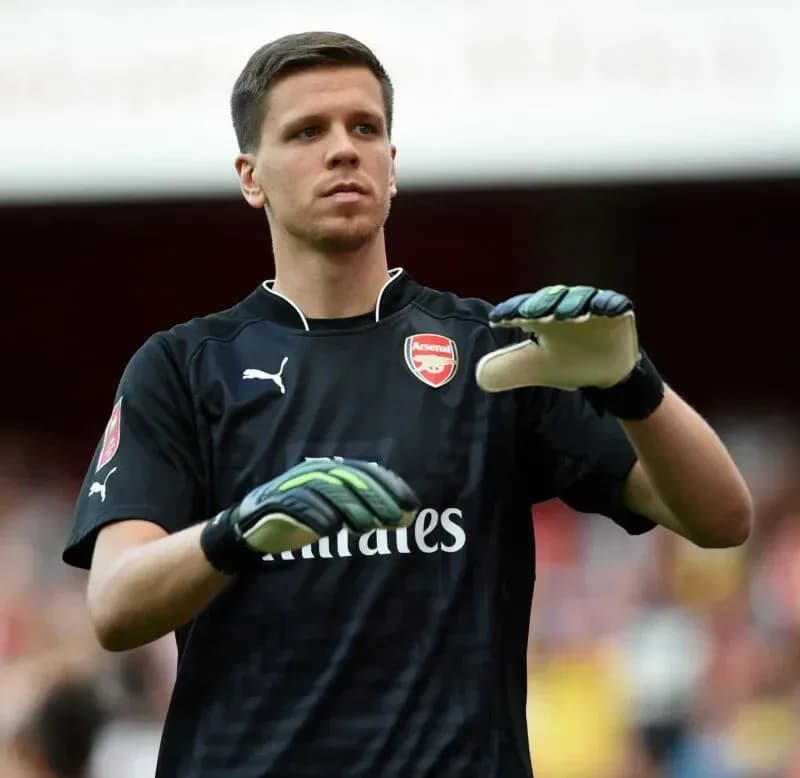
Wojciech Szczęsny's Painful Journey: From Injury to Elite Football
Wojciech Szczęsny still feels it. Every day. Almost two decades on from the moment a routine weights session at London Colney turned into a nightmare, the pain has never really left him.
He was 17 then, a talented, confident academy goalkeeper on the brink of a breakthrough at Arsenal. The work was simple enough: a bench press exercise in the club gym in 2008. Then the bar slipped.
It crashed down onto his arms with brutal force, snapping both radii and, in Arsène Wenger’s stark description, “crushed his forearms.” The room changed in an instant. A promising career suddenly looked fragile, if not finished.
The damage was severe. Szczęsny needed surgery, with metal plates inserted into both forearms. He spent six to seven months out, his development abruptly stalled. A loan move was scrapped. His rise towards the first team stopped dead.
Those around the club feared the worst. How do you come back as a goalkeeper when both forearms have been broken and rebuilt?
He did come back. He fought through rehabilitation, rebuilt his strength and timing, and eventually claimed the No 1 shirt at Arsenal. From the outside, it looked like a story of complete recovery.
From the inside, it never was.
Now 36, Szczęsny has revealed that the injury still shadows every save he makes.
“It's not that I can catch the ball without feeling pain,” he said. “There has not been a single shot that I have stopped without feeling anything. I've just gotten used to the pain and it's a very unpleasant feeling.”
Every dive, every parry, every punch carries a reminder of that day in 2008. The routine actions of his profession double as a constant test of his tolerance.
“I can do two workouts, but I already know that the third one will be an ordeal,” he admitted, laying bare the physical cost behind a career that has taken him from London to the very top of the European game.
The strain grew so relentless that, he said, it became one of the reasons he decided to retire. The idea of stepping away from the game, of finally leaving the pain behind, had started to make sense.
Then Barcelona called.
Barely a month after he had resolved to stop, the pull of elite football dragged him back, even after he had turned down an approach from Arsenal. The temptation of one more challenge, one more chapter, outweighed the daily discomfort he has long since accepted as part of his reality.
For Szczęsny, the story of that bar at London Colney is no longer just a freak accident in a gym. It is the line that runs through his entire career, from the fear of an ending at 17 to the decision, all these years later, to keep going anyway.