World Cup Showdown: Argentina vs Egypt and Switzerland vs Colombia
The World Cup has reached the point where every game feels like a verdict. One mistake, one flash of brilliance, and four years of planning either explode into life or disappear in an instant.
On Tuesday, the spotlight narrows to Atlanta and Vancouver. Argentina, the defending champions, march into a meeting with Egypt that feels loaded with history and politics. Switzerland and Colombia, meanwhile, scrap for their own place in the quarterfinal story.
Around them, the tournament keeps throwing up images that will live far longer than the final whistle: Cristiano Ronaldo’s last bow on this stage, the United States’ home-soil heartbreak, a World Cup podium used to speak about Palestine, and Kylian Mbappe drawing a hard line against racism.
This is where the World Cup stops being a festival and starts becoming a reckoning.
Argentina, Egypt and a date with history
Argentina vs Egypt: Tuesday, Atlanta Stadium, noon local (16:00 GMT).
On paper, it looks straightforward. The numbers say so, the supercomputers say so, the weight of World Cup history says so.
Argentina have long enjoyed themselves against African opposition at this tournament. The last time they faced Egypt, in a Cairo friendly back in 2008, they eased to a 2-0 win courtesy of Sergio Aguero and Nicolas Burdisso. Lionel Messi did not even play that night, missing out through injury.
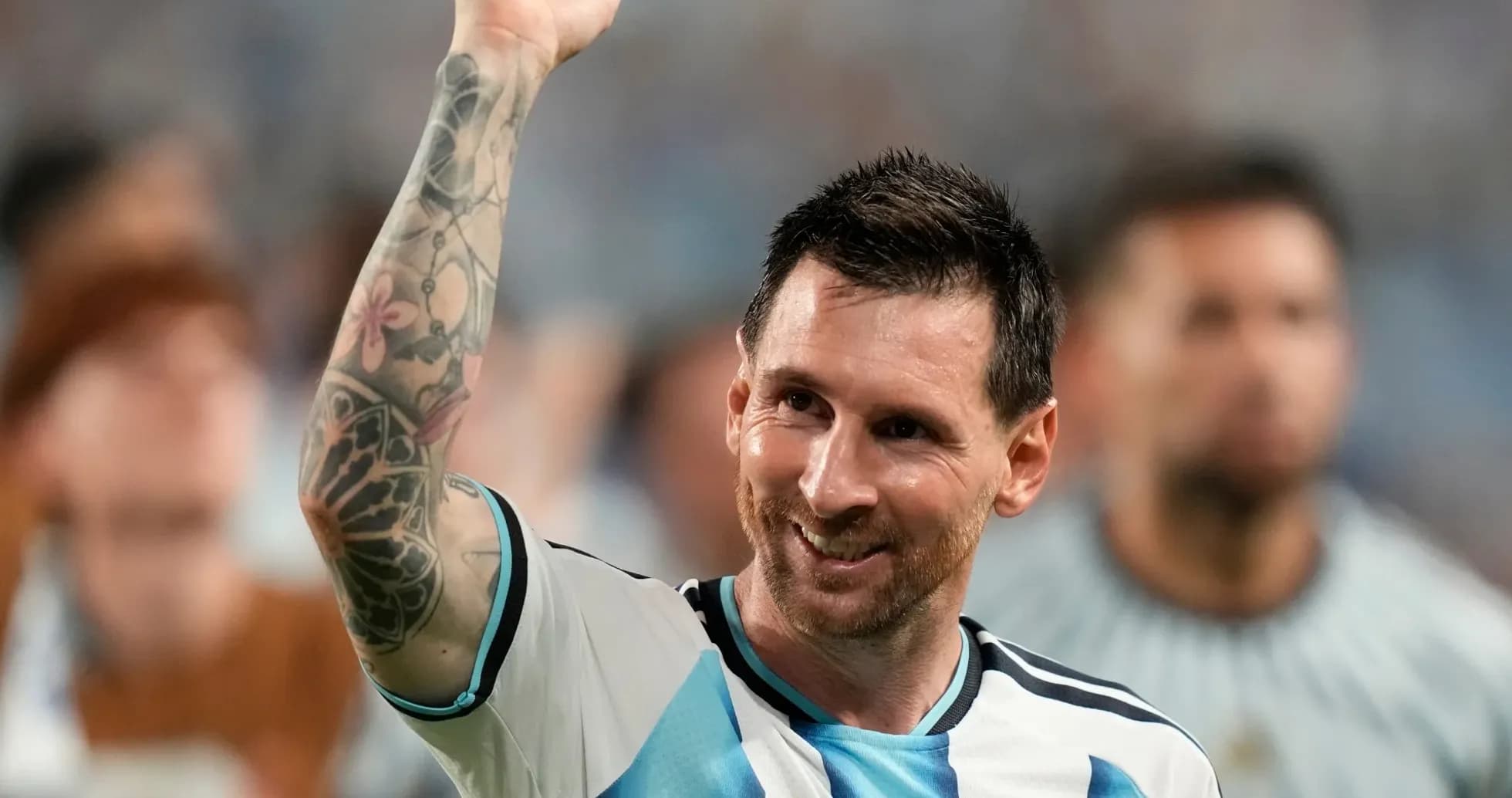
This time he is here, the centre of everything, leading a world champion side that the Opta supercomputer hands a 69.1 percent chance of winning inside 90 minutes. Twenty-five thousand simulations, one clear favourite.
Yet Egypt have not come this far to play the role of scenery.
The data still gives them a 12.3 percent chance of an upset, a small window but not a closed door. Another 18.5 percent of those simulations finish level after normal time, dragging the game into extra minutes and all the chaos that comes with them.
For Egypt, this is the biggest match in their football history, a shot at a first-ever World Cup quarterfinal. For Argentina, it is something different: the burden of expectation, the obligation to win, the knowledge that anything less than a deep run will feel like failure.
The numbers say Argentina. The World Cup has never cared much for numbers.
Colombia’s edge, Switzerland’s resolve
Switzerland vs Colombia: Tuesday, BC Place, Vancouver, 1pm local (20:00 GMT).
This is a very different contest. Less heritage, more edge.
These two have met four times before, three of those in friendlies. The most recent came in March 2007, when Colombia rolled to a 3-1 win, goals from Edixon Perea, Jhon Viafara and Andres Chitiva underlining a comfortable afternoon for Los Cafeteros.
Now, the margins are tighter.
Opta’s supercomputer leans slightly toward Colombia. Over 90 minutes, the South Americans come out on top in 41.9 percent of 25,000 pre-match simulations. Switzerland win 28.2 percent of the time. Almost a third of the scenarios – 29.9 percent – end in a draw.
It feels like that kind of game: cagey, tactical, with long stretches of tension and one moment likely to tilt the whole thing.
Colombia carry the flair and the slight statistical edge. Switzerland bring tournament nous and a long record of being stubborn when it matters most. One will blink.
Ronaldo’s final World Cup bow
Away from Tuesday’s fixtures, a different kind of finality has already arrived.
Cristiano Ronaldo has played his last World Cup match.
The 41-year-old forward, whose World Cup career has stretched across six editions, saw his country’s run end in defeat. There was no fairytale finish, no late rescue act to add one more chapter to his already vast international story.
After the game, he confirmed what many had suspected.
“I’m sad to be leaving the World Cup like this,” Ronaldo said. “I gave everything I had, I did my best, and I leave with a clear conscience. It was my last World Cup, yes, but now I’ll have time to reflect and spend time with my family. I won’t make any decisions in the heat of the moment.”
He stopped short of saying whether this was his last match for Portugal. That decision, he insisted, would not be made while emotions were still raw, and he was determined not to let his own future overshadow the team.
A giant has stepped away from the biggest stage. The tournament moves on, but a six-edition presence has gone with it.
USA’s home dream crushed by ruthless Belgium
For the United States, this World Cup was supposed to be a launchpad. A home tournament, a golden generation, a chance to show they belonged in the latter stages.
Instead, it ended in images that cut deep.
Christian Pulisic on the turf, clutching an injured ankle. Goalkeeper Matt Freese frozen with his hands on his head after a costly error. Chris Richards collapsed on the pitch, the frustration etched across his face. On the touchline, head coach Mauricio Pochettino lashing out at a rack, sending bottles flying.
Belgium did not show mercy. Charles De Ketelaere tore through the American defence, scoring twice and creating another in a 4-1 victory that sent the Red Devils into the last eight and sent the hosts out.
“It stinks,” Tyler Adams admitted. “This was a moment to have an opportunity to advance and really try and do something special. We fell short.”
The United States had Folarin Balogun back after FIFA controversially lifted his red-card suspension, a boost that should have steadied them. Instead, defensive errors sank them. Two mistakes in the first half allowed Belgium to seize control; another blunder from Freese after the break handed them yet more breathing room.
A home World Cup run, built up over years, ended not with a heroic near-miss but with a brutal lesson.
Hossam Hassan’s World Cup podium for Palestine
In Atlanta, Egypt’s coach knows he stands on the brink of a footballing milestone. He also knows the World Cup offers a rare global microphone, and he has chosen to use it.
Hossam Hassan has made Palestine part of this tournament’s narrative.
After Egypt’s win over Australia in the previous round, he held up a Palestinian flag. On Monday, in a press conference meant to look ahead to Argentina, he instead spoke for more than four minutes about the suffering of Palestinians, his voice turning a football briefing into something far more charged.
“If there is anyone in the world who does not feel for the Palestinian people, then they are not human, whether they are Arab, European, or American,” Hassan said.
He drew a stark comparison between global reactions to civilian deaths in Gaza and to animal welfare, arguing that it must never become normal for thousands of people to lose their lives in a single day.
The room responded with applause from several journalists. The message was clear: Egypt’s run to a first possible World Cup quarterfinal is historic, but Hassan refuses to separate it from the wider world.
On Tuesday, he will send his players out against the reigning champions. His words ensure the game carries more than just sporting weight.
Mbappe hits back at racist tirade
In another corner of this World Cup, the conversation has turned to racism, and Kylian Mbappe has chosen confrontation over silence.
After France’s round-of-16 win against Paraguay, Paraguayan senator Celeste Amarilla launched a racist tirade on X, targeting Mbappe with slurs and describing him as a “colonised Cameroonian, desperately trying to pass himself off as French” and a “brute” who had not learned to write. She even suggested Paraguay’s players should have slapped him after the match.
Mbappe did not let it pass.
He responded with a blistering statement on X, calling her comments “despicable” and declaring her “unworthy” of representing Paraguay’s Congress. He accused her of allowing racism to eclipse what Paraguay’s players had actually achieved at this World Cup.
“Madame Celeste Amarilla, you are a despicable woman and unworthy of your position. You do not represent Paraguay, that country which has sweated passion and honour throughout the competition,” he wrote.
He went further, arguing that her recklessness and racism had erased the memory of Paraguay’s historic effort, replacing it with the image of “an incompetent woman who gives the worst possible image of her country.” He finished with a line that made his stance unmistakable: he would never allow people like her to spread hatred and racism across the world unchecked.
Amarilla later deleted her posts and issued an open letter to Mbappe, saying she regretted using insults she herself had experienced as a mixed-race person. The damage, and the debate, remain.
France now move on to face Morocco in the quarterfinals. Mbappe will again be at the centre of attention, this time with his football and his words both echoing around the tournament.
The World Cup’s decisive phase has arrived with all its contradictions: brilliance and frailty, politics and protest, farewells and firsts. On Tuesday, Argentina, Egypt, Switzerland and Colombia step into that storm.
Only two will walk out with their story still alive.