World Cup Players Face Red Cards for Mouth-Covering
World Cup players who cover their mouths during flashpoints on the pitch now risk going straight off it.
In a significant tightening of football’s disciplinary code, Fifa has confirmed that deliberate attempts to conceal what is being said in confrontations can be punished with a red card at this summer’s World Cup. The move follows a special Fifa Council meeting in Vancouver, where two law amendments proposed by Fifa were approved and later ratified as competition opt-ins by the International Football Association Board (Ifab).
Both will be in force on the game’s biggest stage.
Mouth-covering crackdown
The image is familiar: tempers flare, players square up, and hands or shirts go over mouths as words are exchanged. That gesture now carries real jeopardy.
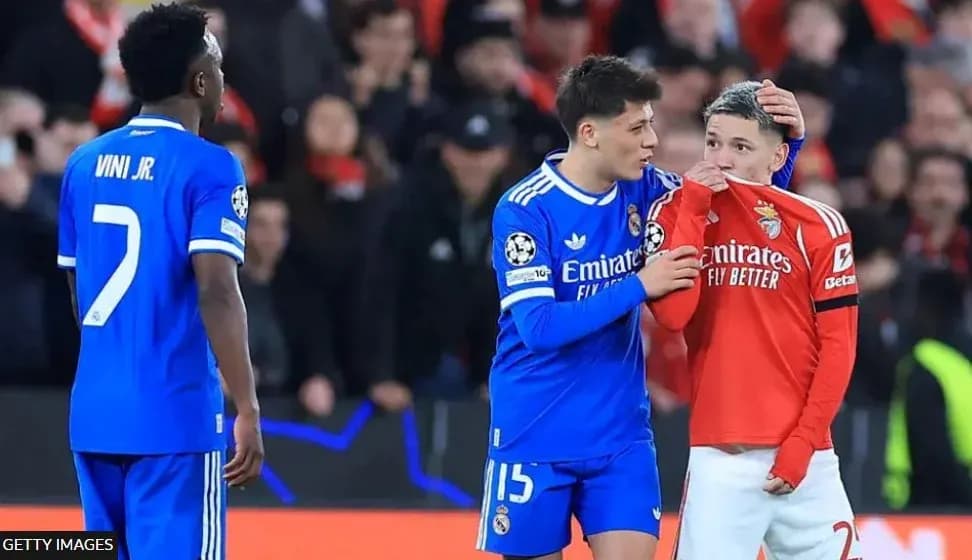
The issue exploded into the spotlight in February when Benfica winger Gianluca Prestianni lifted his shirt to cover his mouth while speaking to Real Madrid’s Vinicius Jr during a Champions League tie. The Argentina international was initially accused of racist abuse and provisionally banned for one match. After a Uefa investigation, he was instead found guilty of homophobic conduct and hit with a six-match suspension, three of those suspended.
That incident forced the debate into the open. It appeared on the agenda at Ifab’s annual general meeting in Wales, and from there moved directly into Fifa’s corridors of power.
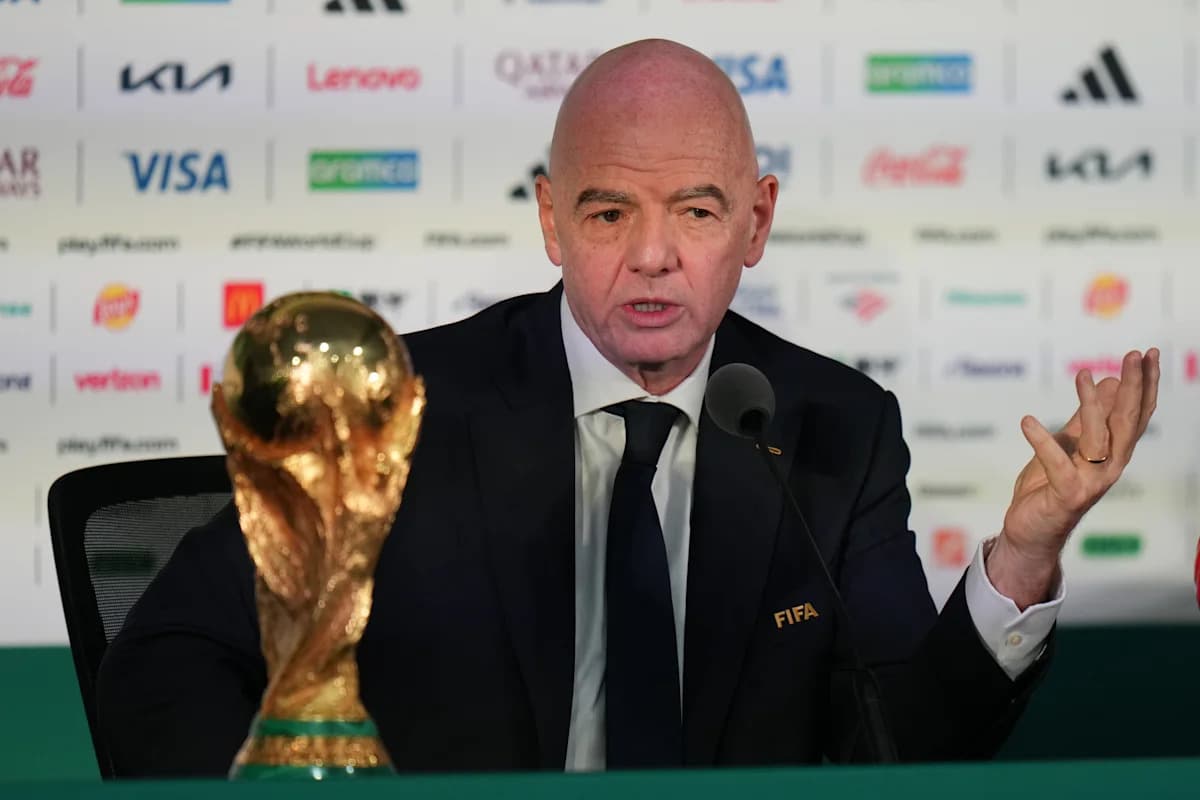
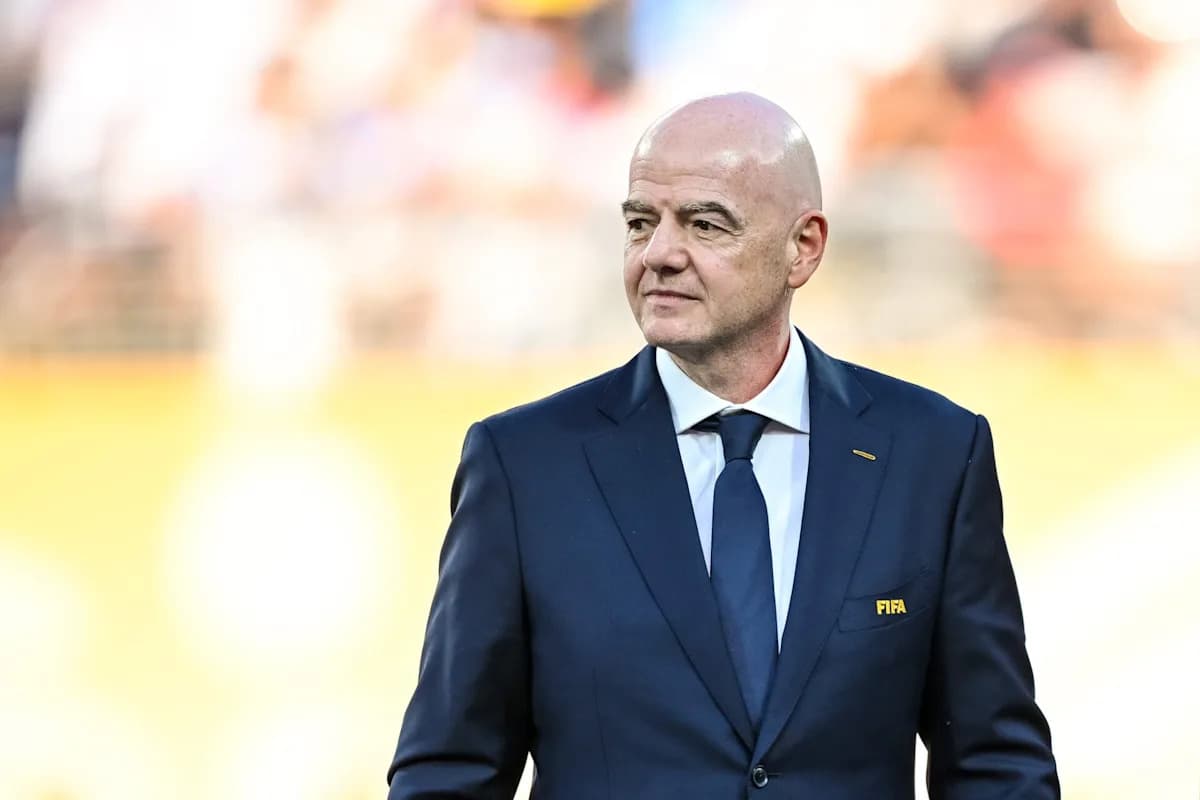
Fifa president Gianni Infantino pushed hard for a measure that would bite.
He framed it bluntly: “If a player covers his mouth and says something, and this has a racist consequence, then he has to be sent off, obviously.
“There must be a presumption that he has said something he shouldn't have said, otherwise he wouldn't have had to cover his mouth.
“If you do not have something to hide, you don't hide your mouth when you say something. That's it, as simple as that.”
The key word, though, is discretion. Referees will decide case by case, weighing the context before showing red. There is no automatic trigger; there is a powerful new tool.
Walk off, get sent off
The second major change targets a different kind of flashpoint: teams leaving the field in protest.
The rule has been sharpened after chaotic scenes at the Africa Cup of Nations final between Morocco and Senegal. When Morocco were awarded a penalty, Senegal’s players walked off, heading back towards the changing rooms in a collective show of fury.
They eventually returned. Brahim Diaz’s Panenka attempt was tame, chipped straight into the hands of Edouard Mendy, and Senegal went on to win 1-0 on the night.
The aftermath was far more brutal. The Confederation of African Football (Caf) later stripped Senegal of the title and awarded Morocco a 3-0 victory.
That episode has become a reference point for Fifa’s lawmakers. Under the new framework, players who leave the pitch in protest at a referee’s decision can be shown a red card. The clampdown does not stop there: any team official who incites players to walk off is also liable to be dismissed.
The message is clear. Disagree, argue, complain – but stay on the pitch.
A further sting sits in the small print: a team that causes a match to be abandoned will, in principle, forfeit the game. The stakes in moments of mass protest have rarely been higher.
A World Cup under stricter scrutiny
Both changes are designed with one eye on football’s darker edges: racist and discriminatory abuse hidden behind cupped hands, and orchestrated walk-offs that threaten the integrity of competition.
Now those edges come with clearer consequences.
At the World Cup, where every camera angle is magnified and every controversy ricochets around the globe within seconds, players and coaches will know the boundaries. Cover your mouth in the heat of confrontation, and you invite suspicion and potential dismissal. Lead a march to the tunnel, and you may be leading your team out of the tournament altogether.
The laws have been written. The real test comes when emotions spike, reputations are on the line, and one decision – to speak, to cover up, to walk away – could decide far more than a single match.