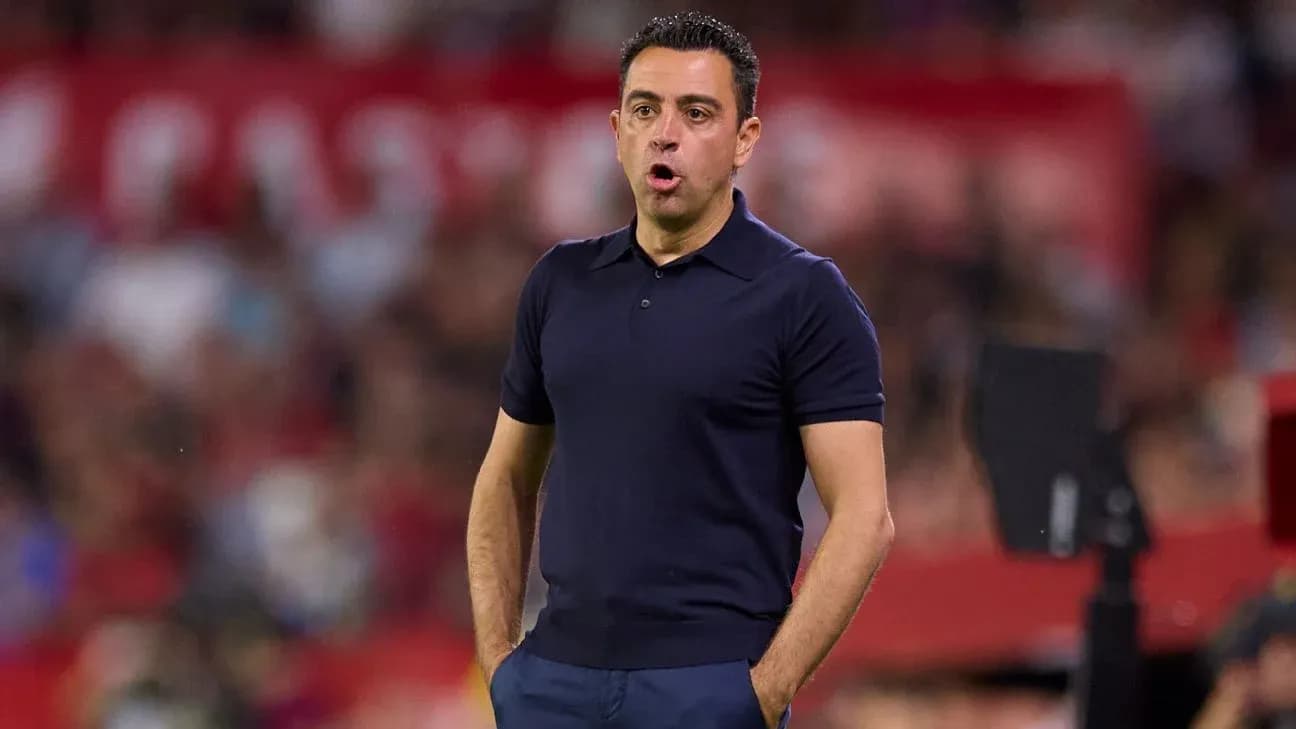
Xavi Hernández Appointed as Netherlands National Team Coach
The Netherlands have turned to one of Barcelona’s great ideologues to revive their national team, appointing Xavi Hernández on a four-year deal after Ronald Koeman’s resignation in the wake of a dismal FIFA World Cup campaign.
At 46, Xavi returns to the dugout after two years out of management following his 2024 dismissal by Barça. His contract runs through Euro 2028 and the 2030 World Cup, handing him the keys to an entire cycle with one of the game’s most storied football nations.
“I consider it a tremendous honour to become head coach of the Dutch national team,” Xavi said after the announcement.
He immediately anchored his new role in his old education. Raised in La Masia and shaped by Johan Cruyff and Rinus Michels’ philosophies, he stressed what he called a “special connection” to Dutch football.
“You could say that I am partly a son of Dutch football,” he added, name-checking Louis van Gaal, the coach who gave him his Barça debut, and Frank Rijkaard as major influences on his evolution as both player and manager.
A familiar replacement for Koeman
There is a twist of symmetry to this move. Xavi also followed Koeman at Barcelona, taking over at Camp Nou in 2021 and dragging a struggling side back to the summit of Spanish football. Within two seasons he had delivered Barça’s first LaLiga title in four years and lifted the Spanish Supercopa in 2023.
That revival did not last. A trophy-less 2023-24 campaign cost him his job and opened the door to Hansi Flick. Xavi stepped away, opting for a sabbatical despite offers from several clubs and national teams, according to ESPN. None of those proposals matched his vision. International football, he said in recent months, was the next step he craved.
Now the Netherlands have given him that platform.
A proud nation in need of a reset
Koeman’s exit followed a flat World Cup in North America, where the Dutch crashed out in the round of 32 to Morocco. For a country that sees itself as a standard-bearer for attacking, possession-based football, the manner of that elimination stung as much as the result.
Xavi’s words will sound like a manifesto to Dutch ears.
“The Netherlands has a rich football culture and a clear vision that also appeals to me enormously: attacking football, based on possession, with creativity, passion, and conviction,” he said.
Winning, he insisted, remains non-negotiable, but the way his team wins matters just as much.
“I prefer to do so in a way that reflects those characteristics and that people can enjoy. The potential for this is there, as well as a solid foundation to build upon. I look forward to starting this challenge together with the players, the staff, and everyone within the Dutch Federation.”
From maestro on the pitch to architect on the touchline
As a player, Xavi stood at the centre of two dynasties: Barcelona’s tiki-taka era and Spain’s golden generation. He won the 2010 World Cup and back-to-back European Championships in 2008 and 2012, defining an age of technical dominance and territorial control.
His coaching career began far from Europe’s spotlight. In 2019 he took over at Al Sadd in Qatar and piled up seven trophies, sharpening his ideas before returning to Barcelona. There, in the middle of financial turmoil and sporting drift, he restored a measure of order and identity, even if the project ultimately ran out of steam.
Now he inherits a national team that has long preached many of the same principles he holds dear but has struggled to impose them consistently on the biggest stage.
A philosophical reunion
In many ways, this appointment feels like a circle closing. Dutch concepts, filtered through Cruyff and Michels, helped build the Barcelona that made Xavi. Decades later, a product of that system walks into Zeist to lead the Oranje.
The Netherlands have gambled on a coach who sees their football not as a new language to learn, but as a dialect he already speaks. The question is no longer whether Xavi fits Dutch football.
It’s whether Dutch football, under his command, can finally turn philosophy back into trophies.