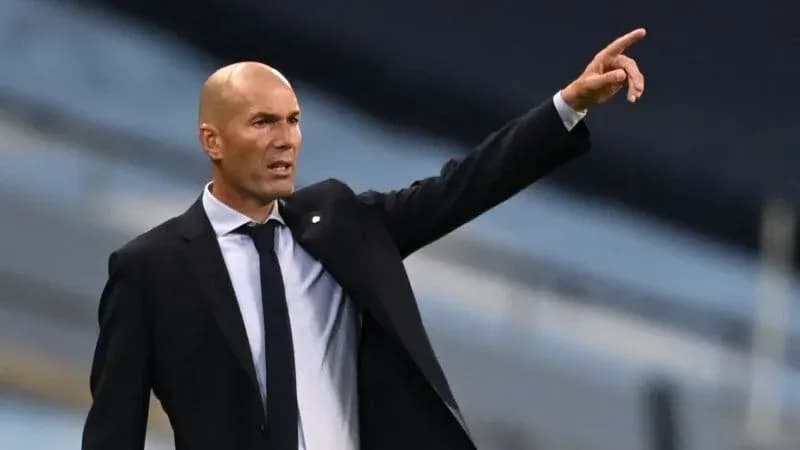
Zinedine Zidane Returns as Head Coach of France
Zinedine Zidane is back where many always believed he was destined to end up.
The French Football Federation confirmed on Tuesday that the 54-year-old has been appointed head coach of France on a four-year deal, stepping into the role vacated by Didier Deschamps after the 2026 World Cup. A long wait, a long courtship, and finally the call that both the country and its greatest modern icon had been circling for years.
Deschamps’ reign ended in frustration. Les Bleus arrived in North America as one of the heavy favorites, only to be knocked out in the semifinals by eventual champions Spain and then beaten by England in the third-place match. For a squad stacked with talent, the end felt flat, almost hollow.
Now comes Zidane, asked to lift the mood of an entire football nation.
A legend returns
For France, this is not just a managerial appointment. It is a reunion with a figure woven into the fabric of its modern football identity.
Zidane’s words at his unveiling carried the weight of that history. He called the national team “nothing greater” and spoke of joy, honor and responsibility, thanking FFF president Philippe Diallo, the Executive Committee and paying tribute to Deschamps’ 14 years in charge. He also nodded to the coaches who shaped him, before landing on the line that will echo around Clairefontaine: he has “a lot of ambition for the French Team.”
No one needs reminding what he represents.
Zizou delivered France’s first World Cup in 1998, dominating a Brazil side that had terrified the rest of the planet. Two towering headers in the final, a 3-0 win, a first star above the crest. Two years later he drove France to the European Championship, completing an extraordinary two-year spell in which Les Bleus ruled both world and continent.
He won it all, and he did it with a style that made France fall in love with its own football.
Yet his last act in a France shirt still stings. The 2006 World Cup final in Berlin, the red card for that headbutt on Marco Materazzi, the penalty shootout defeat to Italy. An era ended in a blur of anger and disbelief.
Eighteen years on, the same man walks back through the door with the chance to rewrite the emotional ending.
From the Bernabéu to Clairefontaine
This is Zidane’s first job in international management, but nobody in French football is confusing that with inexperience.
Since leaving Real Madrid in 2021 after his second spell in charge, Zidane has hovered on the edge of the international game, widely viewed as the heir-in-waiting to Deschamps. Each major tournament brought the same question: is this the moment?
Now it is.
At Madrid, Zidane built one of the most ruthless cup teams modern football has seen. Three consecutive Champions League titles. Two La Liga crowns. Two Club World Cups. He managed Cristiano Ronaldo, Sergio Ramos, Luka Modrić, Karim Benzema and a dressing room full of egos and expectation, and he made it look almost serene.
That matters. France’s squad is a constellation of stars, and the job is as much about handling personalities as it is about chalkboard tactics.
His Champions League record will follow him into every team talk at a major tournament. He knows how to navigate two-legged ties, how to survive nights when his team suffers, how to keep elite players aligned when the pressure spikes. Those lessons now move from the Bernabéu to the international stage.
The puzzle of modern France
If there is a single word that has followed France since lifting the World Cup in 2018, it is “balance.”
Zidane inherits a squad overflowing with attacking talent. Kylian Mbappé, the face of the generation. Ousmane Dembélé, electric when fit and focused. Michael Olise, Désiré Doué, Bradley Barcola – a fresh wave of creativity and pace. The options are lavish. The combinations are endless. That is both gift and headache.
France have often lurched between explosive attacking displays and periods where the structure behind the forwards seemed fragile. Zidane’s task is clear: unleash the firepower without losing the defensive steel that underpinned Deschamps’ best sides.
He did this at Madrid by building from a strong spine and trusting his forwards to decide games in moments. With France, he will again need that blend of discipline and freedom, of control and chaos.
The expectation is blunt. France want to win the World Cup again, as soon as 2030.
Chasing history
There is also a more personal chase.
Deschamps belongs to a tiny, elite group who have won the World Cup as both player and manager. Zidane already owns the medal from 1998. Now he has the chance to join his former teammate in that exclusive club from the dugout.
The narrative writes itself, but the work ahead is anything but simple. International football allows little time on the training pitch, little room for experimentation. Zidane will have to imprint his ideas quickly, manage the transition from one era to the next, and do it all under the glare of a country that remembers what peak France looks like.
He returns as a hero, yes. Yet heroes in this job are judged by trophies, not memories.
France have handed their golden generation to one of their greatest. The question now is not whether Zidane fits the shirt. It is how far he can carry it.