2026 World Cup Preview: A Swollen Giant Awaits
The 2026 World Cup kicks off in less than 12 hours, and it already feels different. Bigger, longer, heavier. Mexico against South Africa at 8pm opens a tournament that stretches to 104 matches – a month-long epic that will either be remembered as football’s bold new frontier or the moment the World Cup finally burst at the seams.
The scale is staggering. The questions are obvious.
A swollen giant
Forty‑eight teams. Twelve groups. A round of 32. The World Cup has never looked like this before, and the early stages threaten to creak under the weight of it all.
There will be glamour, of course. Spain, reigning European champions and bookmakers’ favourites, arrive with a midfield that most nations would happily build a decade around. France bring the depth and ruthlessness of back-to-back finalists. England, under Thomas Tuchel, turn up with something approaching belief after yet another near-miss at Euro 2024.
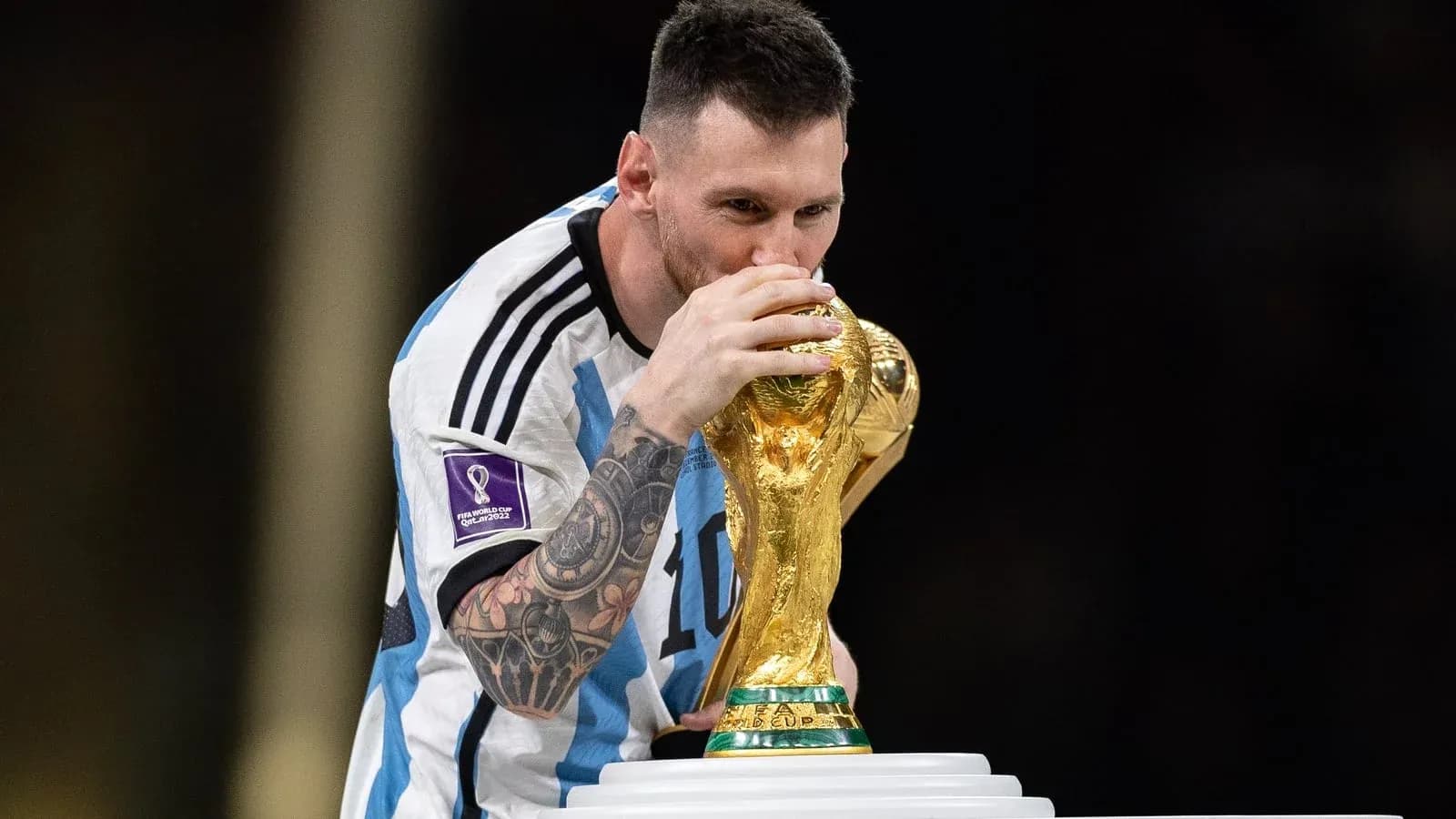
Argentina, defending champions and still built around Lionel Messi, are chasing history: no team has retained the trophy since Brazil in 1962. Messi, now 38, is hunting a second World Cup to finally move beyond Diego Maradona’s shadow in the only debate that really matters in his homeland.
Brazil come armed, as ever, with enough attacking talent to scare anybody. Portugal, captained again by Cristiano Ronaldo, are staring at a last roll of the dice in his extraordinary career. Whether that storyline powers them or distracts them will define their month.
The usual warning about Germany still stands. Julian Nagelsmann’s side arrive without the aura of past generations, but nobody is writing them off. Colombia, Senegal and Morocco lurk just beneath the elite, each with the tools to flip the script and wreck a favourite’s plans.
On paper, the cast is irresistible. The problem is how long it may take to get to the good stuff.
A group stage without fear
With 48 nations spread across 12 groups, the early fixture list is bloated with mismatches and slow burners. The jeopardy that once made World Cup group stages unmissable feels diluted.
Germany against Curacao on Sunday and Spain’s opener with Cape Verde on Monday could turn into training-ground exercises under stadium lights. Qatar v Switzerland and Uzbekistan v Colombia are unlikely to stir global pulses, even if they matter deeply to those nations involved.
The format does the heavy lifting for the superpowers. The top two from each group go through automatically, joined by the eight best third-placed sides. Two-thirds of the field will reach the knockouts. Teams can lose twice and still stumble into the last 32, punished only with a tougher draw.
It looks and feels like a safety net for the sponsor-friendly giants. The kind of net that catches early stumbles and keeps the biggest names on the billboards deep into July.
Irish fans know all about sneaking through thin groups – Italia 90 remains a fond, if faintly absurd, reference point – and that particular quirk could easily reappear. It’s entirely plausible that someone again reaches the knockouts without winning a game.
The trade-off is clear. The extended group phase may feel flat, but it gives the favourites time to play themselves into form and nurse their stars through the opening weeks.
Managing stars and heat
That suits the tournament’s headline acts. Messi, Neymar, Lamine Yamal, Bukayo Saka, Nico Williams – all are likely to be eased in, rested, or carefully rationed in the first couple of games as coaches look beyond the group and towards an eight‑match slog for those who go all the way.
Injuries and fatigue hover over everything. After another brutal club season, the World Cup becomes as much about load management as tactics.
Then there is the heat.
Matches in Miami, Houston, Guadalajara and Mexico City will unfold in some of the harshest conditions international football has ever seen in June and July. FIFA has already imposed hydration breaks at the 22nd and 67th minutes of every game, regardless of the weather, and stacked most daytime kick-offs in air‑conditioned stadiums.
Even so, the temperature will shape the football. It should, on paper, favour Spain, Brazil, Argentina and Mexico – nations accustomed to playing in heavy air and draining heat. For others, it will be a test of conditioning and discipline as much as talent.
Spain, France and the chase for control
Spain arrive with the most complete squad in the field. Their midfield depth is the envy of the tournament, their structure clear, their style defined. They want to add the World Cup to their European crown and reassert themselves as the game’s dominant national side.
One cloud hangs over them: Lamine Yamal. A hamstring injury has left his availability for the group stage uncertain. Spain have the luxury of time and depth to ease him back, but the longer he sits, the more their cutting edge blunts.
France stand in their way more than anyone else. If both win their groups, they can only collide in the semi-finals – a potential classic loaded with storylines.
Les Bleus travel with Kylian Mbappé, Ousmane Dembélé, Michael Olise and Désiré Doué in attack, a collection of forwards who can shred any defence in a few seconds. The overall quality of the squad remains formidable. This is Didier Deschamps’ final tournament in charge, and after falling on penalties in the last final, the mission is simple: finish the job this time.
England know that feeling.
England roll the dice with Tuchel
Beaten 2-1 by Spain in the Euro 2024 final, England have turned the page. Gareth Southgate’s risk-averse caution has been replaced by Tuchel’s more fluid, high-intensity approach. The change is not just tactical; it’s cultural.
Tuchel has already put his stamp on the squad list. Phil Foden, Cole Palmer, Trent Alexander-Arnold – all left at home. Not because of form or reputation, but because they don’t fit the system he wants. It is a ruthless, calculated gamble.
If it works, he looks visionary. If it doesn’t, those omissions will become the stick that beats him from the first misstep to the flight home.
South American giants with questions
Brazil and Argentina, the tournament’s emotional heavyweights, both arrive with doubts.
Carlo Ancelotti now leads the Seleção. He has high-class options at both ends of the pitch, yet the midfield remains a puzzle. Qualification was patchy, the performances uneven. Vinícius Júnior, Raphinha and Marquinhos bring genuine star quality, but the aura of invincibility has faded.
Argentina’s concerns are different, but no less real. They want to become the first side in more than 60 years to retain the World Cup. Everything still orbits Messi. The question is whether his body can keep pace with his brain for one last month at the summit.
If he can turn back the clock, Argentina become terrifying again. If he can’t, the holders look suddenly human.
A tournament that asks a lot
For fans, this World Cup is demanding long before a ball is kicked.
Irish viewers in particular face brutal kick-off times. Brazil’s first game, against Morocco, starts at 11pm on a Saturday night. Argentina’s opener is scheduled for 2am on a Wednesday. Alarm clocks, blackout curtains and industrial quantities of coffee will be part of the ritual.
In the stands, supporters will wrestle with long travel, awkward schedules and stifling conditions. At home, viewers are being asked for time, stamina and patience to navigate 104 matches.
The reward? That’s the gamble.
The hope is that the knockout stages – with the big nations sharpened, the upstarts emboldened and the stakes finally rising – will justify the excess. Whether this swollen World Cup proves worth the strain will only truly be known on 19 July, when the last whistle blows and football decides if bigger really meant better.