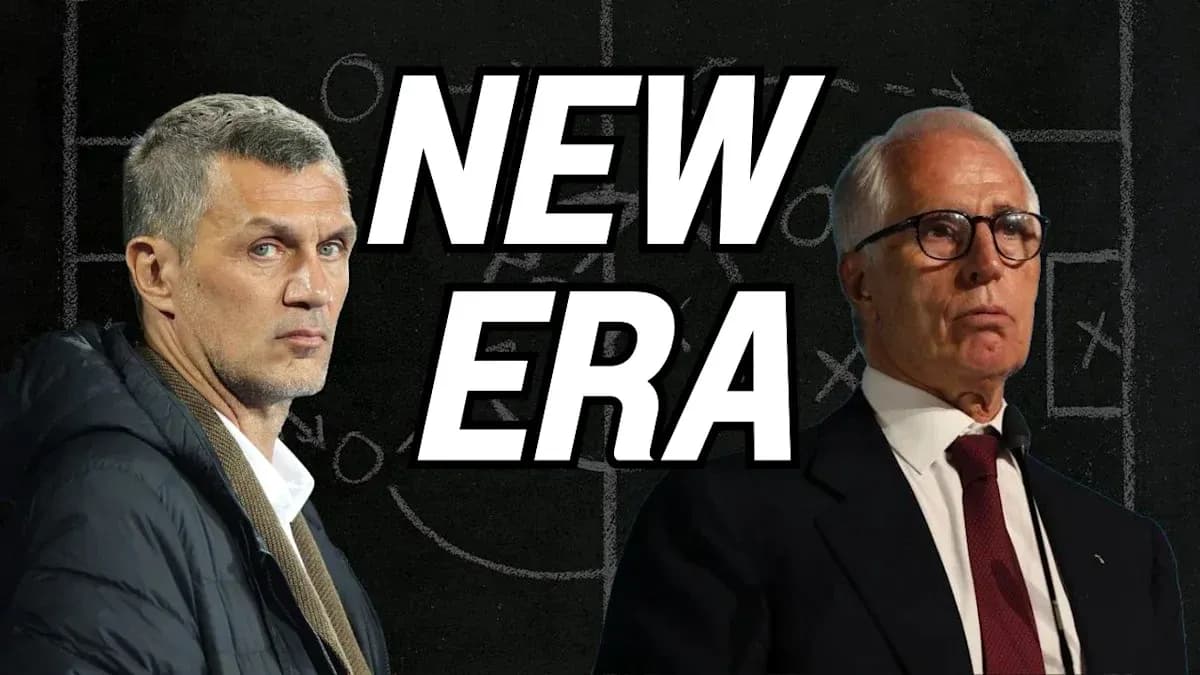
Giovanni Malagò's Mission to Rebuild the Azzurri
Giovanni Malagò has stepped into the most scrutinised office in Italian football with a mandate that leaves no room for half measures: rebuild the Azzurri from the ground up.
Elected as the new FIGC President with almost 69% of the votes, Malagò arrives with strong political backing and an urgent to‑do list. The national team is in need of identity, credibility and a long‑term plan. He has been handed the keys to all three.
At the top of his agenda: a new head coach and a new technical director. Those two appointments will shape not just the next qualifying campaign, but the direction of Italian football for years. This is not a cosmetic reshuffle. It is a reset.
And already, one name is cutting through the noise.
Maldini back for the Azzurri?
According to Gazzetta and Corriere della Sera, Paolo Maldini has already been contacted over a potential role as the Azzurri’s technical director. Just the suggestion of his return to the national setup has jolted the conversation.
Maldini is not simply a former captain. He is a symbol. Seven league titles, five European Cups with AC Milan, and a career that defined defensive excellence and professionalism. More recently, he moved upstairs at Milan as a football executive, helping to build a young, aggressive squad that climbed back to the top of Serie A.
Now his profile fits exactly what Italy crave: authority, vision, and the respect of players at the highest level.
Malagò knows that his early moves must send a message. Bringing in Maldini, even at the discussion stage, does just that. It tells players, fans and clubs that the federation is willing to place football people with heavyweight experience at the heart of the project.
A presidency with a clear mission
Malagò’s mission has been spelled out in simple terms: rebuild the national team, restore confidence, and lay the foundations for future success. No shortcuts, no quick fixes.
Rebuilding means more than picking a new CT. It means creating a structure in which a technical director can oversee a coherent footballing philosophy, from youth to senior level. It means giving that figure enough power to shape the sporting side of the project, rather than leaving the role as a ceremonial title.
That is where Maldini’s candidacy becomes so intriguing. His track record at Milan showed he can operate in a modern football environment, balancing tradition with data, scouting and financial constraints. His presence would carry weight in any dressing room, any boardroom, any negotiation.
The stakes are obvious. Get these appointments right, and Italy can start to move with purpose again. Get them wrong, and another cycle risks being lost.
For now, the numbers underline the strength of Malagò’s position: almost 69% of the vote gives him political capital and time. What he does with that time will define his legacy.
One thing is already clear. With Giovanni Malagò in charge and Paolo Maldini firmly in the conversation, the next Italy will not be built quietly in the shadows.