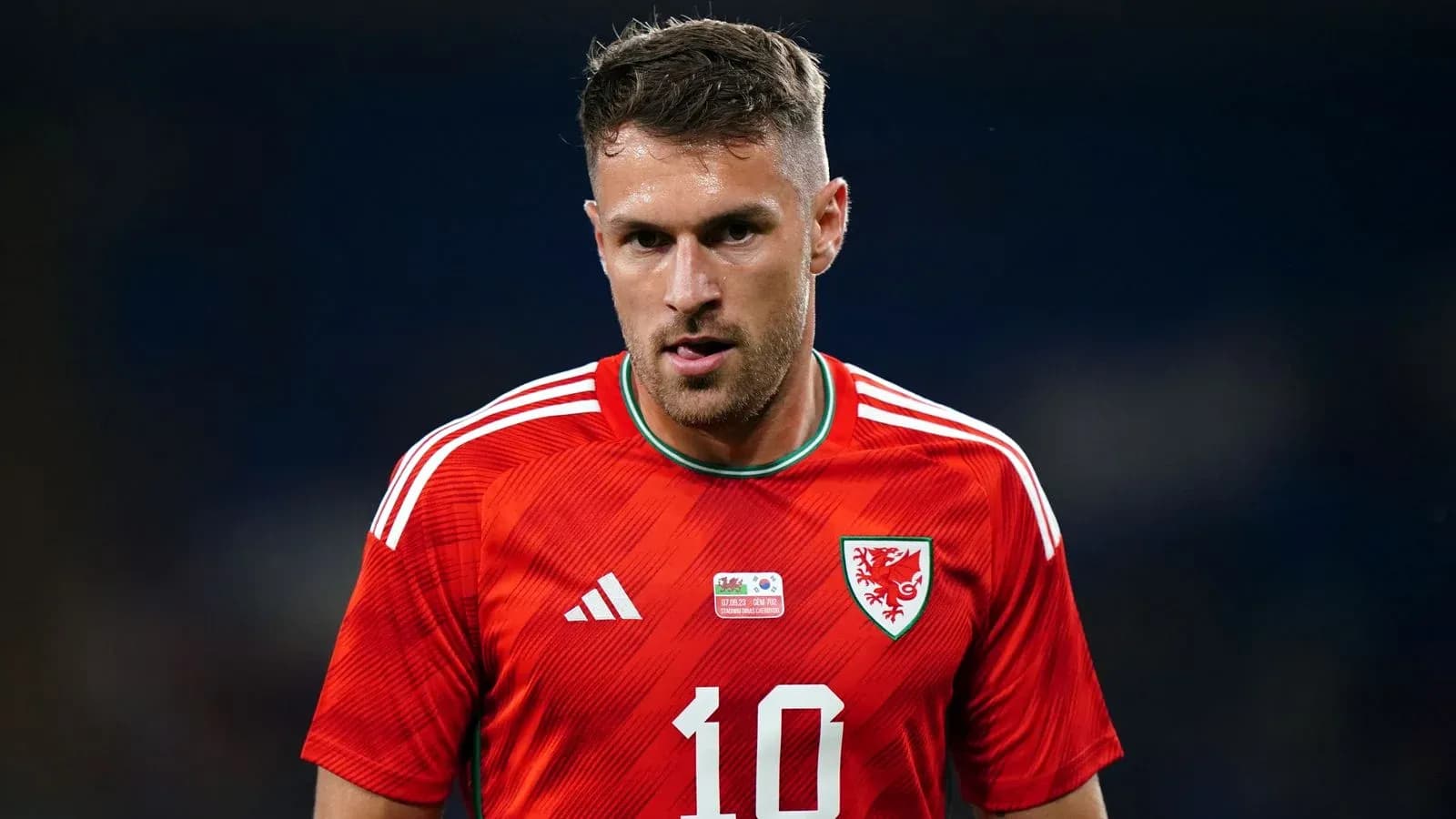
Aaron Ramsey has stepped away from football, closing a 20-year career that carried him from a teenage prodigy at Cardiff to the heart of Wales’ golden generation and the engine room of Arsenal.
At 35, with more than 250 Premier League appearances for Arsenal and 86 caps for Wales, Ramsey announced his retirement on Instagram, choosing his own moment after several months without a club.
“This has not been an easy decision to make,” he wrote. “After a lot of consideration, I have decided to retire from football.”
From Red Wall hero to reluctant goodbye
Ramsey’s message began where his story always seemed to return: Wales.
“It has been my privilege to wear the Welsh shirt and experience so many incredible moments in it,” he said, paying tribute to the managers, staff and the supporters who turned every Wales game into a spectacle.
“To the Red Wall. You have been there through thick and thin… We've been through everything together and it's been an honour to represent you. Diolch.”
For Wales, the feeling is mutual. The national side hailed him as a “world-class talent” and “an integral part of the golden generation that made international history” – a player who helped drag the country onto the major-tournament stage and keep it there.
Ramsey reached three major tournaments with Wales, the defining chapter coming at Euro 2016. He lit up that summer in France, driving Chris Coleman’s side to a stunning semi-final run and earning a place in the team of the tournament. For a nation long starved of such stages, he became a symbol of what was suddenly possible.
By then, his status was already entrenched. Gary Speed had handed him the captain’s armband at just 20, a striking show of faith in a midfielder who played with a veteran’s authority. Ramsey would later take on the role permanently, a standard-bearer for a generation that changed the way Welsh football saw itself.
From Cardiff prodigy to Arsenal mainstay
The journey started in south Wales. Ramsey broke through at Cardiff in April 2007, becoming the club’s youngest-ever player at 16 years and 124 days. He did not linger on the fringes. Within a year he was a regular, his poise on the ball and maturity off it marking him out as a rare prospect.
Arsenal moved quickly. Just under £5m took him to the Emirates, a bold investment in a teenager who still looked like he should be preparing for exams rather than Premier League midfields.
The adaptation took time. So did his body. Injuries, which would haunt much of his career, slowed his early progress in north London. Even so, the talent kept breaking through the interruptions. He was named Welsh Young Player of the Year in both 2009 and 2010, a sign of how firmly he sat at the centre of the country’s footballing future.
Once established, he became a fixture. Ramsey made 369 appearances for Arsenal, scoring 64 goals and, at his peak, driving Arsène Wenger’s side with a mix of tireless running, late penalty-box arrivals and a knack for the decisive moment.
In the 2013/14 Premier League season he hit double figures, his most prolific campaign, and twice he took Arsenal’s Player of the Year award – no small feat in squads packed with attacking talent.
A serial cup winner
His time in north London brought silverware. Ramsey won three FA Cups with Arsenal, often at the heart of their biggest days. Those finals and those surges from midfield became a core part of his legacy in England.
In 2019, he took on a new challenge with Juventus. The move to Turin delivered more medals: a Scudetto under Maurizio Sarri and a Coppa Italia the following year, adding Italian honours to his English haul.
A short loan at Rangers followed, and with it another trophy – the Scottish Cup – and a run to the Europa League final against Eintracht Frankfurt. Ramsey came on in the 117th minute of that final, only to endure one of the cruellest moments of his career as he missed the decisive penalty in a 5-4 shootout defeat.
It could have lingered. Instead, he pushed on again.
World Cup closure
By 2022, Ramsey was back where he always seemed most at home: in the red of Wales, carrying the hopes of a nation on the biggest stage of all.
He started all three of Wales’ matches at the World Cup in Qatar, part of the country’s first appearance at the tournament since 1958. The campaign did not bring the fairytale many had dreamed of, but the symbolism was unmistakable. Ramsey had helped drag Wales to a place that had felt unreachable for generations.
His club career wound its way through a second spell at boyhood side Cardiff and then to Mexico with UNAM, where his contract was terminated by mutual consent in October last year. He had also taken on a brief stint as interim manager at Cardiff, a nod to the leadership qualities that had long defined him.
By the time he chose to retire, he had done enough to be remembered in three different footballing cultures: as a Cardiff prodigy, an Arsenal stalwart and the beating heart of modern Welsh football.
In his farewell, Ramsey reserved special thanks for his family. “Without you by my side throughout, none of this would have been possible,” he wrote.
A 20-year journey, from a 16-year-old debutant in Cardiff blue to a standard-bearer in Welsh red and a decorated midfielder in Arsenal colours, ends not with fanfare but with a simple decision on his own terms.
The medals, the scars, the memories of France in 2016 and Qatar in 2022 remain. The question now is who steps into the space he leaves behind for Wales – and how long it will be before they find another midfielder who carried so much, for so long.