AC Milan vs Bologna: Serie A Tactical Lesson
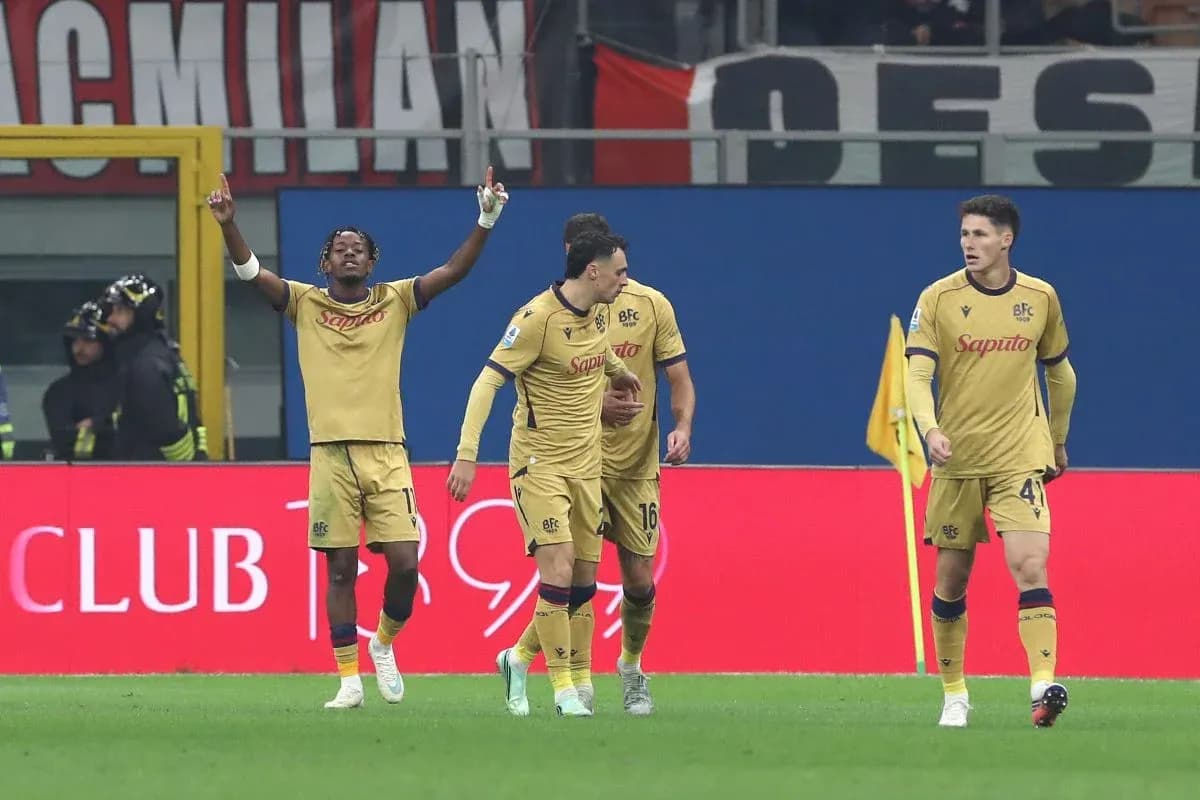
San Siro under the lights, Serie A’s Regular Season - 9, and a script nobody in red and black expected: AC Milan 2, Bologna 4. What was billed as a statement night for a top‑four contender instead became a brutal tactical lesson, reshaping the narrative for both squads as the campaign deepens.
I. The Big Picture – A tale of two identities
Heading into this game, Milan were a model of controlled ambition. Fifth in Serie A with 18 points from 9 matches, they had a clear statistical profile: 18 goals scored and 11 conceded overall, a goal difference of +7. At home, they had been assertive and efficient, winning 3 of 4, scoring 10 and conceding 6. Their overall attacking output of 2.0 goals per game, with 2.5 at home, painted them as a side that could overwhelm visitors at San Siro in bursts.
Those bursts were not random. Milan’s goals skewed heavily towards the 61–75 minute window, where they had scored 10 of their 18 overall goals, an imposing 55.56% late-third surge. Yet the same period and the final quarter of games exposed a more fragile side: 3 goals conceded between 61–75 minutes (27.27% of their total against) and a worrying 5 conceded between 76–90 minutes (45.45%). Milan were a team that lived – and sometimes died – in chaos as legs tired.
Bologna arrived as an awkward, transitional opponent. Eleventh with 11 points from 9 matches, they were neither relegation fodder nor fully formed contenders. Their overall record was balanced: 12 scored, 12 conceded, goal difference 0. On their travels, though, they were quietly dangerous: 3 wins from 5 away games, 8 scored and only 5 conceded, mirroring Milan’s away numbers.
Their attacking minute map hinted at a side that could hurt you early and late: 27.27% of their goals in the first 15 minutes and another 27.27% in the final 15. Defensively, they were more porous across the middle and late phases, with 23.08% of their goals conceded in each of the 46–60, 61–75, and 76–90 ranges. This was the critical intersection: Milan’s late-game surge against Bologna’s late-game looseness – and yet the night twisted in favour of the visitors.
II. Tactical Voids – Absences and structural compromises
Both coaches arrived with heavily edited scripts due to injuries.
Ruben Amorim’s Milan were stripped of some of their spine and variety. The absence of Adrien Rabiot (calf injury), Ruben Loftus-Cheek (thigh), S. Chukwueze (hip), A. Saelemaekers (ankle), M. Gabbia, M. Gila and D. Moreira forced a reconfiguration of the midfield and backline rotation. Crucially, Rabiot’s dual role as one of Serie A’s leading scorers and creators – 4 goals and 3 assists in 7 appearances – was missing from the engine room. Milan’s most complete midfielder, a top‑tier passer (324 total passes at 87% accuracy) and reliable box-arriver, was unavailable on a night that cried out for control and leadership when momentum swung.
In his place, Amorim leaned into youth and mobility. Y. Musah and A. Jashari formed the double pivot in a 4‑2‑3‑1, with O. Hutchinson, A. Cissé and D. Bartesaghi supporting Gonçalo Ramos. The structure promised verticality and pressing, but lacked Rabiot’s calming metronome and Loftus-Cheek’s ball-carrying weight.
At the back, S. Pavlović anchored the defensive line, a high-volume defender who had already accumulated 22 tackles, 2 blocks and 6 interceptions in Serie A, along with 3 yellow cards. His aggressive front-foot style is part of Milan’s identity, but with so many defensive absences, the margin for error around him shrank.
Raffaele Palladino’s Bologna were also shorn of key wide and attacking threats: L. De Silvestri, R. Orsolini, R. Piccoli, J. Enem and E. Holm all missed out. Without Orsolini’s one‑v‑one threat and De Silvestri’s experience, Bologna leaned into structure and collective movement.
Palladino set his side up in a 3‑4‑3: Ł. Skorupski behind a back three of M. Darmian, N. Casale and A. Theate; a hard‑working midfield four with N. Zortea and R. Alhassane as wing-backs flanking L. Ferguson and T. Pobega; and a fluid front three of F. Bernardeschi, J. Odgaard and S. Mbangula. It was a shape designed to absorb Milan’s central surges and then punch back into the channels.
Disciplinary trends added another layer. Milan’s yellow cards this season have been scattered but spike late: 26.67% between 76–90 and another 20.00% in added time. Bologna, meanwhile, are most combustible in the 31–45 window, where 35.29% of their yellows arrive. It set the stage for a first-half storm and a nervy finale – and the match duly followed an open, emotional rhythm.
III. Key Matchups – Hunter vs Shield, Engine Room vs Enforcer
The “Hunter vs Shield” narrative for Milan centred on their collective attack, given the absence of Rabiot. With 10 goals at home from 4 games, their 2.5 home goals per match met a Bologna defence conceding 1.0 goal per game away. On paper, Milan’s front four – Hutchinson between the lines, Cissé as a direct runner, Bartesaghi tucking in and Gonçalo Ramos leading the line – should have stretched Bologna’s back three.
Yet Bologna’s away profile, conceding only 5 goals in 5 games, suggested a unit comfortable in deep blocks. Theate’s left-footed aggression, Casale’s aerial presence, and Darmian’s positional intelligence formed a shield that could step out on Cissé’s dribbles and track Ramos’ penalty-box movements.
The “Engine Room” clash was equally decisive. Without Rabiot, Milan leaned on Musah’s ball-carrying and Jashari’s distribution to navigate through Ferguson and Pobega. Ferguson, one of Bologna’s most complete midfielders, is a natural enforcer-playmaker hybrid, capable of snapping into duels and then springing transitions. Pobega, facing his former club, added physicality and late runs.
On Bologna’s creative flank, Juan Miranda loomed as a key subplot even from the bench. One of Serie A’s top assist providers with 4 assists and 13 key passes, his profile – 235 passes at 80% accuracy, 14 tackles, 2 blocks, 7 interceptions – underlines how Bologna’s width is built on intelligent full-back play. Even when not starting, his presence in the squad embodies the team’s tactical idea: progression from wide zones, early crosses and overlaps.
At the back for Milan, Pavlović’s duel numbers – 85 total duels, 61 won – show a defender who thrives in physical battles. His three yellow cards, however, underline the risk: if Bologna could isolate him against Mbangula or Odgaard in space, the line between dominance and over-commitment would be thin.
IV. Statistical Prognosis – xG patterns without the numbers
Even without explicit xG data, the season’s shot and goal patterns sketch a predictive model. Milan, with 18 goals from 9 matches, are performing like a side whose underlying chance creation is strong, especially given they have failed to score in 0 matches overall. Their penalty record, though, is a red flag: 2 penalties awarded in total, with only 1 scored and 1 missed, a 50.00% conversion rate. In high-pressure home fixtures, that fragility from the spot can tilt tight games.
Bologna’s profile is more modest but efficient. Twelve goals from 9 matches, with 1.6 goals per game away, suggest a team that does not flood the box but picks its moments. Their single penalty this season has been converted, a clean 100.00% record from the spot. Combined with their capacity to strike early (27.27% of their goals in the opening 15) and late (another 27.27% in the final 15), they fit the profile of an away side that survives long spells without the ball before landing decisive blows.
Overlaying the minute distributions, the critical intersection becomes stark. Milan are at their most potent between 61–75 minutes, but they also concede heavily from 61 minutes onwards, particularly 76–90. Bologna, meanwhile, ramp up their scoring threat again in the final quarter, where Milan are statistically most vulnerable. In a match where Milan surged to a 2–1 half-time lead but lost 4–2 by full time, that data reads less like a coincidence and more like a warning that went unheeded.
Following this result, the numbers will harden the lesson. Milan’s biggest home defeat of the season was already a 2–4 loss; Bologna have now reproduced that exact away scoreline, reinforcing their identity as a dangerous, opportunistic travelling side. For Amorim, the task is to rebuild a late-game structure that can protect San Siro leads, especially while key midfield controllers like Rabiot and Loftus-Cheek remain sidelined.
For Palladino, this is the blueprint: a compact 3‑4‑3, disciplined away defending and a front three that punishes transitions. Bologna’s season may yet be defined by how often they can reproduce the San Siro template – suffering, surviving, and then ruthlessly rewriting the script.