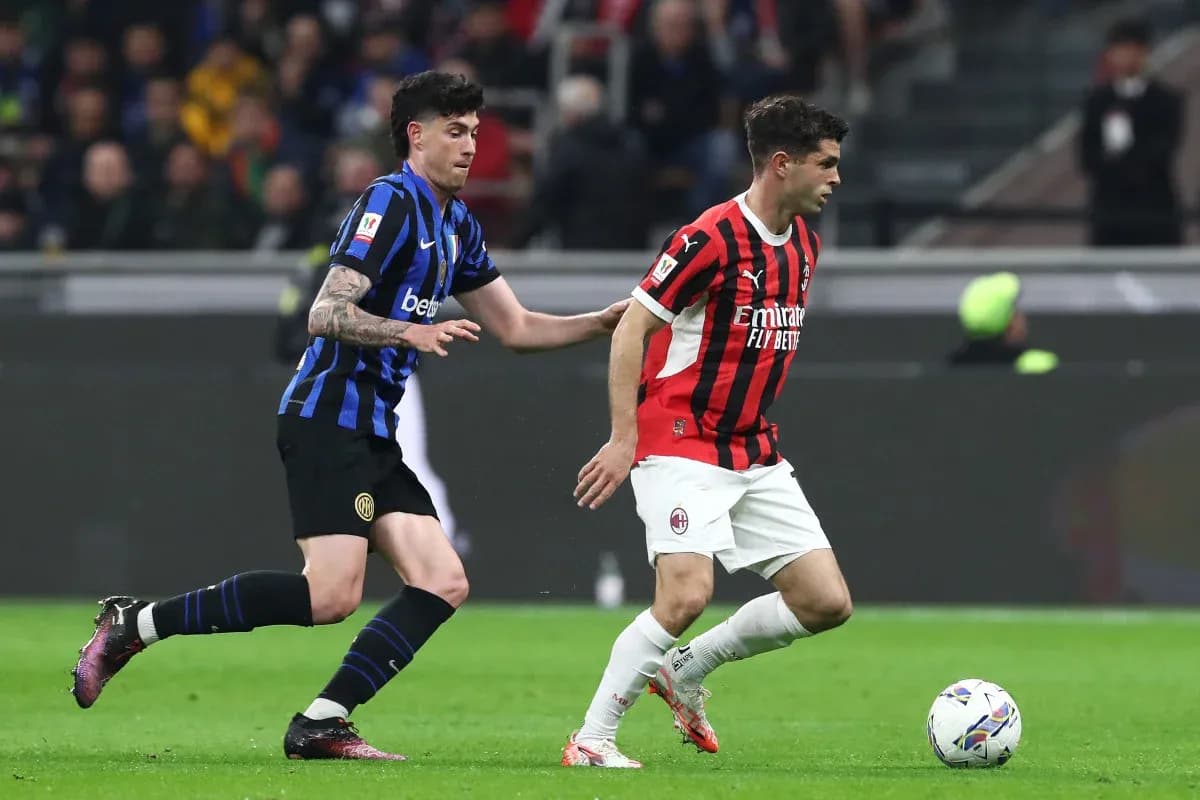
AC Milan Edges Inter in Derby della Madonnina
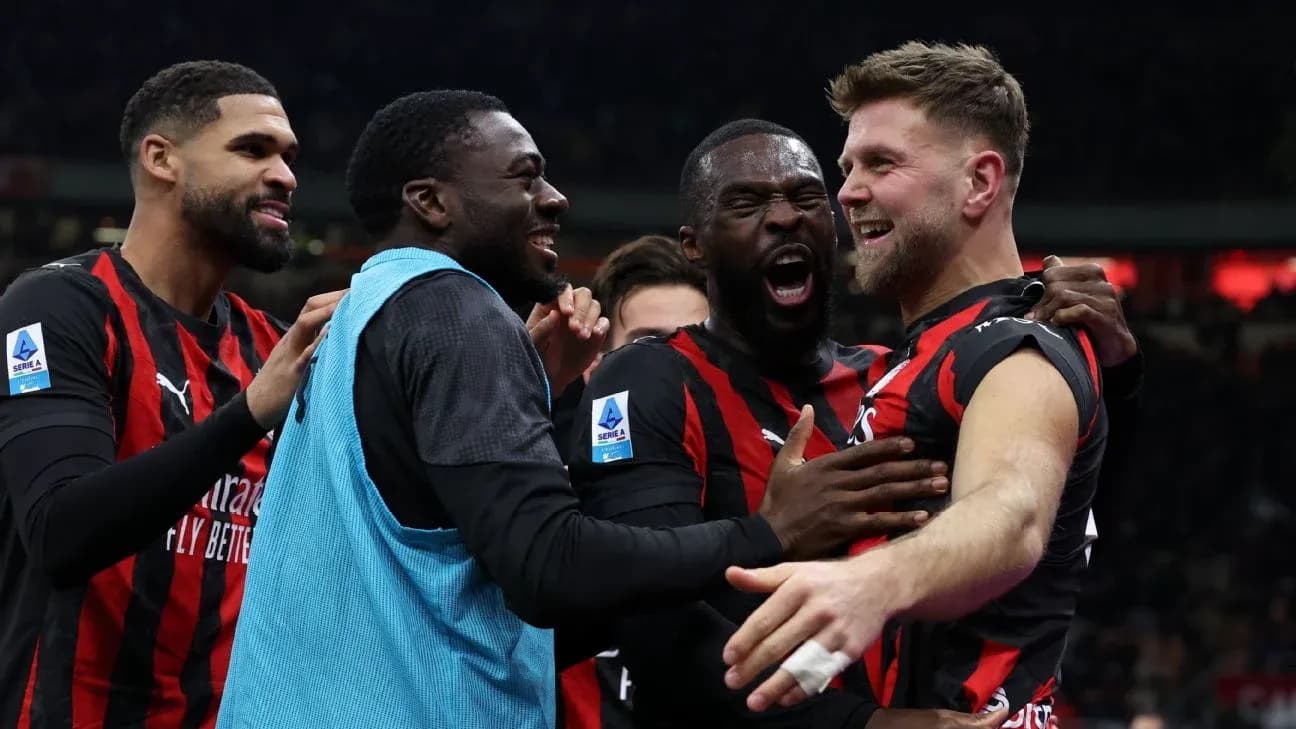
At Stadio Giuseppe Meazza, AC Milan edged Inter 1–0 in a tight Derby della Madonnina, decided by a first‑half goal and then managed with control over 90 minutes. The fixture, part of Serie A Regular Season – 28, saw second‑placed Milan (60 points, +24 goal difference) close the gap on league leaders Inter (67 points, +42) in a match that was more about structure and discipline than volume of chances.
Squad analysis – AC Milan
Massimiliano Allegri’s 3‑5‑2 was built to suffocate Inter’s central combinations and then spring quickly through Rafael Leão and Christian Pulisic. The back three of Fikayo Tomori, Koni De Winter and Strahinja Pavlović protected Mike Maignan superbly, consistent with a season in which Milan have conceded only 20 goals in 28 games and kept 13 clean sheets. The wing‑orientated midfield line, with Pervis Estupiñán on the left and Alexis Saelemaekers on the right, pushed high to pin back Federico Dimarco and Luis Henrique, limiting Inter’s best crossers.
In central midfield, Adrien Rabiot and Luka Modrić gave Milan a technical edge in tight spaces. Rabiot’s season numbers – 4 goals, 4 assists, 38 tackles and 10 interceptions – translated into a commanding two‑way display, even if his 5 yellow cards and 1 previous red meant he had to manage his aggression carefully. Youssouf Fofana added legs and ball‑winning. Up front, Leão (9 goals, 2 assists in Serie A) and Pulisic (8 goals, 2 assists, 7.08 average rating) justified their status as key attackers: Leão constantly threatened depth, while Pulisic drifted into half‑spaces to link with Modrić. Despite absences like Ruben Loftus‑Cheek (broken jawbone) and Santi Giménez (ankle injury), Milan’s depth allowed them to maintain their 1.6 goals‑per‑game attacking standard while preserving their strong defensive record (0.7 goals against per game).
Squad analysis – Inter
Cristian Chivu also lined Inter up in a 3‑5‑2, but the usual fluency of Serie A’s most prolific attack (64 goals in 28 games, 2.3 per match) was blunted. Without Marcus Thuram at full fitness (listed as questionable with illness) and with Lautaro Martínez only among the substitutes, Inter lacked their top scorer’s 14‑goal, 4‑assist cutting edge and his 7.03 average rating. The starting front pair of Francesco Esposito and Ange-Yoan Bonny offered movement but not the same penalty‑box presence.
In midfield, Nicolò Barella and Piotr Zieliński tried to dictate tempo, but Milan’s block forced them wide. Barella, a creative hub with 5 assists and 56 key passes this season, found fewer pockets between the lines. Henrikh Mkhitaryan’s advanced role was often crowded out by Rabiot’s aggressive stepping. Federico Dimarco, one of Serie A’s standout creators with 6 goals and a league‑leading 13 assists (74 key passes, 7.53 rating), delivered dangerous balls from the left, but Milan’s back three defended the box well. Defensively, Inter’s season record of 22 goals conceded and 15 clean sheets underlines their quality, and the Akanji–Bisseck–Bastoni trio generally contained Milan’s counters after the goal. However, chasing the game exposed them to transitions and reduced their usual control.
Key matchups
- Efficiency – Rafael Leão vs Inter’s defense Leão entered as Milan’s primary scorer (9 goals, 2 assists), facing a defense that had allowed just 22 goals in 28 league matches (0.8 per game) with 15 clean sheets. Milan’s plan to isolate Leão against wide center‑backs paid off in the decisive first‑half phases, as his threat forced Inter’s line deeper and created the space around the box that led to the 1–0 scoreline. Inter’s generally superior defensive metrics could not prevent the one key breakthrough.
- Creative vs disruptive – Adrien Rabiot vs Hakan Çalhanoğlu On paper, Çalhanoğlu is Inter’s creative and disciplinary reference: 8 goals, 2 assists, 36 key passes, but also 6 yellow cards. Rabiot mirrors that blend for Milan with 4 goals, 4 assists, 21 key passes and 5 yellows plus 1 red this season. In this derby, Milan’s structure allowed Rabiot to step onto Inter’s playmakers early, disrupting Çalhanoğlu’s usual rhythm when he came on and limiting central progression. The duel tilted towards Milan as Rabiot balanced aggression with enough control to avoid costly cards.
- The void – Marcus Thuram’s missing output vs Ange-Yoan Bonny Thuram’s profile – 7 goals, 3 assists, 198 duels and 15 successful dribbles – underpins Inter’s vertical threat. His illness‑related uncertainty meant reliance on Bonny, who does not bring comparable end product in the available data. Inter’s attack lost a runner who stretches defenses and wins fouls (29 drawn), and Milan’s back three could hold a higher line. That “void” in Inter’s forward line was evident in their inability to convert territorial phases into clear chances.
Verdict – statistical edges
Attack: Over the season Inter retain the attacking edge (64 goals vs Milan’s 44, higher averages home and away), but in this specific fixture Milan’s efficiency and game‑state management were superior.
Defense: Milan and Inter are both elite, yet Inter’s season numbers (22 conceded, 0.8 per game, 15 clean sheets) are marginally less stingy than Milan’s 20 conceded and 13 clean sheets. On this night, however, Milan’s unit delivered the decisive clean sheet against the league’s top attack.
Discipline: Both sides walk a fine line – Milan’s card profile is heavier in key figures like Rabiot and Estupiñán, while Inter lean on Çalhanoğlu’s controlled aggression. Across 90 minutes, Milan better balanced intensity and restraint, turning structure and discipline into a statement 1–0 derby win.