AS Roma Dominates Fiorentina 4-0 in Serie A Clash
Under the lights of the Stadio Olimpico, this was billed as a crossroads in the Serie A season: a resurgent AS Roma, chasing Europe from 5th place on 64 points, against a Fiorentina side hovering in 16th on 37 points, still glancing nervously over their shoulder. Heading into this game, Roma’s overall goal difference of 23 (52 scored, 29 conceded) and Fiorentina’s -11 (38 for, 49 against) told a story of contrasting trajectories. The 4-0 full-time score simply made those underlying trends visible in one brutal evening.
I. The Big Picture – Roma’s structure suffocates Fiorentina
Roma leaned into their seasonal identity: a 3-4-2-1 that has been their most-used shape, deployed 27 times this campaign. M. Svilar sat behind a back three of G. Mancini, E. Ndicka and M. Hermoso, with Z. Celik and Wesley Franca as aggressive wing-backs. In central zones, N. Pisilli and M. Kone formed the hinge, allowing the advanced pair of M. Soule and B. Cristante to orbit around lone striker D. Malen.
It was a system built to compress the middle and then explode into the half-spaces, and it played directly into Roma’s seasonal strengths. Heading into this game, they were scoring 1.7 goals at home on average and conceding just 0.6, with a pronounced attacking surge between 61-75 minutes, when 25.00% of their league goals arrived. The surprise here was not that Roma overwhelmed Fiorentina, but that they did it so early: 3-0 by half-time, the tie effectively killed before the interval.
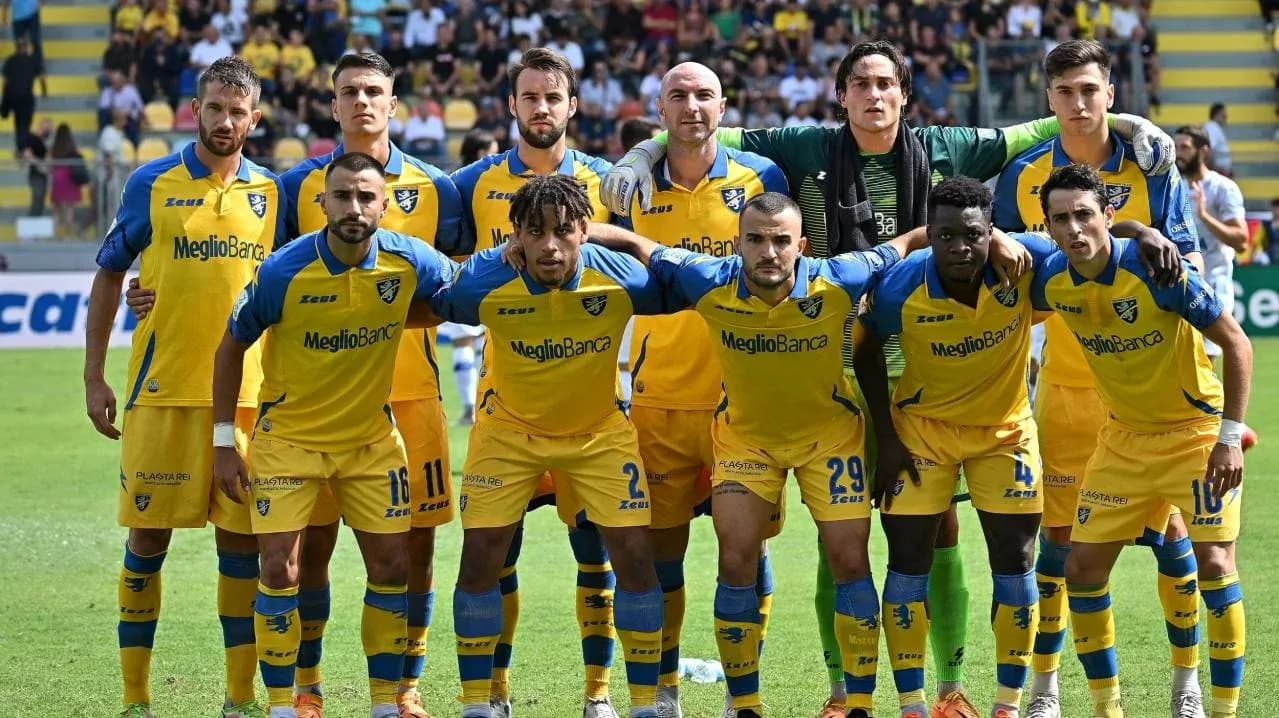
Fiorentina lined up in a 4-3-3, one of several shapes they have used this season, but clearly not the only one in their tactical toolbox. D. de Gea marshalled a back four of Dodo, M. Pongracic, L. Ranieri and R. Gosens. The midfield trio of M. Brescianini, N. Fagioli and C. Ndour was tasked with building through Roma’s press, while a front three of J. Harrison, A. Gudmundsson and M. Solomon aimed to stretch Roma horizontally.
Yet Fiorentina’s seasonal profile hinted at fragility: on their travels they had conceded 29 goals in 18 games, an away average of 1.6 against, and their goals-against minute distribution showed persistent vulnerability from 46-60 and 76-90 minutes, both at 20.41%. Roma did not need to wait for those windows; they simply overwhelmed the visitors from the first whistle.
II. Tactical Voids – Absences and discipline
Both managers had to navigate significant absences. Roma were without A. Dovbyk (groin injury), N. El Aynaoui (suspension for yellow cards), E. Ferguson (ankle injury), L. Pellegrini (thigh injury) and B. Zaragoza (knee injury). That stripped Piero Gasperini Gian of a natural penalty-box focal point and a key creative midfielder, forcing a more fluid, mobile front line. Cristante’s deployment as a nominal forward underlined the improvisation: less a classic striker, more an extra arriving runner from deep.
Fiorentina’s absences were just as disruptive. L. Balbo, N. Fortini, M. Kean, T. Lamptey and R. Piccoli were all missing, removing both depth and variety in attack. Kean’s absence was particularly stark: heading into this fixture he had scored 8 league goals, a crucial share of Fiorentina’s total of 38. Without him, the burden fell heavily on Gudmundsson and Harrison.
Disciplinary trends framed the risk profile. Roma’s season-long card map shows a spiky second half: 23.08% of their yellow cards come between 46-60 minutes, and another 23.08% in each of the 61-75 and 76-90 windows. Fiorentina, meanwhile, accumulate 25.00% of their yellows in the final 15 minutes, with both of their league red cards also arriving in the 76-90 range. This game, however, never reached that boiling point; the scoreline removed the tension that often triggers late chaos.
III. Key Matchups – Hunter vs Shield, Engine Room battles
The headline duel was always going to be D. Malen against a Fiorentina defence anchored by M. Pongracic. Malen arrived as Roma’s top scorer in Serie A with 11 goals and 2 assists in just 15 appearances, averaging almost a goal every game. His profile is that of a vertical, direct attacker: 40 shots with 24 on target, 34 dribbles attempted, and 2 penalties scored from 2 taken. Fiorentina’s away record – 18 goals scored, 29 conceded – suggested that if Malen received even modest service, chances would come.
Pongracic, for his part, has been Fiorentina’s defensive workhorse: 2714 minutes, 29 tackles, and a remarkable 23 successful blocked shots, plus 34 interceptions. Yet his aggression comes at a cost: 66 fouls committed and 11 yellow cards, the most in the league. Against Roma’s fluid front three, that tendency to step out and engage became a liability. Malen’s movement dragged the line around; Soule and Cristante exploited the gaps.
In the engine room, the contrast was just as stark. Soule, one of Serie A’s top assist providers with 5 assists and 6 goals, is the creative nerve of this Roma side. With 918 passes at 83% accuracy and 43 key passes, he thrives between the lines. His duel numbers – 242 contested, 97 won – show a player who doesn’t just create, but competes. Opposite him, Fagioli and Brescianini were asked to both build and screen. It was too much.
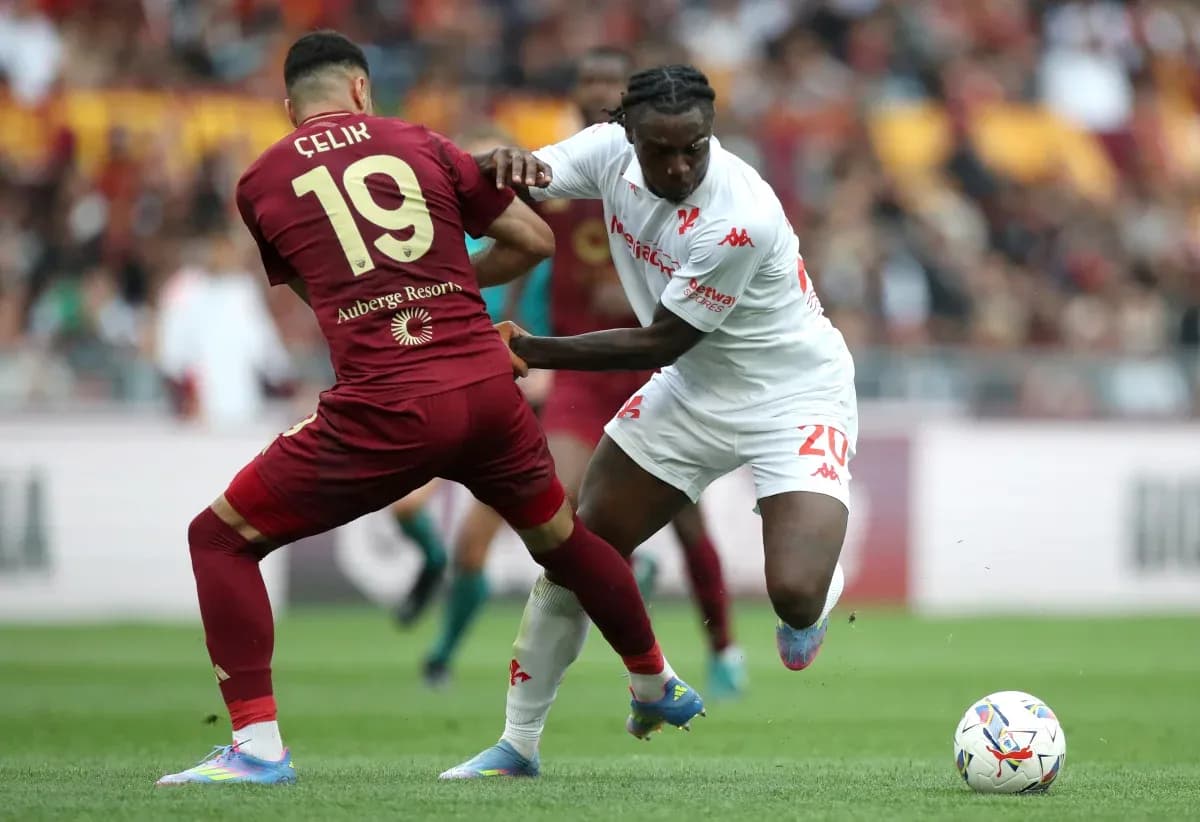
Roma’s wing-backs added another layer. Z. Celik, who has 2 assists and 1 goal this season, plus 57 tackles and 6 blocked shots, offers relentless up-and-down energy. On the opposite flank, Wesley Franca provided width that pinned back Gosens. Fiorentina’s full-backs, Dodo and Gosens, are natural attackers, but here they spent long stretches retreating, unable to join Harrison and Solomon in advanced zones.
At the other end, Gudmundsson’s duel with Roma’s back three was meant to be Fiorentina’s release valve. The Icelandic forward has 5 goals and 4 assists, 31 key passes and 37 dribbles attempted, plus 3 penalties scored from 3. His ability to draw fouls (28) and his one red card underline a volatile, combative presence. But against Mancini and Ndicka, both comfortable in physical duels, he was largely smothered. Mancini’s season line – 50 tackles, 13 blocked shots, 44 interceptions, 175 duels won – showed again in the way he stepped in front of Gudmundsson and cut off central progression.
IV. Statistical Prognosis – Why a heavy Roma win always loomed
Heading into this match, Roma’s overall attacking profile was that of a side that grinds opponents down. They had scored 52 league goals at an overall average of 1.5 per game, but crucially, 25.00% of those goals came between 61-75 minutes, when their physical and territorial dominance tends to tell. Defensively, they conceded just 0.8 goals per game overall, and at home only 10 goals in 18 matches, an average of 0.6.
Fiorentina, by contrast, were a team of narrow margins and soft underbelly. Overall they scored 1.1 goals per game and conceded 1.4, with their most productive attacking window between 46-60 minutes (26.32% of goals), but also significant defensive leaks in that same phase (20.41% of goals conceded). That symmetry often produces chaotic, end-to-end spells; here, Roma simply denied them the platform to reach it.
From an Expected Goals lens – even without explicit xG numbers – the underlying shot and scoring data points to Roma generating higher-quality chances more consistently. Malen’s 24 shots on target from 40 attempts, Soule’s 43 key passes, and Roma’s 16 clean sheets overall form a coherent picture: they create enough, and concede very little. Fiorentina’s 10 games failed to score and only 8 clean sheets overall reinforce the impression of an attack that can be blunted and a defence that can be exposed.
Following this result, the 4-0 scoreline feels less like an outlier and more like the logical convergence of form, structure and mentality. Roma’s 3-4-2-1, even without key absentees like Pellegrini and Dovbyk, looked fully weaponised: Malen as the hunter, Soule as the architect, Celik and Wesley Franca as relentless wide runners, and a back three anchored by Mancini’s controlled aggression.
For Fiorentina, the defeat underlines the fragility that their season statistics have been hinting at. A defence reliant on last-ditch interventions from Pongracic and Ranieri, a midfield that struggles to protect transition moments, and an attack blunted by the absence of Kean – all of it was laid bare in Rome. If this were a knockout tie, the narrative would be simple: Roma as ruthless executioners, Fiorentina as a side that arrived with multiple tactical plans but no convincing shield.
In league terms, the story is just as clear. Roma look every inch a Europa League side in waiting, with a defined identity and numbers to back it. Fiorentina, meanwhile, remain a team whose statistical profile warns of danger long before the scoreboard does. At the Olimpico, those warnings became a 4-0 reality.