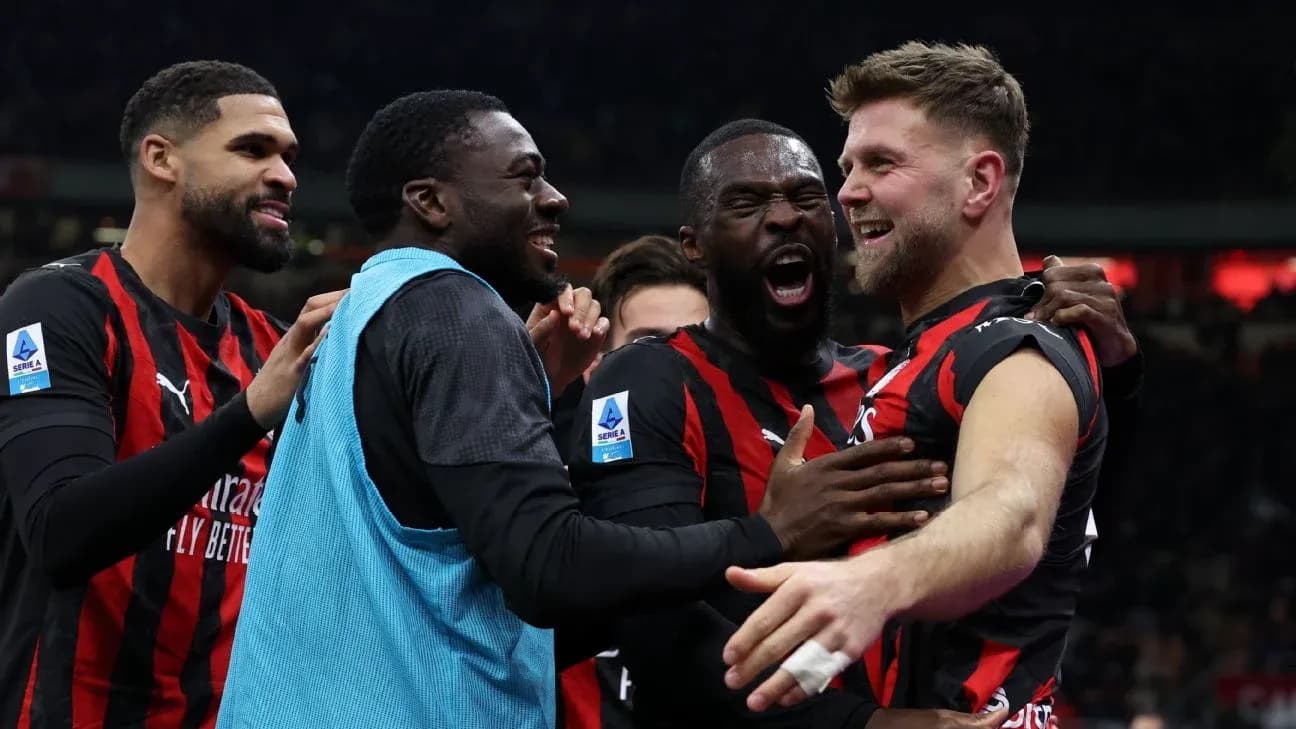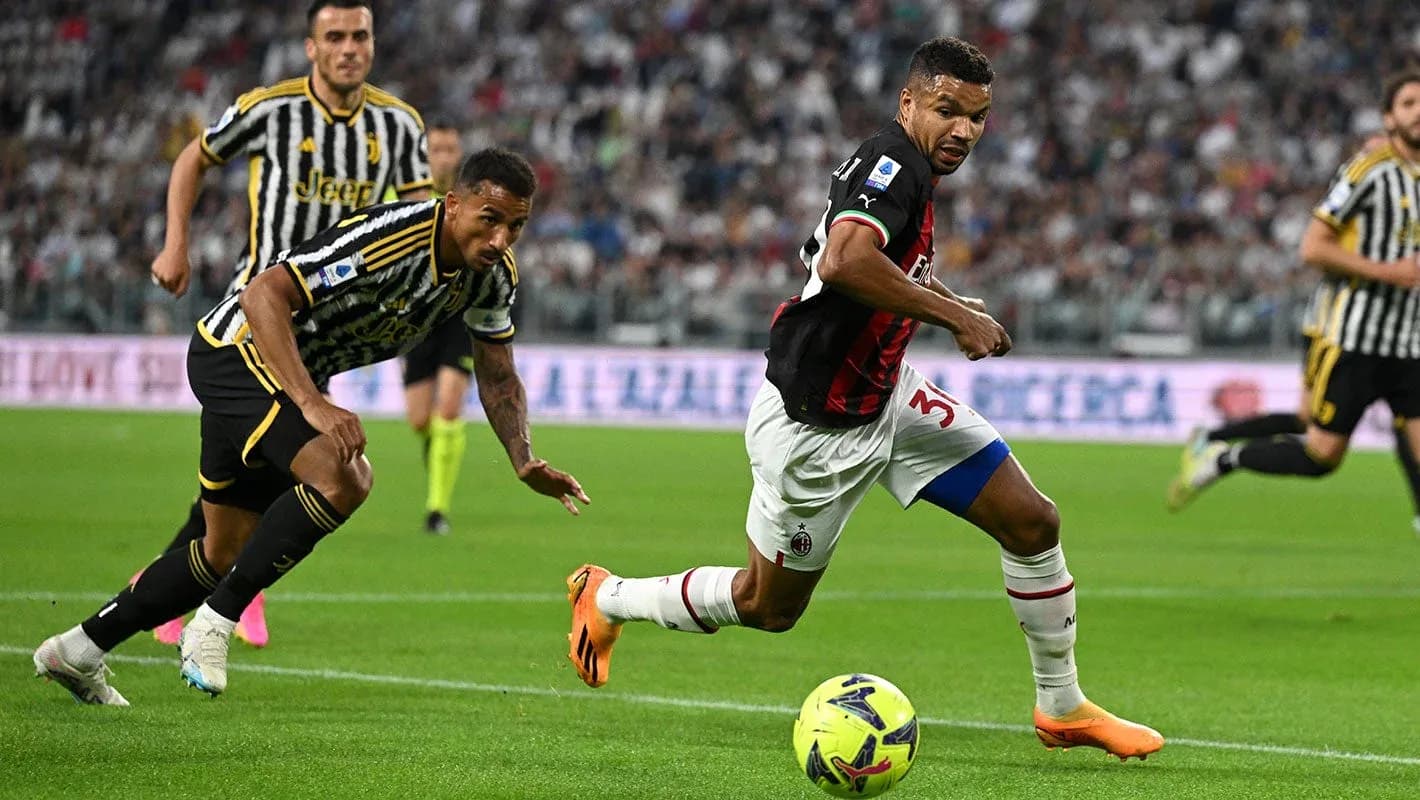
AC Milan vs Juventus: Serie A Showdown in April 2026
Stadio Giuseppe Meazza sets the stage in April 2026 for one of Serie A’s defining fixtures: AC Milan vs Juventus. With four rounds left in the regular season, the stakes are clear. Milan sit 2nd on 66 points, Juventus 4th on 63. Both are firmly “Promotion – Champions League (League phase)” in the league, but the margin for error in the race for position – and prestige – is razor-thin.
This is not a cup tie, so there is no immediate 1/4 final on the line, yet the feel is unmistakably knockout-like: a direct duel that could shape the final top‑four order.
Form and momentum
Across all phases, Milan’s season has been defined by consistency more than sparkle. They have 19 wins, 9 draws and just 5 defeats from 33 league games, with a goal difference of +21 (48 scored, 27 conceded). At home they have been solid rather than overwhelming: 9 wins, 4 draws, 3 losses at San Siro, scoring 22 and conceding 16.
Their recent league form line – “WLLWL” – hints at a stutter. The broader form string across all phases shows long winning streaks but also a cluster of defeats late on. Milan remain hard to beat, but their rhythm has dipped at precisely the point Juventus are surging.
Juventus arrive in Milan with a “WWWDW” league form line and 18 wins, 9 draws, 6 defeats from 33 matches. They boast a superior goal difference of +28, powered by 57 goals scored and just 29 conceded. Away from home, 8 wins, 3 draws and 5 defeats, with 23 scored and 16 conceded, underline a side that travels well and can hurt opponents on the counter.
Across all phases, Juventus have pieced together several positive runs – their biggest winning streak is three – and, crucially, they appear to be trending upward as the run‑in intensifies.
Tactical outlook: structures and styles
Milan under this season’s data profile are a back‑three team. Their most-used formation is 3‑5‑2 (29 matches), with occasional switches to 3‑4‑2‑1 and 3‑1‑4‑2, plus a rare 4‑3‑3. That base suggests:
- Three centre-backs to control Juventus’s central forwards.
- Wing-backs providing width, aiming to push Juventus’s wide players backwards.
- Two forwards or a front two plus a support line, depending on whether it is 3‑5‑2 or 3‑4‑2‑1.
Milan average 1.5 goals for and only 0.8 against per game across all phases. They have kept 14 clean sheets (6 at home) and failed to score only 5 times. The profile is of a team that generally manages game tempo, defends well in structure and trusts its front line to produce enough moments.
In attack, Rafael Leão remains the headline threat. He has 9 league goals and 3 assists in 25 appearances, with 23 shots on target from 40 attempts and a strong dribbling volume (49 attempts, 22 successful). His ability to isolate defenders on the left and break lines with pace is central to Milan’s attacking plan. Importantly, his penalty record this season is clean: 2 scored, 0 missed, giving Milan a reliable left‑footed option from the spot.
Christian Pulišić adds a different angle. With 8 goals and 3 assists in 26 appearances, he combines end product with creativity (36 key passes, 55 dribble attempts with 26 successful). However, from the penalty spot he is less secure this season, with 0 scored and 1 missed, so he cannot be described as flawless from 11 metres. In open play, though, his movement between the lines and late box arrivals are vital, especially if Milan operate with two No.10s behind a striker in a 3‑4‑2‑1.
Juventus are more tactically flexible. Their most used shape is 3‑4‑2‑1 (21 matches), but they have also lined up in 4‑2‑3‑1, 4‑3‑3, 3‑5‑2, 4‑1‑4‑1 and 3‑5‑1‑1. That variability makes them harder to prepare for. The common thread is:
- A back three or back four that is comfortable defending in a mid‑block.
- Two advanced playmakers or wide forwards behind a central striker.
- Aggressive transitions once the ball is won.
Juventus average 1.7 goals for and 0.9 against per game across all phases, with 14 clean sheets (6 away) and only 6 matches where they failed to score. They can dominate weaker sides but are equally comfortable playing a more reactive, counter‑attacking game against top opposition.
Kenan Yıldız is the standout individual this season. The 20‑year‑old attacker has 10 goals and 6 assists in 32 appearances, with 38 shots on target from 59 attempts, 71 key passes and an impressive dribbling output (131 attempts, 71 successful). He is Juventus’s main creative and scoring hub, operating between the lines or drifting wide to receive. From the spot, his record is mixed: 1 penalty scored and 1 missed, so any narrative of ruthless penalty efficiency would be inaccurate.
Team news and depth
Juventus’s squad is stretched in key areas. Confirmed absentees include J. Cabal and A. Milik, both out with muscle injuries. More concerning are several “Questionable” tags:
- E. Holm (calf injury)
- M. Perin (injury)
- D. Vlahovic (calf injury)
If Vlahovic is not fully fit, Juventus lose their most natural penalty‑box striker and aerial presence. That would place even greater responsibility on Yıldız and the supporting cast to generate and finish chances, perhaps pushing Juventus towards a more fluid, false‑nine style in a 3‑4‑2‑1.
Milan’s injury list is not detailed in the data, which suggests they may be closer to full strength. That, combined with home advantage, is a significant factor in a match of fine margins.
Head‑to‑head narrative (last 5 competitive meetings)
Looking strictly at competitive fixtures (Serie A and Super Cup, no friendlies), the last five meetings read:
- October 2025, Serie A in Turin: Juventus 0-0 AC Milan.
- January 2025, Serie A in Turin: Juventus 2-0 AC Milan.
- January 2025, Super Cup semi-final in Riyadh: Juventus 1-2 AC Milan.
- November 2024, Serie A in Milan: AC Milan 0-0 Juventus.
- April 2024, Serie A in Turin: Juventus 0-0 AC Milan.
That yields:
- Juventus wins: 1 (the 2-0 home league win in January 2025).
- AC Milan wins: 1 (the 2-1 Super Cup semi-final in January 2025).
- Draws: 3 (all 0-0 in league play).
The pattern is striking: in the league, these sides have produced three consecutive goalless draws. The only recent matches to break the deadlock came in the Super Cup and that single Juventus league win. It underlines how tight and tactical this rivalry has become, with both defences often on top.
Key battles and tactical details
- Milan’s left vs Juventus’s right: Leão attacking down Milan’s left against Juventus’s right‑sided defender or wing‑back is the clearest mismatch on paper. If Juventus persist with a back three, the wide centre-back will need consistent cover from the wing‑back and nearest midfielder.
- Yıldız between the lines: Milan’s back three can be exposed if the midfield line is not compact. Yıldız’s tendency to drift into half‑spaces could pull Milan’s wide centre-backs out of shape, creating lanes for runners from deep.
- Midfield control vs transition: Milan’s 3‑5‑2 is built to dominate central zones and recycle possession. Juventus, comfortable in a 3‑4‑2‑1, may cede some of that control to spring forward quickly once they win the ball. The side that better manages rest‑defence – their structure when they lose possession – will likely dictate the flow.
- Discipline and cards: Both teams collect a spread of yellow cards late in games, particularly between minutes 61‑90. With so much at stake and recent history of tight scorelines, the final half‑hour could be fractious, and set‑pieces may become decisive.
The verdict
All indicators point to another finely balanced contest. Milan have home advantage, a slightly better league position and a defensive record (0.8 goals conceded per game across all phases) that has repeatedly frustrated Juventus in recent league meetings. Juventus, however, arrive in better immediate form, score more freely (1.7 per game), and possess a genuine match‑winner in Kenan Yıldız.
Given the sequence of low‑scoring head‑to‑heads and both sides’ strong clean‑sheet numbers (14 each), this fixture again leans towards a cagey, tactical battle rather than a shoot‑out. Milan’s slight edge at San Siro and Juventus’s injury doubts, particularly around D. Vlahovic, nudge the balance marginally towards the hosts.
A narrow Milan win or another draw feels the most logical outcome, with a single goal – or a single mistake – likely to separate two teams whose rivalry continues to be defined by detail rather than drama.