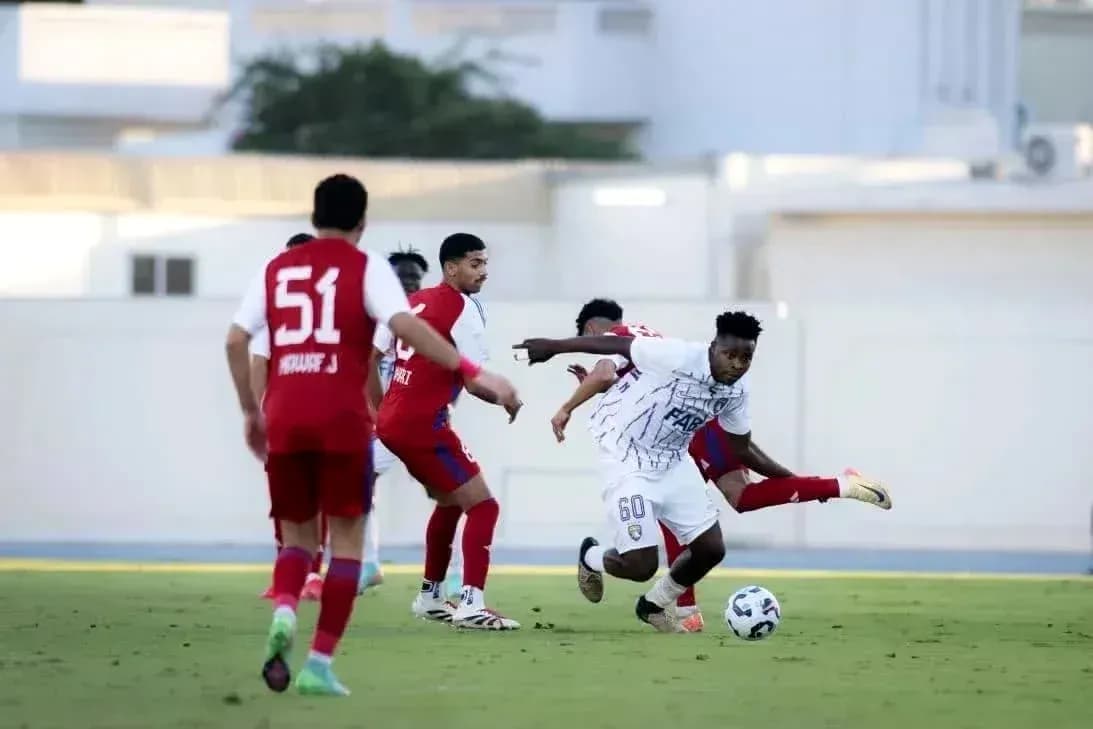
Al Wahda U23 vs Al Dhafra U23: Mid-Table Clash Analysis
In the Pro League U23 regular season, this Round 26 fixture between Al Wahda U23 and Al Dhafra U23 is a direct mid-table duel with clear positional stakes: Al Wahda U23 come in 9th with 31 points, just two points ahead of 10th-placed Al Dhafra U23 on 29 points in the league phase. With both sides safely away from the very bottom but far from the title picture, the seasonal weight of this game is about final ranking, momentum, and psychological edge going into the next year, especially given how tight their points and goal differences are.
Head-to-Head Tactical Summary
The only recent meeting on record in the league phase is from 20 September 2025 in the Pro League U23 regular season (Round 4), when Al Dhafra U23 hosted Al Wahda U23 and won 3-0. There is no half-time score provided, so only the final 3-0 margin can be cited. That result underlines Al Dhafra U23’s ability to punish Al Wahda U23 when given space, and it sets a clear narrative: Al Wahda U23 enter this home match looking to respond to a heavy away defeat earlier in the same league campaign.
Global Season Picture
- League Phase Performance:
Al Wahda U23 are 9th with 31 points from 25 matches in the league phase, scoring 31 and conceding 32 (goal difference -1). Their split is stark: at home they have 2 wins, 4 draws, 6 losses with 11 goals for and 15 against; away they are much stronger with 7 wins, 0 draws, 6 losses and a 20-17 goal record.
Al Dhafra U23 are 10th with 29 points from 25 matches in the league phase, with 35 goals scored and 39 conceded (goal difference -4). At home they have 5 wins, 3 draws, 5 losses (20-19 goals), while away they show 2 wins, 5 draws, 5 losses with 15 goals for and 20 against. - Season Metrics:
Scope detection shows team_statistics games played (25) match the standings totals (25), so these metrics also apply in the league phase.
Al Wahda U23 show a balanced but modest attack with 31 goals in 25 games, averaging 1.2 goals per match, and a relatively stable defense at 1.3 goals conceded per game in the league phase. They have kept 5 clean sheets and failed to score in 10 matches, pointing to inconsistency in chance conversion rather than an outright high-volume attack. The absence of penalties suggests their xG profile is likely driven by open play rather than set-piece reliance, but no explicit xG values are provided in the data.
Al Dhafra U23 average 1.4 goals scored and 1.6 conceded per match in the league phase, a slightly more open profile than Al Wahda U23. With 3 clean sheets and 6 matches without scoring, they are somewhat more reliable offensively but more exposed defensively, especially away where they concede 1.7 goals per game.
Card data is structurally present but without numeric values, so no disciplinary trend can be quantified from the current dataset. - Form Trajectory:
Using the standings form strings in the league phase:
• Al Wahda U23: "DLLWD" – one win, two losses, and two draws in the last five. This indicates a slightly negative trend, with points being collected but not in a sustained run. The pattern suggests volatility: they are capable of winning but struggle to string results together.
• Al Dhafra U23: "LLLDW" – three straight losses followed by a draw and a win. This hints at a recent upturn after a poor spell: the last two results (D, W) suggest stabilization and some regained confidence heading into this match.
Tactical Efficiency
The comparison block with explicit attack/defense indices and Poisson projections is not included in the provided JSON, so only season averages from team_statistics can be used for efficiency analysis in the league phase.
Al Wahda U23’s attacking efficiency is moderate: 1.2 goals per game with 10 matches where they failed to score suggests that when they do create, they can be effective, but their attack is streaky and heavily context-dependent (stronger away than at home). Defensively, conceding 1.3 per match with 5 clean sheets points to a unit that is generally stable but can collapse in specific fixtures (as reflected in their biggest home loss of 0-3 and away loss of 4-1).
Al Dhafra U23 operate in a slightly higher-variance game model: 1.4 goals scored and 1.6 conceded per match in the league phase. Their attack is marginally more productive than Al Wahda U23’s, but the defensive trade-off is clear, particularly away from home where they concede 20 in 12 matches. Their biggest wins (3-0 at home, 1-3 away) and losses (0-2 at home, 3-0 away) underline that they can both dominate and be dominated depending on game state and venue.
In efficiency terms, this sets up a contrast: Al Wahda U23 lean towards a slightly tighter game with lower scoring averages, while Al Dhafra U23 are more open, with higher combined goals per match. Without explicit attack/defense indices or Poisson probabilities from the comparison block, the best read is that Al Dhafra U23’s offensive upside is balanced by greater defensive risk, whereas Al Wahda U23’s main inefficiency is their inability to translate away solidity into home performances.
The Verdict: Seasonal Impact
With Al Wahda U23 on 31 points and Al Dhafra U23 on 29 in the league phase, this Round 26 fixture is a direct battle for mid-table positioning rather than a title, top-4, or relegation decider. However, its seasonal impact is still meaningful:
- If Al Wahda U23 win: They open up a five-point gap over Al Dhafra U23, consolidating 9th place and potentially positioning themselves to climb further if teams above them slip. It would also correct the narrative of the earlier 3-0 defeat away to Al Dhafra U23, giving them a psychological reset and reinforcing their away-strong, home-recovering profile going into 2026.
- If Al Dhafra U23 win: They leapfrog Al Wahda U23 into 9th, turning a two-point deficit into at least a one-point advantage. Coupled with their recent mini-revival in form ("LLLDW"), this would confirm an upward trajectory and mark them as the more progressive mid-table side, with a stronger attacking ceiling despite defensive leaks.
- If the match is drawn: The table remains tight, with Al Wahda U23 preserving a two-point edge but missing a chance to break away. For Al Dhafra U23, an away draw would be acceptable in isolation but would limit their ability to significantly improve final ranking, especially given their negative goal difference.
In a broader seasonal lens, this match is about hierarchy in the mid-pack rather than trophies or survival. The result will shape which of these two U23 sides can sell a narrative of progress and momentum into the next calendar year: a win sets a platform for a higher mid-table finish and a more optimistic internal assessment of player development, while a loss locks the loser into the lower half and reinforces existing structural issues (Al Wahda U23’s home struggles or Al Dhafra U23’s defensive openness).