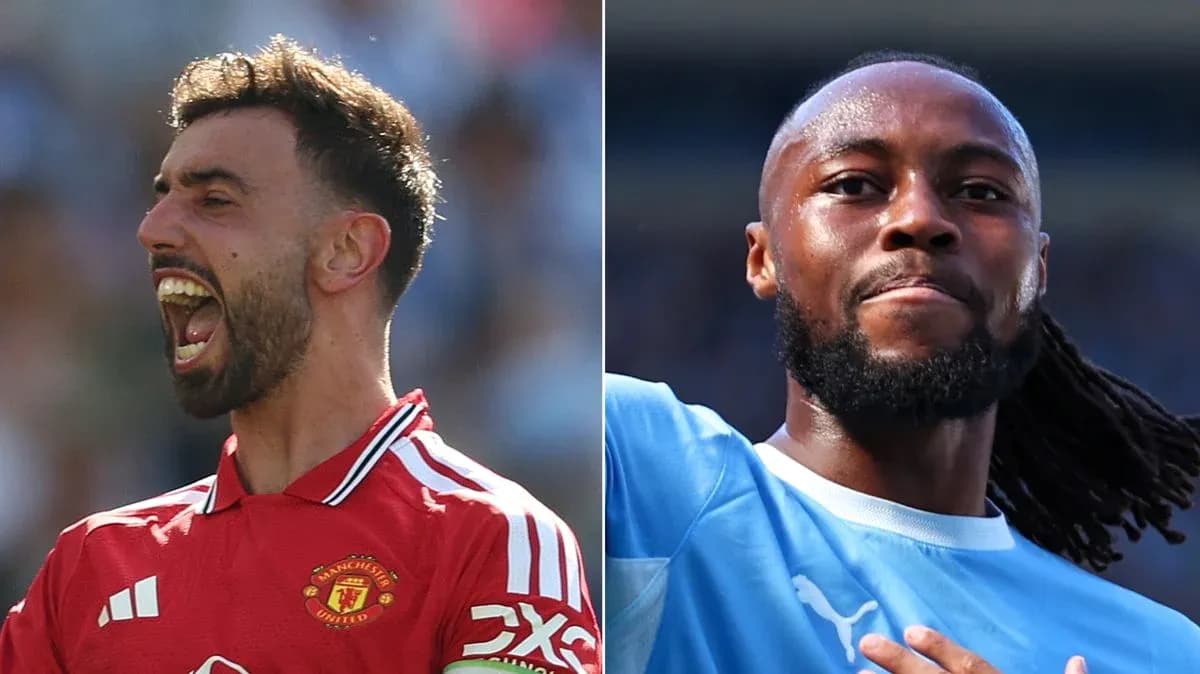
Manchester United and City Prepare for Defining 2026/27 Season
The Premier League pauses for nobody. Not for the World Cup, not for the hangover of a long season, and certainly not for two clubs staring at a defining year in their modern histories.
This morning, at 10am, Manchester United and Manchester City discover the shape of their 2026/27 campaign. Eight and a half months of jeopardy, pressure and possibility will be mapped out in a neat grid of dates and opponents. The storylines are already there. The calendar will decide the rhythm.
Carrick’s United look for lift‑off
At Old Trafford, there is something that has been in short supply for much of the past decade: momentum.
Michael Carrick walked into a mess in January, replaced Ruben Amorim and quietly dragged United not just out of trouble but back into the Champions League with room to spare. It was calm, controlled and convincing enough that the interim tag disappeared and the job became his.
Now comes the harder part. Sustaining it. Improving it. Proving it wasn’t a mid-season sugar rush.
United finished last season nine points behind City and 14 adrift of champions Arsenal. Respectable on paper, but inside the club there’s no appetite to dress up third place as a triumph. The aim is blunt: close the gap, and fast.
That’s why today’s fixture release matters at Carrick’s level as much as in the stands. United will want a kinder opening stretch than the one that ambushed them last year, when Arsenal, City and Chelsea all arrived in the first five games. Seven points from 15 was survivable; it was never a platform for a title challenge.
This time, a “relatively simple start” is the quiet wish. A run that allows United to keep that January surge rolling into August, to bank points while belief is still fragile enough to wobble. The wrong opening fortnight can derail a project. The right one can harden it.
Layered on top of that is Europe. United’s Champions League opponents are still unknown, but the dates are locked in. League fixtures around:
- 8–10 September
- 13–14 and 20–21 October
- 3–4 and 24–25 November
- 8–9 December
- 19–20 and 27 January
will be circled in red at Carrington. No manager wants a draining European night followed by a long away trip or a heavyweight domestic clash. Eight league games will follow those European ties; United will be desperate to avoid a sequence that turns every midweek into a physical and mental drain.
The mood, though, is bright. Carrick has already delivered his first win as permanent head coach, a comfortable final-day victory over Brighton. There is clarity over who leads United into the new season. There is a style, a structure, and – for once – a sense of upward movement.
Today’s list will tell him how steep the climb really is.
City’s new era, same demand
Across town, there is no such certainty.
Pep Guardiola has gone, leaving a void at the Etihad that no tactic board can fully explain away. Enzo Maresca is still expected to be the man to step into it, the former Chelsea boss tipped as the chosen successor, but the appointment has yet to be rubber-stamped. Negotiations have dragged, and with each passing day the questions grow louder.
What is not in doubt is the standard he will be judged against. For City, this is a season where the message must be simple: Guardiola or not, it is business as usual. That means one thing – reclaiming the Premier League.
Last year, City began with a flourish, smashing Wolves 4-0 away, then promptly veered off course with back-to-back defeats to Spurs and Brighton. A 3-0 derby win over United and a 1-1 draw with Arsenal steadied things, but the sense of invincibility had already slipped.
This time, with a new man likely in the dugout and a dressing room adjusting to life after the architect of an era, the start feels even more crucial. The identity of City’s opening opponents will be poured over. A gentle introduction would help Maresca bed in his ideas. A brutal one could test the club’s “nothing has changed” mantra before the leaves have fallen.
Like United, City’s Champions League schedule will loom large over the domestic calendar. The same European dates will dictate rotation, travel and the risk of fatigue. For a squad used to juggling competitions, that is nothing new. Doing it without Guardiola is.
Uncertainty has not been a word associated with City for a long time. Today’s fixtures will either ease that feeling or sharpen it.
New faces, new storylines
The league itself will look different around them.
Wolves, Burnley and West Ham have dropped through the trapdoor. In their place come three very different stories.
Coventry City are back in the big time as Championship winners, guided by Frank Lampard, the former Chelsea player and manager, who has finally found a route back into the Premier League spotlight. The Sky Blues didn’t just sneak up; they stormed it, finishing 11 points clear of Ipswich Town.
Ipswich still made it, sealing automatic promotion on the final day under Kieran McKenna, the highly rated former United assistant. The Tractor Boys’ joy was tempered this summer when McKenna chose to step down to take time away from football. The search for his replacement is on, with United legend Ole Gunnar Solskjaer among those in the frame. Whoever takes over inherits a club on the rise but facing a brutal learning curve.
Then there is Hull City, who arrived via one of the strangest play-off campaigns in recent memory. Sixth in the table, they took out third-placed Millwall over two legs, only to see their final opponents change in extraordinary circumstances. Southampton were thrown out of the play-offs for spying on Middlesbrough in the semi-finals, Boro were reinstated, and Hull still found a way, winning at Wembley with a last-minute goal from Oli McBurnie.
Those three will be circled by City and United fans alike as “must-win” fixtures. History warns against that kind of complacency. The fixture list will reveal when those potential banana skins appear – and whether they fall awkwardly after European nights.
Inside the Premier League machine
Behind the drama of the draw sits a cold, meticulous process.
Work on the 2026/27 fixture list began six months ago. The Premier League fed in Champions League dates, local policing requirements, stadium availability and a thicket of logistical constraints. A supercomputer then spat out a season that has to obey strict rules:
- In any block of five matches, each club must have either three home and two away games, or two home and three away.
- No team will play more than two home or two away matches in a row. Where possible, clubs will be home and away either side of FA Cup ties and international breaks.
- Nobody starts or finishes with two at home or two away.
- Around Christmas, if a club is at home in the first round of games after December 25, they will be away on New Year’s Day (or the equivalent date) and midweek, and vice versa.
- The league tries to keep a Saturday home-away rhythm where it can.
All of that sits on top of a calendar already straining at the seams.
A later start, a fuller Boxing Day
This season begins a week later than last, on Saturday, August 22. The Premier League has pushed the start back in the name of player welfare, carving out 89 clear days from the end of the 2025/26 campaign and 33 days from the FIFA World Cup 2026 final.
United and City will finish their league seasons on Sunday, May 30, one week before the Champions League final at the Metropolitano Stadium in Madrid on June 5. For both clubs, the hope is obvious: that final date matters.
The festive period, so often the heart of the English football experience, also returns to something more familiar. Last season, only one Boxing Day fixture survived, a decision that angered supporters and forced the league into a lengthy explanation about the squeeze caused by expanded European competitions and a reduced number of weekends.
This time, with Boxing Day falling on a Saturday, the Premier League has promised more games on December 26. It has also maintained its pledge that no club will play within 60 hours of another match across rounds 18, 19 and 20, stretching rest periods to protect players while still feeding the tradition.
For United and City fans, that means a proper festive run again – and another set of fixtures to scan for derbies, title clashes and long away trips in the winter cold.
A city waiting on 10am
As the clock ticks towards the announcement, both halves of Manchester are restless.
United supporters want a launchpad. They want the chance to see Carrick’s side hit the ground running, to turn January’s resurgence into a full-season surge, to feel that the club is finally moving with purpose towards the top rather than glancing at it from a distance.
City’s fanbase wants reassurance. They want to look at the first six games and see a path for Maresca – or whoever steps into Guardiola’s shoes – to settle, to assert control, to show that the machine still hums even without the man who built it.
The fixture list won’t decide the title. It rarely does. But it will decide the cadence of the fight – when the derbies land, where the season-defining away days fall, how the European midweeks bite into domestic ambitions.
At 10am, Manchester will know the route. Then the real question begins: which side of the city is truly ready to walk it?