Alaves' Dramatic Comeback Against Celta Vigo in La Liga
At Estadio Abanca Balaídos, a chaotic La Liga contest ended with Alaves overturning a 3–1 half-time deficit to beat Celta Vigo 4–3 on Matchday 29. Celta’s aggressive 3-4-3 under Claudio Giráldez produced a devastating first-half surge, but Quique Sánchez Flores’ structural and personnel reset at the break transformed Alaves, whose 4-4-2 became far more vertical and incisive. With both sides posting almost identical xG (Celta 1.84, Alaves 1.83), the game was decided less by chance creation than by pressing dynamics, wing control, and the impact of half-time substitutions that flipped the territorial and emotional balance.
Scoring Sequence & Disciplinary Log
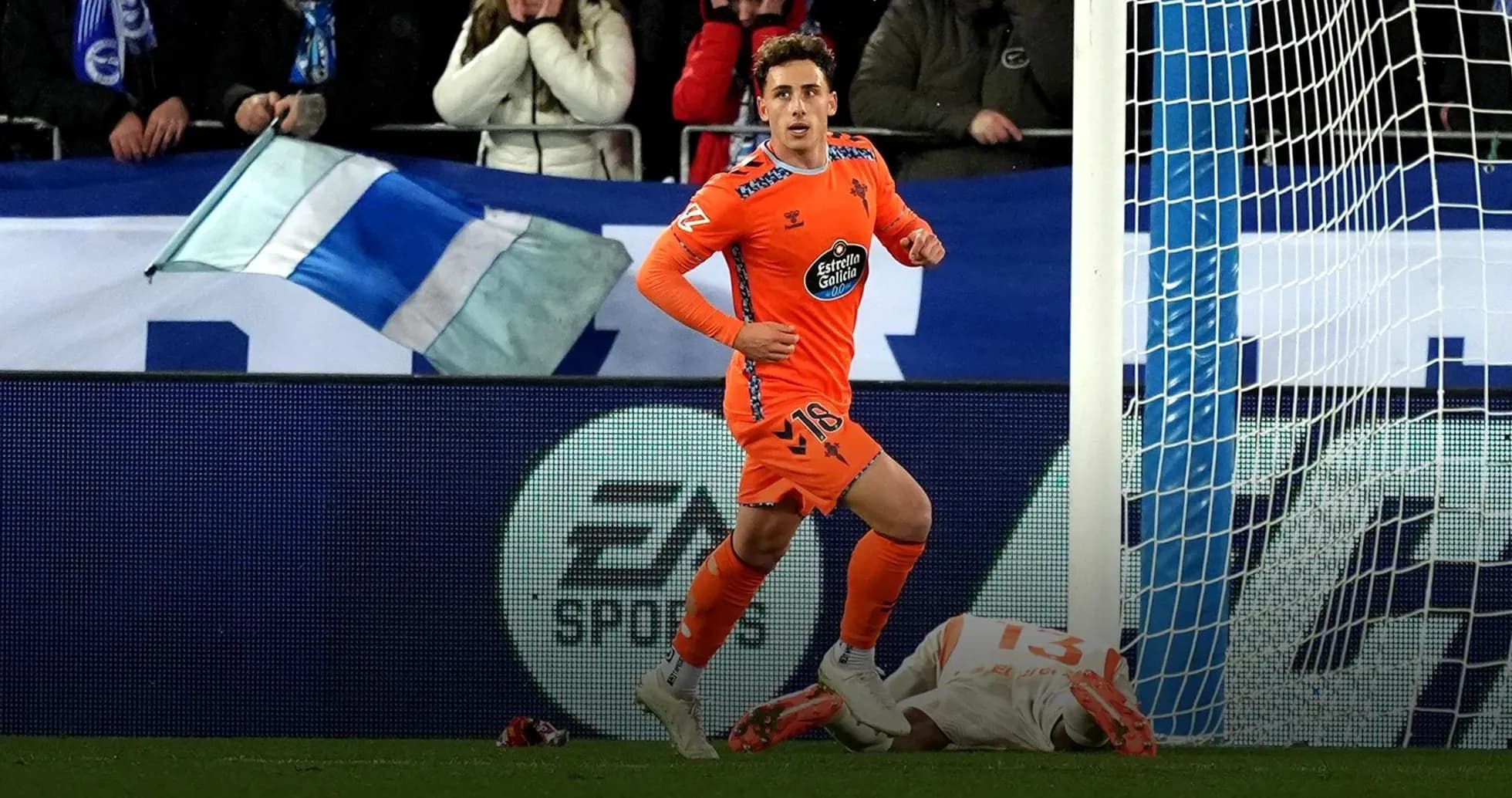
Celta’s front three set the tone early. On 19', F. Jutgla finished a move created from the right, converting after J. Rodriguez advanced and supplied the assist. Their 3-4-3 stretched Alaves’ back four, and on 27' H. Alvarez struck for 2–0, this time Jutgla turning provider as Celta exploited the channels between full-back and centre-back.
The pressure continued: on 37', H. Sotelo connected play through midfield and assisted Jutgla again, whose second goal made it 3–0 and seemed to settle the contest. Alaves briefly stabilized and found a lifeline at 45', when T. Martinez scored from an A. Perez assist, a rare first-half sequence where the visitors broke Celta’s first line and attacked with numbers.
Discipline began to surface around the break. Jon Pacheco of Alaves received a yellow card for a foul at 22'. Javi Rodríguez of Celta Vigo received a yellow card for a foul at 45+3'. That made it 3–1 at the interval, with Celta still in control on the scoreboard but Alaves showing signs of life.
The restart was the turning point. At 46', D. Suarez (IN) came on for C. Alena (OUT), I. Diabate (IN) came on for L. Boye (OUT), J. Guridi (IN) came on for P. Ibanez (OUT), and A. Rebbach (IN) came on for J. Pacheco (OUT). These four changes completely reconfigured Alaves’ midfield and attack.
The impact was immediate. On 50', A. Perez scored from a T. Martinez assist to bring it back to 3–2, as Alaves now attacked with greater width and second-line runs. Celta responded with their own changes to regain control: at 54', S. Carreira (IN) came on for A. Nunez (OUT), and F. Lopez (IN) came on for O. Mingueza (OUT).
Fer López of Celta Vigo received a yellow card for a foul at 65', reflecting a growing need for tactical fouls as Alaves’ transitions accelerated. Celta then altered their front and flank profiles: at 69', J. Rueda (IN) came on for B. Iglesias (OUT), and P. Duran (IN) came on for J. El Abdellaoui (OUT).
Alaves’ momentum, however, was unstoppable. On 74', T. Martinez scored again, this time from an A. Rebbach assist, levelling the match at 3–3 with a direct, vertical attack. Four minutes later, at 78', A. Rebbach completed the comeback, scoring from a V. Parada assist to make it 4–3, capitalising on Celta’s increasingly stretched 3-4-3.
Celta’s final throw of the dice came at 82', when I. Aspas (IN) came on for J. Aidoo (OUT), an attacking substitution that further compromised their defensive line. In added time, Denis Suárez of Alaves received a yellow card for a foul at 90+4'. At the same 90+4' mark, V. Koski (IN) came on for T. Martinez (OUT) to help close the game.
Card totals finished perfectly balanced: Celta Vigo received 2 yellow cards, while Alaves also saw 2.
Tactical Breakdown & Personnel
Celta Vigo’s 3-4-3 was front-foot and possession-oriented from the outset. With 55% of the ball and a strong passing accuracy of 87% (437 accurate of 505), they built through the back three of J. Rodriguez, J. Aidoo and C. Dominguez, using the wing-backs J. El Abdellaoui and A. Nunez to pin Alaves’ full-backs. O. Mingueza and H. Sotelo formed the central engine, circulating quickly into the front line of H. Alvarez, B. Iglesias and Jutgla.
Their first-half success came from repeatedly isolating Alaves’ defenders in wide channels. J. Rodriguez’s advanced positioning on the right underpinned the opener, and Jutgla’s movement between the lines created the assist lane for H. Alvarez on the second goal. Celta’s 9 shots inside the box from 12 total attempts show how effectively they penetrated; they also forced 4 of their shots to be blocked, evidence of sustained pressure in the final third.
However, the same aggressive structure carried defensive risk. With only three natural defenders, Celta were vulnerable when possession was lost, particularly against direct passes into the channels behind the wing-backs. In the second half, as legs tired and the back line was reshuffled by substitutions (Carreira and Rueda entering, Aidoo later withdrawn for Aspas), the coherence of the 3-4-3 eroded.
Alaves began in a more conservative 4-4-2, but their first-half shape was too flat. The midfield four of A. Perez, P. Ibanez, A. Blanco and C. Alena struggled to apply pressure on Celta’s build-up, allowing Giráldez’s side to dictate tempo. Despite this, Alaves still managed 10 shots inside the box out of 14 total, signalling that even in the first half their direct play could hurt when it broke through.
The half-time overhaul was decisive. Introducing D. Suarez, J. Guridi and A. Rebbach, plus I. Diabate up front, gave Alaves more technical quality between the lines and greater vertical threat. D. Suarez and Guridi improved ball progression and pressing coordination, while Rebbach operated as a hybrid wide-forward, attacking the space behind Celta’s wing-backs. The quick 50' goal by A. Perez and the later strikes from T. Martinez and Rebbach all stemmed from this new, more dynamic structure.
Both goalkeepers, I. Radu for Celta and A. Sivera for Alaves, registered 2 saves each. With both teams finishing with goals prevented at 0, this points to finishing quality and defensive exposure rather than extraordinary shot-stopping as the key drivers of the scoreline.
Fouls were relatively balanced (Celta 13, Alaves 16), but Celta’s bookings for Javi Rodríguez and Fer López underlined how often they were forced into late challenges once Alaves’ revamped midfield started running at their back three.
The Statistical Verdict
The underlying numbers confirm how finely balanced the game became. Celta’s xG of 1.84 and Alaves’ 1.83 are almost identical, yet Alaves scored four times from their chances while Celta converted three. The visitors’ 14 total shots to Celta’s 12, and crucially 10 shots in the box compared to Celta’s 9, reflect how their second-half surge produced slightly higher-volume, close-range opportunities.
Celta’s superior possession (55% to 45%) and passing accuracy (87% vs 82%) did not translate into control after the break, largely because Alaves’ adjusted pressing and verticality turned the match into a transition battle. Alaves’ 7 shots off target compared to Celta’s 3 show a willingness to shoot more frequently once they had momentum, while Celta’s 4 blocked shots versus Alaves’ 1 underline how often the home side encountered a reinforced defensive block.
Ultimately, this was a tactical story of structural bravery versus reactive adjustment. Celta’s 3-4-3 produced a devastating first half but became increasingly fragile, while Alaves’ half-time reconfiguration of their 4-4-2 delivered territorial gains, more box entries, and, in the end, a remarkable 4–3 comeback victory consistent with, but slightly outperforming, the underlying xG balance.