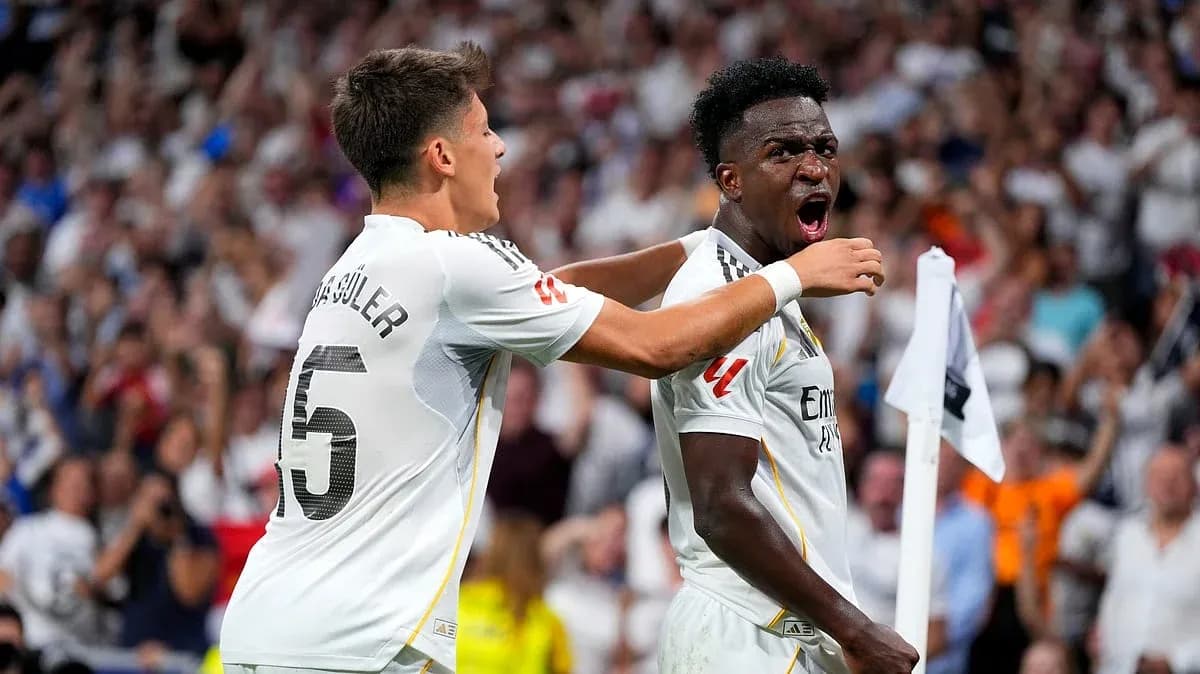
Mallorca Defeats Real Madrid 2–1 in La Liga Clash
At Estadi Mallorca Son Moix, Mallorca edged Real Madrid 2–1 in a La Liga regular-season Round 30 match that was defined by defensive organisation and ruthless efficiency. Despite conceding 64% possession and facing 15 shots, Mallorca converted two of their six attempts, leaning on a compact 4-3-1-2 block and a disciplined, time-management heavy second half. Real Madrid’s 4-4-2 dominated territory and circulation, but with 1.27 xG to Mallorca’s 1.22 and zero saves required from Andriy Lunin, their superiority on the ball never translated into clear separation on the scoreboard. Mallorca’s structure, game-state management, and late bench impact decided a finely balanced contest.
Scoring Sequence & Disciplinary Log
The breakthrough came on 41'. Working from their 4-3-1-2, Mallorca exploited the right channel: Pablo Maffeo overlapped from right-back and delivered for Manu Morlanes, who arrived from midfield to finish for 1–0. That goal framed the entire game-state: Mallorca could retreat into a deeper block, Real Madrid were forced to chase.
Discipline began after the interval. On 47', Dean Huijsen received a yellow card for Real Madrid for a foul, signalling Madrid’s urgency and higher defensive line as they tried to compress the pitch.
The second half then became a contest of control and disruption. On 66', goalkeeper Leo Román was booked for time wasting, the first clear indicator that Mallorca were consciously stretching restarts to break Madrid’s rhythm. Later, on 84', centre-back Martin Valjent also received a yellow card for time wasting, again reflecting Mallorca’s priority: protect the lead, slow the tempo. At 90+5', right-back Pablo Maffeo was booked, again for time wasting, underlining a systematic approach to game management in the closing stages.
Real Madrid added a second yellow on 90', when Franco Mastantuono was cautioned for a foul, capping a frustrated Madrid press phase as they tried to retrieve the ball high.
The visitors’ equaliser arrived on 88': from a set or wide delivery phase, Éder Militão, introduced earlier, scored with Trent Alexander-Arnold providing the assist, making it 1–1 and briefly swinging momentum. However, Mallorca immediately reasserted themselves at 90', as Vedat Muriqi converted from close range after substitute Mateo Joseph’s involvement, restoring a 2–1 lead that they protected through added time.
Tactical Breakdown & Personnel
Mallorca lined up in a 4-3-1-2 under Martin Demichelis, with Leo Román in goal; a back four of Pablo Maffeo, Martin Valjent, Omar Mascarell, and Johan Mojica; a midfield trio of Samú Costa, Sergi Darder, and Manu Morlanes; Pablo Torre as the advanced midfielder behind a front two of Vedat Muriqi and Zito Luvumbo.
Out of possession, this structure collapsed into a narrow 4-3-3/4-4-2 hybrid: Torre often dropped alongside Darder and Morlanes, while one forward (often Luvumbo) shifted wide to screen Madrid’s full-backs. The key was central congestion: with Tchouaméni and Eduardo Camavinga trying to progress for Real Madrid, Mallorca’s trio stayed compact, forcing Madrid to play around rather than through.
In possession, Mallorca were direct and selective. Only 308 total passes (243 accurate, 79%) and 36% possession illustrate a plan based on verticality and moments rather than sustained control. Five of their six shots came from inside the box, aligned with an xG of 1.22: they attacked sparingly but with good shot quality. The first goal encapsulated this: a quick pattern down the right, Maffeo advancing from full-back and Morlanes timing his run from midfield into the box.
Real Madrid, under Álvaro Arbeloa, set up in a 4-4-2: Andriy Lunin in goal; a back four of Trent Alexander-Arnold, Antonio Rüdiger, Dean Huijsen, and Álvaro Carreras; a midfield line of Manuel Ángel Morán, Aurélien Tchouaméni, Eduardo Camavinga, and Arda Güler; with Brahim Díaz and Kylian Mbappé as the front two.
Madrid’s 568 passes (499 accurate, 88%) and 64% possession show a clear territorial dominance. The double pivot of Tchouaméni and Camavinga circulated under little pressure in the first phase, but Mallorca’s compactness meant that much of Madrid’s play was in front of the block. Despite 13 shots inside the box, their 1.27 xG suggests a high volume of crowded or low-angle efforts rather than repeated clear one-on-ones.
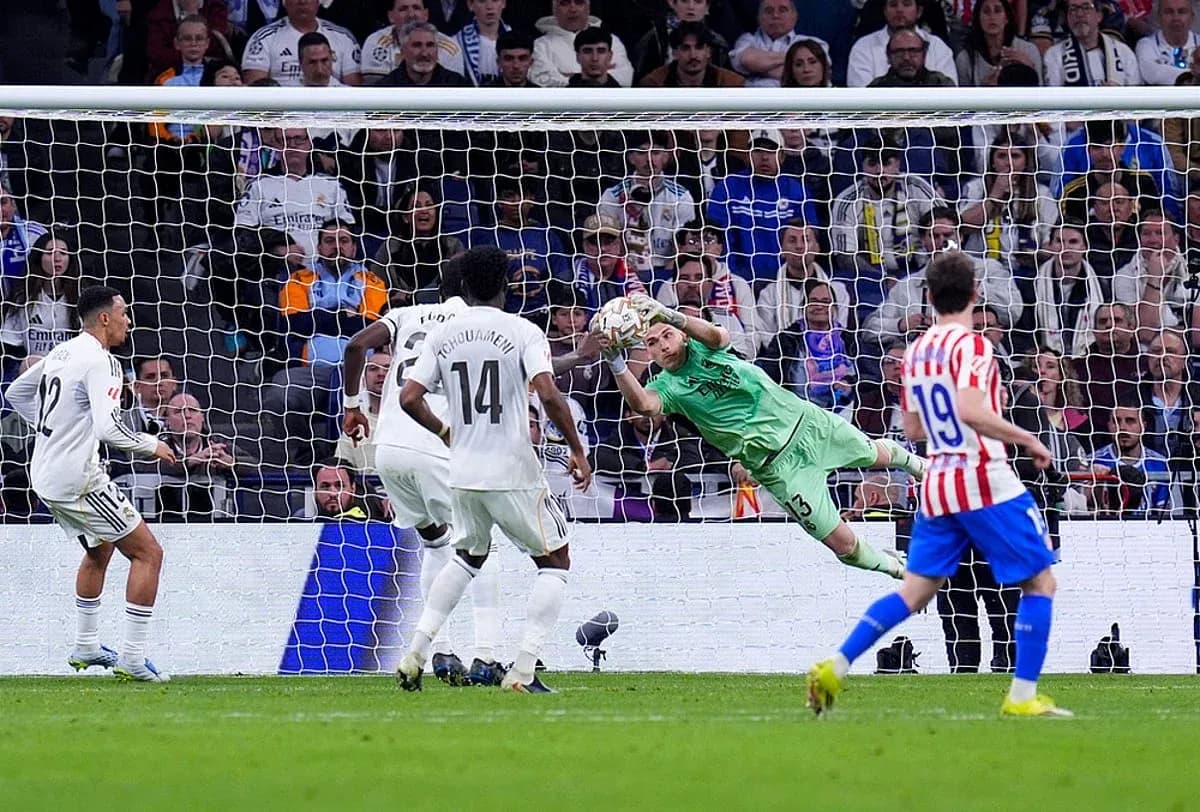
Crucially, Lunin recorded 0 saves, underlining that Mallorca’s two on-target shots both beat him. By contrast, Leo Román made 5 saves, a decisive factor given Madrid’s late pressure and volume of box entries. Yet, the goals prevented metric for both sides stands at 0, indicating that while Román’s interventions were important, they broadly aligned with expected outcomes of the chances faced rather than wildly overperforming.
Substitutions were central to the tactical story. Arbeloa reacted aggressively on 59':
- Éder Militão (IN) came on for Dean Huijsen (OUT), adding aerial threat and more aggressive front-foot defending.
- Vinicius Júnior (IN) came on for Manuel Ángel Morán (OUT), shifting Madrid into a more attacking posture from the left.
- Jude Bellingham (IN) came on for Eduardo Camavinga (OUT), adding late-box runs and creativity between the lines.
These moves tilted Madrid further forward, and it was Militão who eventually scored, with Alexander-Arnold assisting, validating the decision to add height and attacking presence from defence. Later, Thiago Pitarch (IN) came on for Arda Güler (OUT) on 72', and Franco Mastantuono (IN) replaced Brahim Díaz (OUT) on 76', further refreshing Madrid’s attacking lines but without changing the fundamental pattern: dominance without decisive penetration.
Demichelis’ response on 70' was to refresh legs in midfield and attack while maintaining structure:
- Mateo Joseph (IN) came on for Manu Morlanes (OUT).
- David López (IN) came on for Samú Costa (OUT).
- Jan Virgili (IN) came on for Pablo Torre (OUT).
These changes preserved the 4-3-1-2 shape but with fresher runners to press and counter. Joseph’s impact was direct: he assisted Muriqi’s 90' winner, attacking the space vacated by Madrid’s advanced lines.
On 81', Antonio Sánchez (IN) came on for Zito Luvumbo (OUT), adding work rate and defensive discipline in the forward line for the final phase, dovetailing with the time-wasting bookings that showed Mallorca’s full commitment to game management.
The Statistical Verdict
Statistically, the match was finely poised. Real Madrid edged xG (1.27 to 1.22), had more total shots (15 to 6), more shots on goal (6 to 2), and a higher passing accuracy (88% to 79%) with far more passes (568 to 308). They also produced more blocked shots (3 to 1), indicating sustained pressure on Mallorca’s block.
Mallorca, however, translated their limited possession and shot volume into maximum efficiency: two shots on target, two goals. Their defensive effort is reflected in 16 fouls to Madrid’s 13 and 6 corners to Madrid’s 4, showing they not only absorbed pressure but also created enough attacking set-piece situations.
Disciplinary totals were clear: Mallorca collected 3 yellow cards (Leo Román, Martin Valjent, Pablo Maffeo), all tightly linked to time-wasting and game management, while Real Madrid received 2 (Dean Huijsen, Franco Mastantuono) for fouls, reflecting frustration and aggressive pressing.
With both goalkeepers posting 0 goals prevented and Román making 5 saves to Lunin’s 0, the difference lay not in extraordinary shot-stopping but in structure, efficiency, and Mallorca’s superior exploitation of key moments in a match Madrid largely controlled but did not decisively own.