Alaves Triumphs Over Mallorca in La Liga Clash
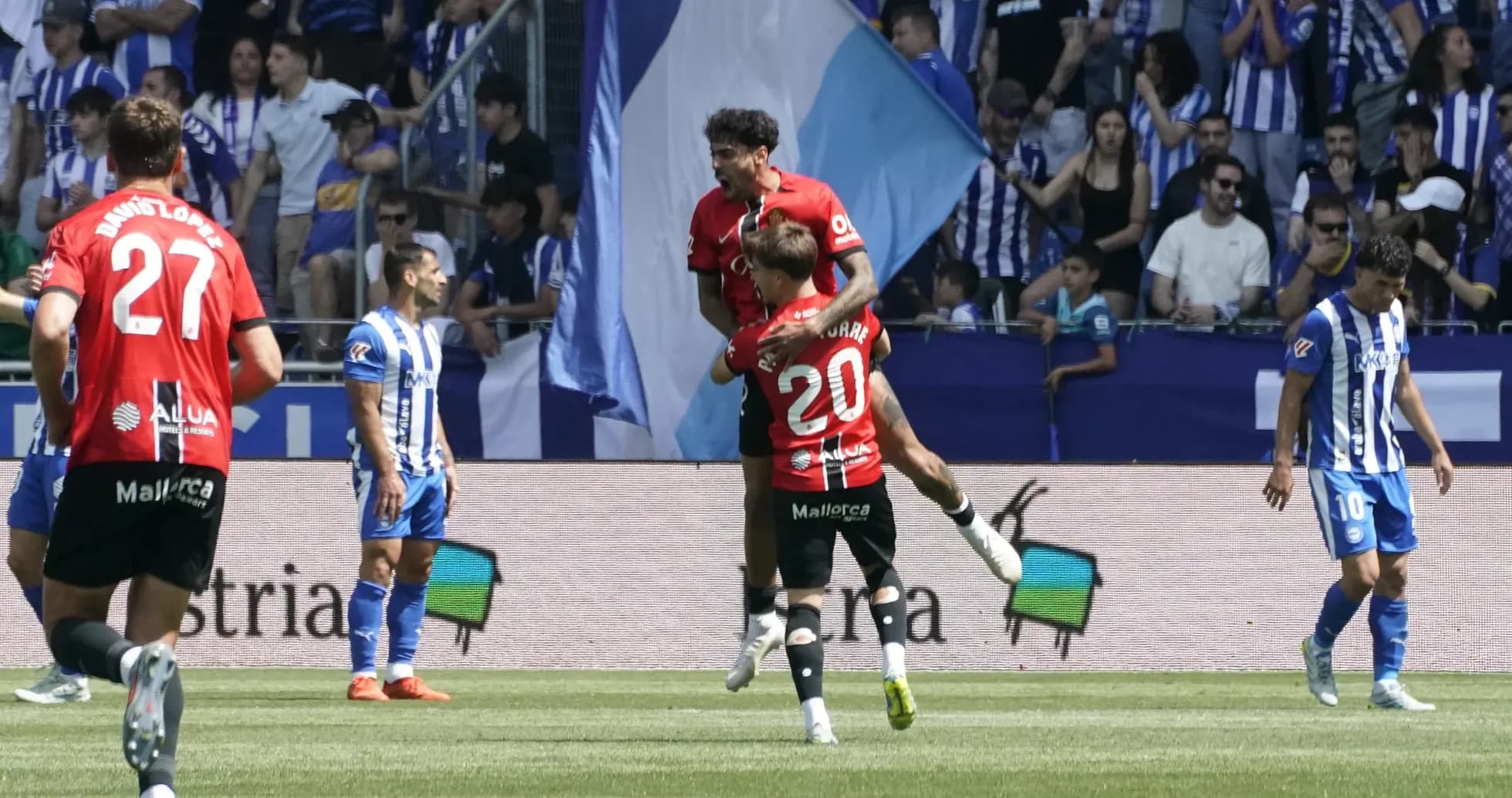
At Estadio Mendizorrotza, under the watch of Javier Alberola Rojas, Alaves and Mallorca met in a relegation-tinged La Liga contest and produced a tight, nervy 2–1 home win after trailing 0–1 at half-time. Following this result, the table snapshot shows just how fine the margins are: Alaves sit 16th on 36 points with a goal difference of -11, Mallorca 17th on 35 points with a goal difference of -10. Both have played 33 league matches, and both live in that uneasy space where one bad week can pull you back toward the drop.
The seasonal DNA of the two sides framed the narrative. At home, Alaves have been stubborn if unspectacular: 16 matches, 6 wins, 6 draws, 4 defeats, with 21 goals for and 19 against. That translates to 1.3 goals scored at home on average and 1.2 conceded, a profile of narrow margins and long evenings of suffering. Mallorca, by contrast, arrive as one of La Liga’s most fragile travellers: on their travels they have played 16, winning just 1, drawing 3 and losing 12, scoring 14 and conceding 31. Their away averages – 0.9 goals scored and 1.9 conceded – scream vulnerability whenever they leave the island.
Yet Mallorca possess one of the league’s most devastating weapons in Vedat Muriqi. Overall this campaign, he has 21 league goals from 32 appearances, with 79 shots and 42 on target, and an attacking rating of 7.09. Alaves, however, counter with a twin spearhead: Toni Martínez and Lucas Boyé have 11 league goals each, giving Quique Sánchez Flores a rare luxury for a team in the bottom third – two double-digit scorers in the same side.
Tactical Voids and Discipline
Both coaches had to navigate significant absences. For Alaves, F. Garces was suspended and C. Protesoni missed out with a muscle injury. Neither appears in the active squad list, but their absence still trimmed depth and limited Sánchez Flores’ options to rotate his defensive block or midfield shield.
Mallorca’s issues were more structural. Martin Demichelis had to cope without L. Bergstrom, M. Joseph, M. Kumbulla, Z. Luvumbo, A. Raillo and J. Salas – a spine of defenders and attacking depth removed in one sweep. The absence of Raillo and Kumbulla, in particular, forced Mallorca to lean heavily on M. Valjent and D. Lopez at centre-back, with little proven cover behind them.
Discipline was always likely to be a subplot. Heading into this game, Alaves’ yellow-card profile showed a tendency toward late-game turbulence: 20.99% of their yellows arrive between 76–90', and another 17.28% in 91–105'. Mallorca, meanwhile, scatter their cautions more evenly, but 21.92% of their yellows fall in the 46–60' window, right after the restart, and 16.44% in 91–105', when fatigue and desperation collide.
Individually, the flashpoints were obvious. For Mallorca, Samú Costa and Pablo Maffeo came in as two of La Liga’s most card-prone players, each with 9 yellows this season. Samú Costa’s 57 fouls committed and 62 drawn underline his role as both destroyer and magnet for contact. On the Alaves side, Víctor Parada had already collected 8 yellows and 1 yellow-red, a full-back whose aggression would be tested by Mallorca’s wide surges and overlaps.
Key Matchups
The marquee duel was always going to be Vedat Muriqi against the Alaves back five. Muriqi’s 21 goals and aerial dominance meet a defence that, overall, concedes 1.5 goals per game and has allowed 49 in 33 matches. At home, though, Alaves are considerably tighter, conceding just 19 in 16 outings (1.2 per game). Sánchez Flores’ decision to set up in a 5-3-2 – with A. Sivera behind a line of A. Rebbach, Víctor Parada, N. Tenaglia, Jonny Otto and A. Perez – was a clear attempt to crowd the box and deny Muriqi clean looks.
Mallorca’s offensive timing added another layer. Heading into this game, 27.91% of their goals arrived between 61–75' and 25.58% between 76–90', a pronounced late-game surge. Alaves’ defensive data does not provide minute splits, but their card spikes in those same late periods suggest a side that increasingly defends on the edge as legs tire. The script practically wrote itself: if Muriqi and J. Virgili could keep the match within reach, Mallorca’s best chance was to cash in during the final half-hour, precisely when Alaves tend to get stretched and booked.
On the flip side, Alaves’ own “hunters” were Toni Martínez and Lucas Boyé. Martínez, with 11 goals and 3 assists plus 22 key passes, works the channels and half-spaces, while Boyé adds a more direct, combative edge – 11 goals, 25 key passes, and a hefty 54 fouls committed. Against a Mallorca defence that concedes 1.9 goals per game away and has already shipped 31 on their travels, the 5-3-2 morphing into a 3-5-2 in possession allowed both forwards to pin the centre-backs while wing-backs pushed on.
In midfield, the confrontation between creativity and control defined the tempo. For Alaves, A. Blanco and C. Alena formed the central axis with P. Ibanez, tasked with progressing play and feeding the front two. They faced Samú Costa, O. Mascarell and S. Darder – a trio that blends bite, positional discipline and line-breaking passing.
Samú Costa, in particular, is Mallorca’s enforcer and metronome. With 1,102 passes at 79% accuracy, 55 tackles, 13 blocks and 22 interceptions, he is both the first line of resistance and the springboard into transition. His duel numbers – 376 total duels, 193 won – illustrate how often he is involved in the physical core of the contest. His job was to suffocate Alena between the lines and prevent Toni Martínez from receiving on the half-turn.
Out wide, Pablo Maffeo’s role was pivotal. With 22 blocked shots this season, Maffeo has repeatedly shown a willingness to defend his box aggressively; those 22 actions are successful blocks, not attempts. Up against the overlapping runs of Rebbach and Parada, he had to balance his forward thrusts with the need to protect D. Lopez on his inside shoulder.
Statistical Prognosis and Tactical Verdict
From a probabilistic lens, the pre-match numbers tilted the balance toward Alaves at Mendizorrotza. At home they average 1.3 goals scored and 1.2 conceded; Mallorca away average 0.9 scored and 1.9 conceded. The combined profile pointed toward a low-to-mid scoring game, with Alaves more likely to edge it by a single goal.
Mallorca’s late-game offensive surge – 53.49% of their goals coming after 60' (27.91% from 61–75' and 25.58% from 76–90') – intersected dangerously with Alaves’ tendency to rack up late yellow cards (20.99% between 76–90'). On paper, that created a window where Demichelis’ side could tilt the xG balance late, especially if Muriqi’s penalty threat came into play. He has scored 5 penalties this season but also missed 2, so Mallorca cannot be described as flawless from the spot.
Yet the broader defensive solidity metrics favoured the hosts. Alaves have kept 2 clean sheets at home and 3 overall, modest but respectable given their league position. Mallorca’s away record – 1 clean sheet, 31 conceded – suggests that even if their xG in a given game stays close, the quality of chances they allow is often high and concentrated around central areas, where Boyé and Toni Martínez thrive.
Following this result, the 2–1 scoreline fits the underlying trends: Alaves leveraging home resilience and dual strikers to just outgun an away side that remains brittle despite the presence of an elite scorer. The tactical story is of a back five that, while creaking at times, did just enough to contain Muriqi’s threat, and a front pair who punished Mallorca’s structural absences in defence.
In the broader arc of the season, this match underlines a simple truth: Alaves’ path to safety runs through Mendizorrotza and the finishing of Toni Martínez and Lucas Boyé; Mallorca’s survival, meanwhile, rests on whether their late-game surges and Muriqi’s goals can keep compensating for an away defence that, statistically and now narratively, continues to leak at critical moments.