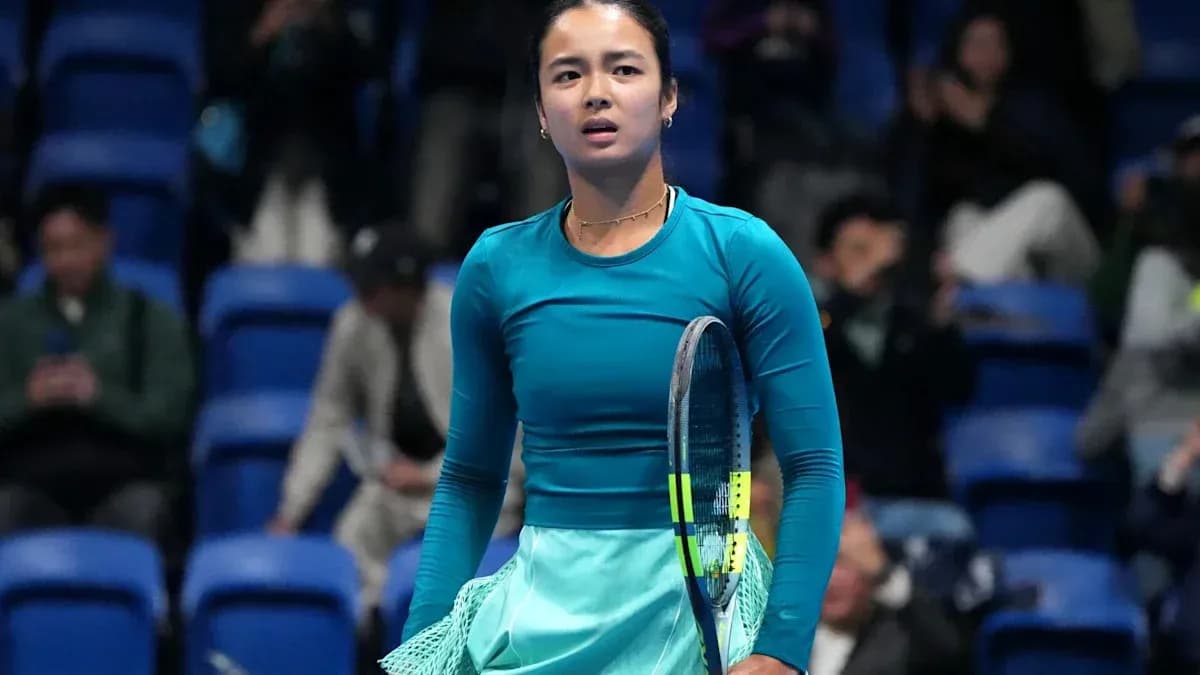
Alex Eala Faces Diana Shnaider Again at Tokyo Open
Alex Eala walks back into a familiar problem in Tokyo. Same opponent. Same lefty angles. A very different opportunity.
Seven days ago in Ningbo, Diana Shnaider shut the door on their first-ever meeting, 7-5, 6-4, exposing the one weakness that still trails Eala through her breakout season: the serve. Now they meet again in the quarter-finals of the Tokyo Open, with the Filipina armed with fresh wins, sharper numbers, and a clearer blueprint of what must change.
A breakout year, with one nagging flaw
On paper, 2026 has been the year Eala arrived. A first WTA title in Washington. A run to the fourth round at Wimbledon. A surge into the top 20. These are not the milestones of a prospect anymore; they belong to a player who expects to be deep in draws.
Yet even as her ranking has climbed, the conversation around her game has kept circling back to the same theme: the serve has to be better.
Ningbo underlined that. Against Shnaider, Eala’s first-serve percentage hovered just above 50%, and she won only a little over half of those points. That combination left her constantly under pressure, and Shnaider pounced, breaking her six times. For all of Eala’s grit from the baseline, you cannot keep handing a player of Shnaider’s quality that many looks at your second serve and expect to survive.
Tokyo offers a hint of the adjustment
Tokyo, though, has already shown what the serve can look like when it clicks.
Eala has played her way into the last eight by beating Mika Stojsavljevic and Talia Gibson, and the Gibson match in particular offered a glimpse of the level she needs against Shnaider. Nine aces. Her highest ace count in any match this season. A far healthier first-serve percentage and a far stronger win rate behind it than she managed in Ningbo.
Those are not cosmetic numbers. They change the entire rhythm of a match. With that kind of serving, Eala holds more comfortably, steps into return games with freedom, and forces her opponent to feel the scoreboard weight instead of constantly carrying it herself.
Shnaider is a different test to Gibson, of course. The Russian is a more complete player, a more dangerous returner, and far more likely to punish any drop in accuracy. But the identity of the opponent should not dictate whether Eala lands her first serve. That is a controllable. In Ningbo, she let it slip. In Tokyo so far, she has tightened the screws.
The lefty puzzle
The serve, though, is only part of the story.
Shnaider brings another problem that has quietly shadowed Eala’s rise: left-handers. Eala is a lefty herself, yet her record against fellow left-handers currently inside the top 100 is stark. She has not beaten any of them.
That matters. Lefty-versus-lefty matches flip the usual patterns. The wide slider that usually drags a right-hander off the court on the ad side now comes back with interest. Cross-court forehands land in the opponent’s strike zone. Comfort zones become contested territory.
Shnaider exploited that in Ningbo, dragging Eala into patterns that suited the Russian’s heavier lefty game. If Eala is to turn the tables in Tokyo, she cannot just serve better; she has to rewrite the geometry of the rallies, take away Shnaider’s favourite angles, and use her own lefty spin as a weapon rather than a mirror.
What must change in the rematch
The technical overhauls to Eala’s serve will likely wait for the off-season. The toss, the motion, the finer details—that work takes time. What she can control now is intent and location.
Higher first-serve percentage. More commitment to hitting her spots. A willingness to accept a few fewer miles per hour in exchange for more balls in and more free points. The Gibson match proved she can produce that balance.
If she marries that improved serving with a clearer plan against a fellow left-hander, the rematch in Tokyo will not look like a rerun of Ningbo. It becomes something else entirely: a test of how quickly a rising top-20 player can absorb a lesson, adjust, and come back at the same opponent, on a bigger stage, with something sharper in hand.
Revenge is a big word in tennis. For Eala, this week, it starts with a first serve that finally holds its ground.