Alexander Blessin Takes Charge of Borussia Mönchengladbach
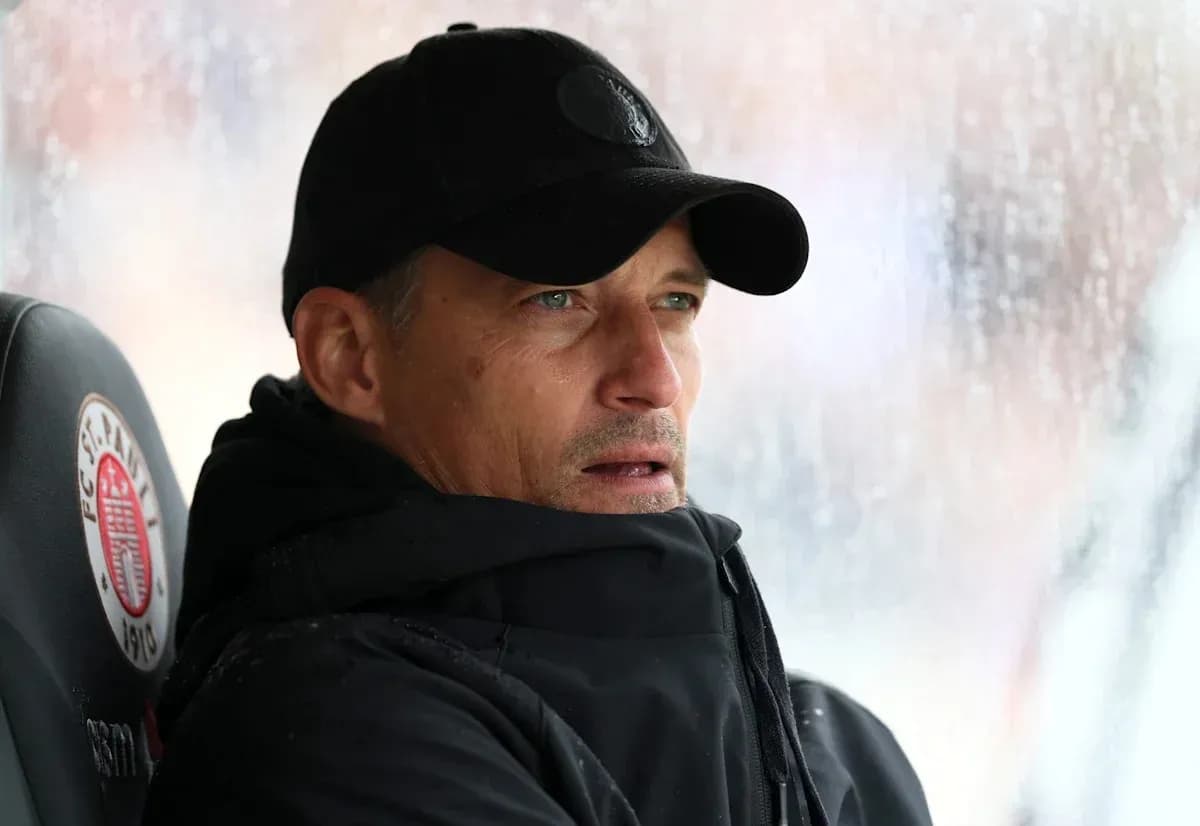
Borussia Mönchengladbach have turned to Alexander Blessin to drag them out of a full-blown early-season crisis, appointing the 53-year-old as head coach on a contract running to 2028.
The club confirmed the deal on Tuesday. Blessin will be unveiled on Wednesday afternoon alongside sporting director Rouven Schröder. The timing says everything: Gladbach hit the international break bottom of the Bundesliga, with zero points and a 6:16 goal difference that screams trouble.
They have conceded 16 goals in four games. Only Union Berlin have shipped more, and that total equals the worst defensive record in Bundesliga history at this stage of a season. Gladbach needed a firefighter. They chose a defensive organiser who was relegated just four months ago.
From 5-0 humiliation to a new man in charge
Blessin replaces Eugen Polanski, who paid the price for a brutal 5-0 defeat at Freiburg on Matchday 3. That result ended his tenure just over a year after it began and underlined how quickly Gladbach’s project had unravelled.
Jan-Moritz Lichte stepped in on an interim basis and, for a while, injected some life. Saturday’s 3-4 home loss to Mainz was chaotic but at least competitive, leaving the incoming coach with both encouragement and a long list of problems.
The table, though, is unforgiving. Four games, four defeats, and a defence in pieces. Into that walks Blessin, whose first competitive match could hardly carry more emotional weight: a Rhine derby away at 1. FC Köln on October 11. No easing-in period. No soft launch. Straight into one of the most charged fixtures on the calendar.
Blessin’s St. Pauli tale: from rock-solid to rock bottom
Blessin returns to the Bundesliga with a reputation shaped by two wildly different seasons at FC St. Pauli.
He took over in Hamburg in 2024 from Fabian Hürzeler after promotion and immediately built a side that was notoriously hard to break down. In his first top-flight campaign, St. Pauli conceded just 41 goals — the second-best defensive record in the league behind Bayern Munich — and stayed up on the back of that discipline.
That work did not go unnoticed. In April 2025, Get German Football News reported that Hoffenheim and Wolfsburg were tracking him as he steered St. Pauli towards safety. By early in the following season, the story looked like it might turn into a classic slow-burn success.
September 2025 brought tactical praise and optimism. A GGFN tactical check highlighted an unbeaten St. Pauli, near the top of the table, with seven points from their opening three matches. Compact, organised, awkward to play against. The model looked sustainable.
Then it collapsed.
A nine-match losing streak dragged St. Pauli straight into a relegation dogfight. Blessin stayed in the job despite mounting pressure and appeared to have found another escape route in late February and early March. Wins over Werder Bremen and Hoffenheim, plus a draw with Eintracht Frankfurt, yielded seven points from three games and a flicker of momentum.
When GGFN published its extensive “Relegation Check” on March 14, the situation remained tense after a 2-0 defeat at Gladbach. Even then, there were reasons to believe. Blessin had squeezed results from a limited squad more than once, and performances such as the 2-1 win over Stuttgart suggested the team still had enough resilience to survive.
What followed ended that hope.
St. Pauli blew a lead and lost 2-1 to Freiburg. In the aftermath, Blessin apologised for insulting referee Florian Badstübner during an emotional post-match interview — a sign of the strain around the club. A 1-1 draw at Union Berlin offered only a brief pause before Bayern tore into them, winning 5-0 at the Millerntor.
Another 1-1, this time against Köln, did little to change the direction of travel.
The key chance to claw their way out came against bottom side Heidenheim. St. Pauli lost 2-0, wasting one of their clearest remaining opportunities to escape the relegation zone. By then, as GGFN noted, they had taken just two points from five matches since the relegation analysis.
The slide continued. A 2-1 defeat to Mainz, another 2-1 loss at RB Leipzig, and suddenly survival hinged on a final-day home showdown with Wolfsburg. St. Pauli lost 3-1 at the Millerntor and finished bottom of the Bundesliga. From the publication of that March relegation check to the end of the season, Blessin’s side collected only two points from eight games and never won again.
St. Pauli chose to start over without him after relegation. Blessin’s reputation took a hit, but not enough to scare off a club in as much trouble as Gladbach.
A CV built on structure, not spectacle
Gladbach are not just hiring the coach who went down with St. Pauli. They are betting on the broader career.
Blessin spent eight years inside the RB Leipzig system, developing as a coach in the club’s academy and absorbing the pressing-heavy, structurally rigorous approach that has shaped so much of modern German football. His first senior job came at KV Oostende, where he made his name as an intense, tactically clear operator.
From there, he moved to Genoa and then Union Saint-Gilloise, where he won the Belgian Cup and twice collected Belgium’s Coach of the Year award. Those honours underline why clubs such as Hoffenheim and Wolfsburg had looked at him, and why Gladbach believe he can impose order on a leaking back line.
They desperately need that order. Since Marco Rose left for Borussia Dortmund in 2021, the head coach’s office at Borussia-Park has had a revolving door. Adi Hütter and Daniel Farke each lasted a single season. Gerardo Seoane took charge in June 2023 and was gone by September 2025. Polanski’s spell barely stretched beyond a year.
Blessin now becomes the fifth permanent head coach in that period. Stability has been missing; identity, too.
What he does have is time on the contract and a two-week international break to get to work before the Köln derby. Gladbach are still searching for their first point of the season. Their defence is fragile, their confidence brittle, their crowd restless.
For Blessin, this is a chance at redemption. For Gladbach, it is a calculated risk on a coach who has already shown he can organise chaos — and who has also felt how quickly it can swallow you whole.