Arsenal Dominates Bayer Leverkusen 2-0 in Champions League Clash
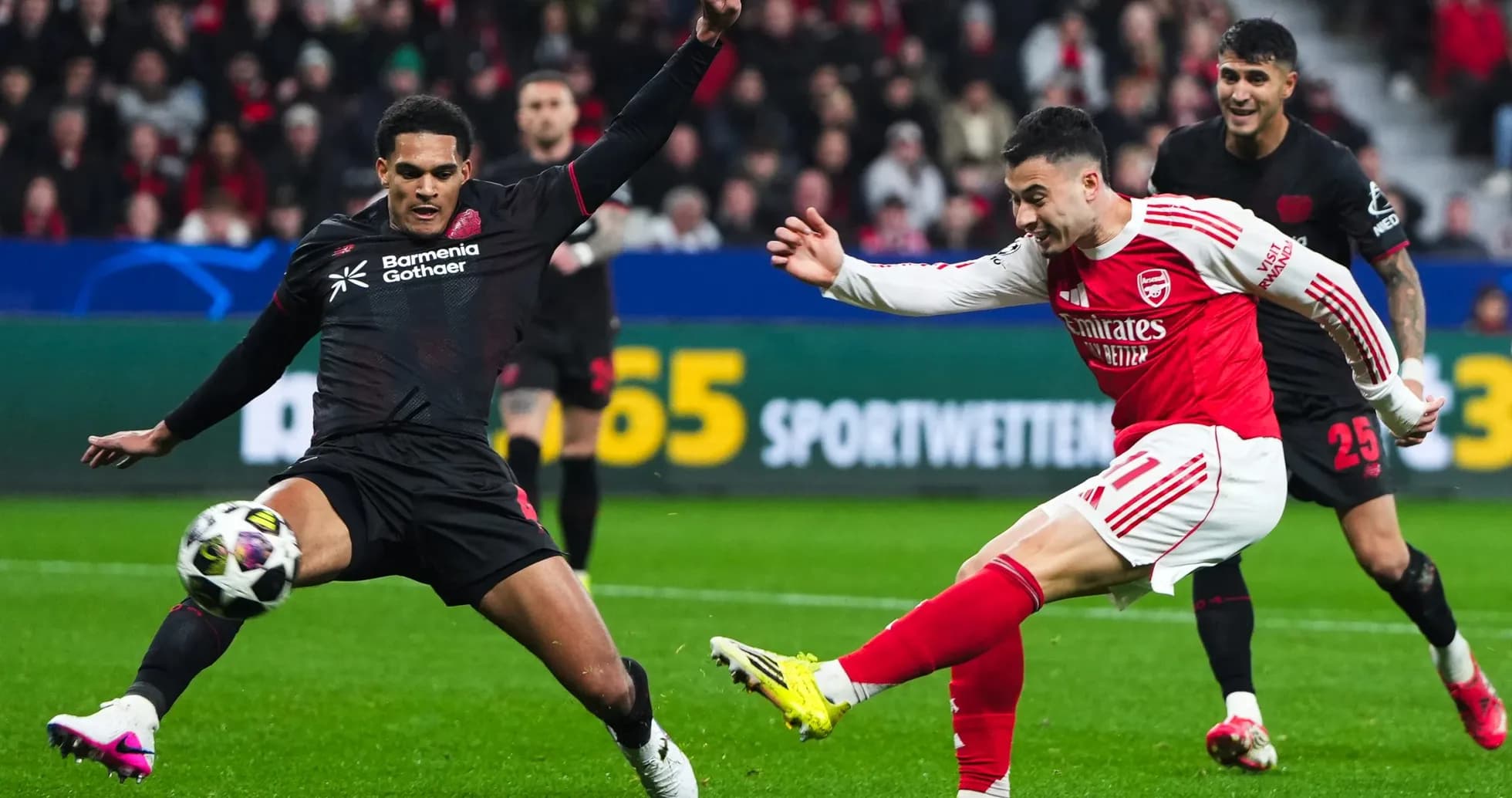
Emirates Stadium, London – Under the lights in north London, Arsenal tightened their grip on the UEFA Champions League Round of 16 with a composed 2-0 win over Bayer Leverkusen, reinforcing why they sit top of the competition’s standings snapshot on 24 points with a perfect record from eight games. Leverkusen, who came into the tie ranked 16th on 12 points, were competitive in spells but ultimately outpunched in both boxes.
Final Score: Arsenal 2 - 0 Bayer Leverkusen (HT: 1-0)
The match finished 2-0 (HT: 1-0), with Arsenal marrying ruthless attacking efficiency to a disciplined defensive structure. Mikel Arteta’s 4-2-3-1, featuring Viktor Gyökeres as the lone forward ahead of a creative trio of Bukayo Saka, Eberechi Eze and Leandro Trossard, proved too sharp for Kasper Hjulmand’s 3-4-2-1, despite the visitors enjoying more of the ball.
First Half
Arsenal’s breakthrough came on 36 minutes, a move that encapsulated their attacking clarity. Eberechi Eze finished from open play, assisted by Trossard, to give the hosts a 1-0 half-time lead. It was a reward for Arsenal’s ability to turn limited possession into high-quality chances: they would finish with 12 shots on target from 21 attempts, 13 of those inside the box.
Second Half
Leverkusen emerged from the interval needing control and incision, but their first notable act after the restart was disciplinary rather than creative. At 46 minutes, Exequiel Palacios was booked for a foul, the only yellow card of the night. It underlined the edge Arsenal’s forwards were beginning to exert between the lines as they repeatedly drew contact.
Hjulmand reacted with a double change on 60 minutes, reshaping his attacking structure. Martin Terrier made way, with Malik Tillman introduced, while Ernest Poku was replaced by Montrell Culbreath. Both changes were clear attempts to add more dynamism and final-third quality, but they ran into an Arsenal side increasingly comfortable managing the game state.
Any hopes of a Leverkusen surge were further dented on 63 minutes when Declan Rice struck Arsenal’s second from open play. The goal, unassisted, reflected Arsenal’s capacity to generate danger from deeper midfield zones as well as through their attacking quartet. With Arsenal’s xG measured at 1.75 against Leverkusen’s 0.52, the scoreline aligned closely with the quality of chances created.
Arteta then moved to consolidate control with a flurry of substitutions around the 70-minute mark. At 68 minutes, Martín Zubimendi went off, replaced by Christian Nørgaard, adding fresh legs and defensive awareness at the base of midfield. A minute later, Ben White was withdrawn for Cristhian Mosquera, Trossard made way for Gabriel Martinelli, and Eze was replaced by Kai Havertz. Each change nudged Arsenal towards a more balanced, game-management shape, protecting the lead while still threatening on the break.
Leverkusen continued to adjust in search of a route back. On 70 minutes, Palacios departed, with Patrik Schick brought on to offer a more traditional focal point in attack. Later, at 83 minutes, Robert Andrich was replaced by Ezequiel Fernández, a final attempt to refresh the midfield and sustain pressure.
Yet the underlying numbers told a story of sterile dominance for the visitors. Leverkusen had 58% of the ball, completed 471 of 536 passes at an impressive 88% accuracy and won eight corners, but mustered just two shots on target from nine attempts. Arsenal, by contrast, were devastatingly direct: 383 passes at 84% accuracy, 10 corners of their own, and 12 efforts on target. Leverkusen’s goalkeeper Janis Blaswich was forced into 10 saves, a figure that kept the scoreline respectable.
At the other end, David Raya made two saves and, with Arsenal’s goals prevented metric at zero, he largely faced efforts in line with expectation. The back four of Ben White (before his withdrawal), William Saliba, Gabriel Magalhães and Piero Hincapié, supported by Rice and Zubimendi/Nørgaard, restricted Leverkusen to low-quality opportunities, reflected in their modest xG of 0.52. Arsenal’s defending was proactive rather than reactive, with four blocked shots compared to Leverkusen’s two.
The final substitution of the night came on 90 minutes, when Viktor Gyökeres was replaced by Myles Lewis-Skelly, allowing Arsenal to see out the closing stages with fresh energy up front and further underline their control.
In the broader Champions League picture, this performance was entirely in keeping with Arsenal’s snapshot status: rank 1, 24 points, goal difference +19, eight wins from eight, with 23 goals scored and just four conceded. Leverkusen, ranked 16th on 12 points with a goal difference of -1, showed why they had navigated their way to the knockouts, but here they encountered an opponent operating at a higher level of efficiency and maturity.
On a night when Leverkusen had more of the ball, it was Arsenal’s structure, shot quality and bench depth that decided a quietly authoritative 2-0.